




The oxidative pentose phosphate pathway
PDF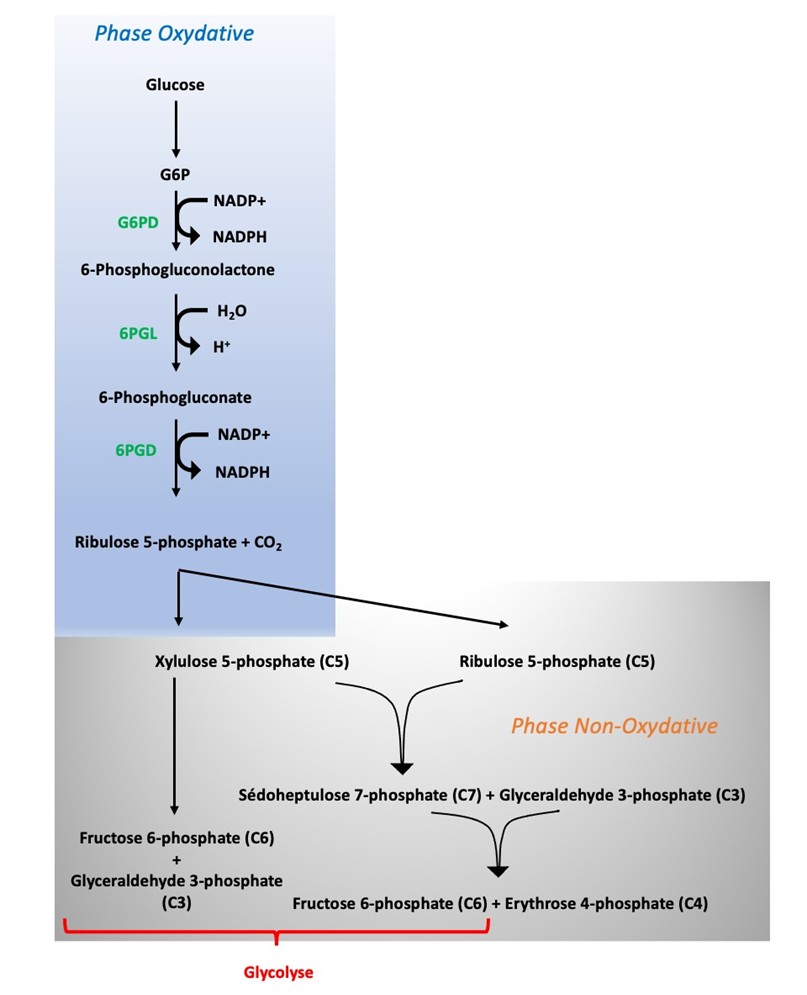
The oxidative pentose phosphate pathway (OPPP) is ubiquitous in all eukaryotes and most bacteria. It is divided into an oxidative branch and a non-oxidative branch (Figure 1) [1].
- The oxidative branch is very active in most eukaryotes and converts glucose-6-phosphate (G6P) into carbon dioxide (CO₂) and ribulose 5-phosphate, which is a precursor for nucleic acid synthesis. The functioning of this oxidative branch also produces reducing power in the form of NADPH, through the reduction of NADP+.
- The non-oxidative branch synthesises glycolysis intermediates (fructose 6-phosphate and glyceraldehyde 3-phosphate) as well as sugar phosphate precursors involved in amino acid synthesis.
While the oxidative branch is considered unidirectional, the non-oxidative branch can feed glycolysis with intermediates derived from ribulose 5-phosphate and vice versa, depending on biochemical needs. In plants, the subcellular localisation of OPPP suggests a complex network of carbon metabolism coordination in cells. Although the cytosolic localisation of OPPP accounts for most of the measured activity, the existence of a complete OPPP, located in the plastid compartment, has been widely demonstrated [2].
Overall, the oxidative phase is particularly interesting in the context of nitrogen nutrition, since the NADPH produced is used as a reducing agent to enable the synthesis of amino acids from nitrogen taken from the soil. In addition, NADPH production via the OPPP pathway is also involved in the ascorbate-glutathione-NADPH system, which converts H₂O₂ into H₂O and prevents cellular toxicity due to the accumulation of H₂O₂. Oxidative bursts in the cell are thus accompanied by an increase in OPPP pathway activity, which increases the NADPH/NADP+ ratio and resistance to oxidative stress [2]. Conversely, inhibition of the OPPP pathway leads to hypersensitivity to oxidative stress in many organisms.
Notes & references
[1] Chaput V, Martin A, Lejay L. Redox metabolism: the hidden player in carbon and nitrogen signalling? J Exp Bot. 26 June 2020;71(13):3816-3826. doi: 10.1093/jxb/eraa078.
[2] Ralser M, Wamelink MM, Kowald A, Gerisch B, Heeren G, Struys EA, Klipp E, Jakobs C, Breitenbach M, Lehrach H, Krobitsch S. Dynamic rerouting of the carbohydrate flux is key to counteracting oxidative stress. J Biol. 21 December 2007;6(4):10. doi: 10.1186/jbiol61.