



Art therapy: a proposed roadmap inspired by WHO guidelines
PDF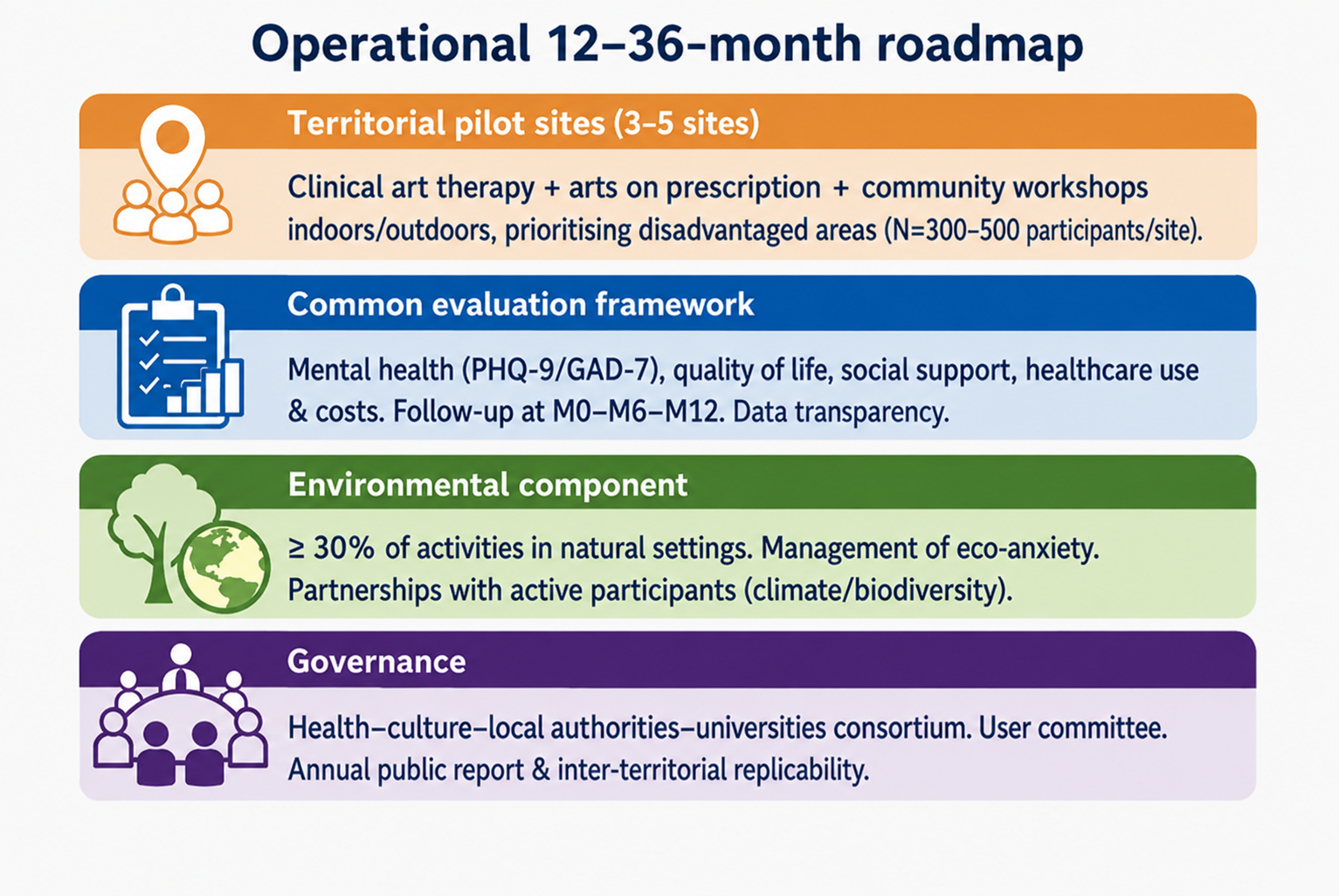
During the first twelve months, activities will focus on mapping existing initiatives, setting up pilot workshops in hospitals, schools and community centres, and providing joint training for healthcare professionals and artists. This initial phase will also enable the first assessments of the effects on well-being and social inclusion to be carried out.
By 24 months, the scheme could be extended to the regional level, with the gradual integration of art therapy into primary care and social prescription schemes. Long-term partnerships between the cultural, health and environmental sectors could be consolidated, while evaluations could be broadened to measure patient-reported outcomes (PROs), social benefits and environmental co-benefits.
By 36 months, the aim would be to ensure the programme’s long-term sustainability through sustainable funding models and its integration into public policy. This final stage would also involve the development of methodological guidelines, best-practice frameworks and university-level training initiatives. Ultimately, it could contribute to international initiatives, such as international programmes and policy frameworks: WHO, IPBES (the Intergovernmental Science-Policy Platform on Biodiversity and Ecosystem Services) and UNESCO.
Notes & references
Thumbnail. Part from Figure 1. Proposed 12–36-month roadmap inspired by WHO guidelines [Source © Isabelle Wachsmuth]
[1] Role of the arts and culture in addressing the health impacts of climate change: Behavioural and Cultural Insights policy brief series, WHO Reference Number: WHO/EURO:2026-13261-53035-82772; https://www.who.int/europe/publications/i/item/WHO-EURO-2026-13261-53035-82772?utm_source=chatgpt.com