


What is biodiversity?
PDF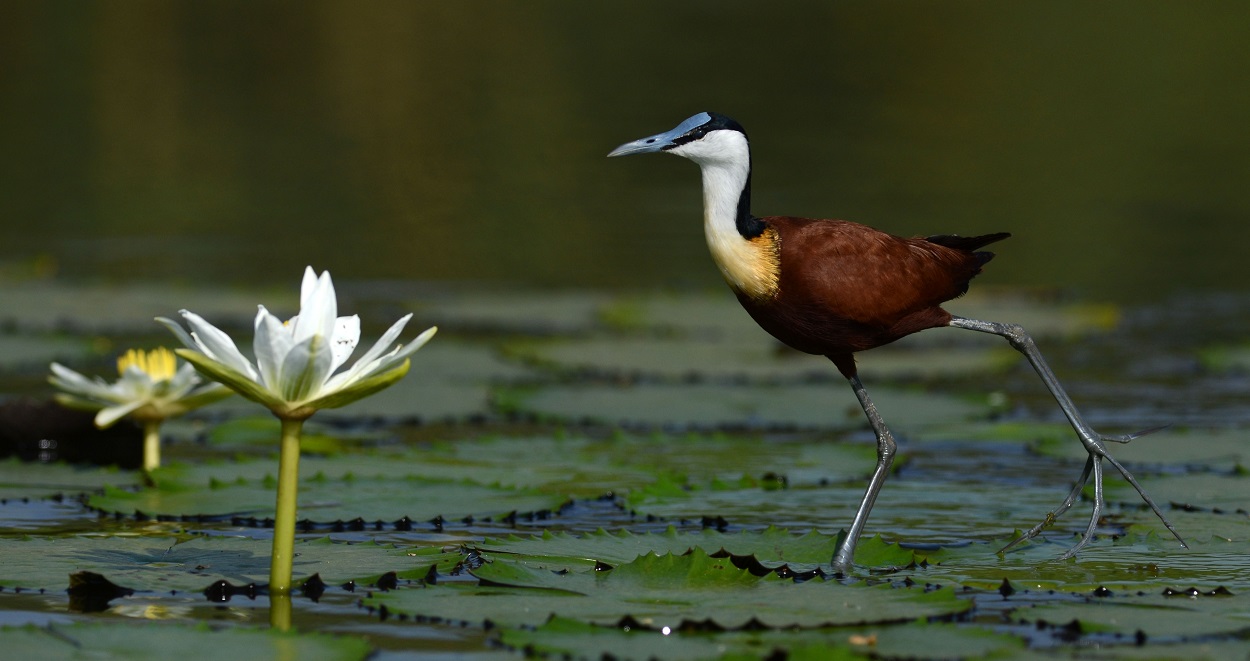
Biodiversity is the ‘living fabric of the planet’: the diversity of organisms, but also of their evolutionary histories, their functions, and the relationships linking them to one another and to their environment. Shaped by several billion years of evolution, it is expressed at every level, from genetic differences between individuals and populations to the variety of species and ecosystems. Yet it is neither fixed nor uniformly distributed: it varies across space and over time as a result of evolution, environmental change, natural disturbances and, increasingly, human activity. Studying biodiversity therefore involves more than simply cataloguing species; it also requires consideration of their abundance, genetic diversity, relationships, functions and the ecological networks that underpin the functioning of ecosystems.
‘What is essential is invisible to the eye,’ repeated the Little Prince, ‘so that we may remember.’
The Little Prince, Antoine de Saint-Exupéry
1. What is biodiversity?
The term ‘biodiversity’, a contraction of ‘biological diversity’, came into widespread use in the 1980s, particularly following the 1988 publication of the book *Biodiversity*, edited by Edward O. Wilson. It gained international significance with the Convention on Biological Diversity, adopted in Rio in 1992. The Convention defines biodiversity as the variability among living organisms from all sources and distinguishes three main levels: diversity within species, diversity between species and ecosystem diversity [1].
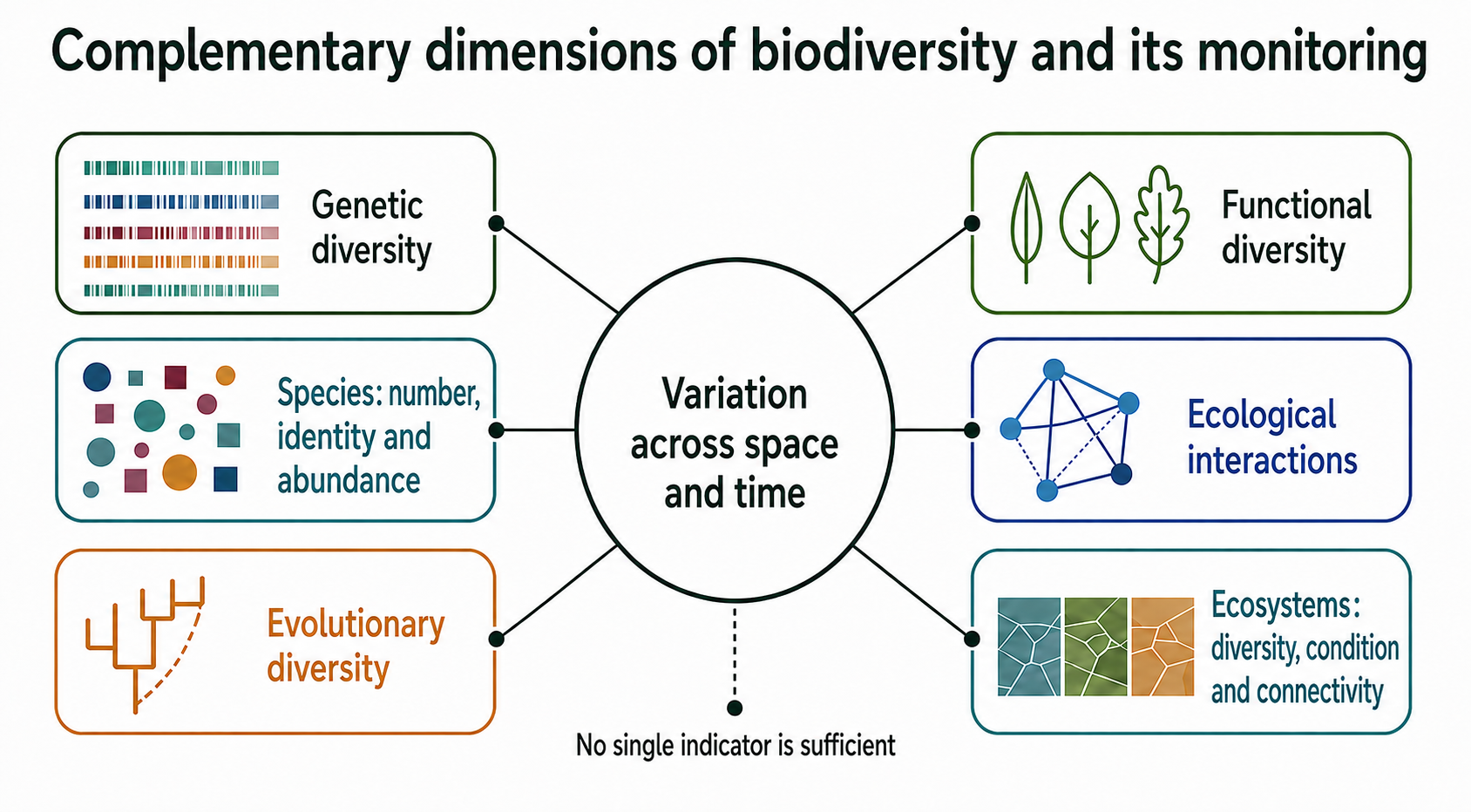
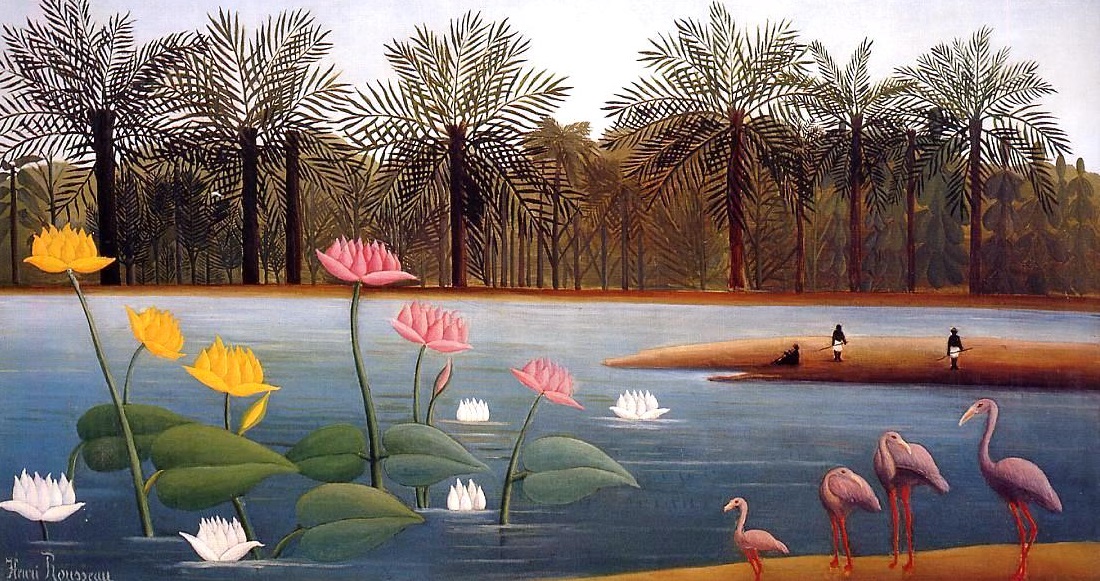
Biodiversity is thus not merely a catalogue of species. The ecologist Robert Barbault described it as the ‘living fabric of the planet’ or a ‘network of networks’. This image emphasises that diversity lies as much in the organisms themselves as in the relationships that bind them together. It is also the result of a long history: today’s life forms represent only a small fraction of the lineages that have emerged since the origins of life, more than 3.5 billion years ago.
Human societies are part of this history and shape biodiversity through their use of land, seas and organisms. They also depend on it for food, water, soil fertility, climate regulation and numerous cultural connections with nature. Biodiversity is therefore not only a subject of scientific study, but also a social, economic, political and ethical issue. (See Environmental Ethics and Biodiversity is not a luxury, but a necessity).
2. Species diversity
2.1 What is a species?
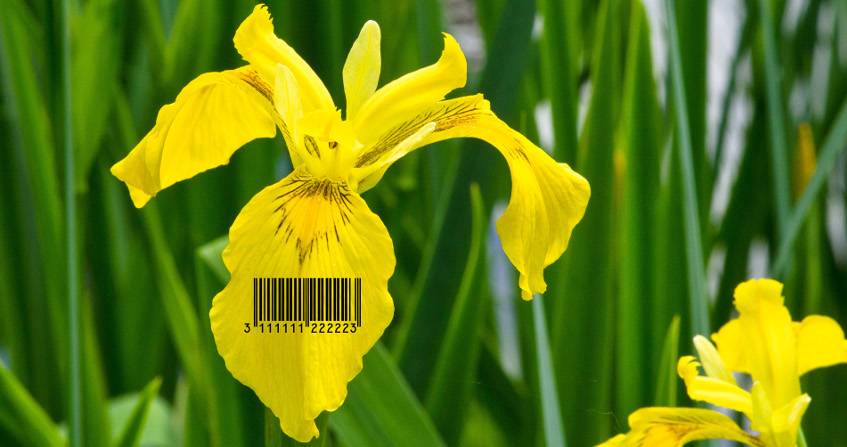
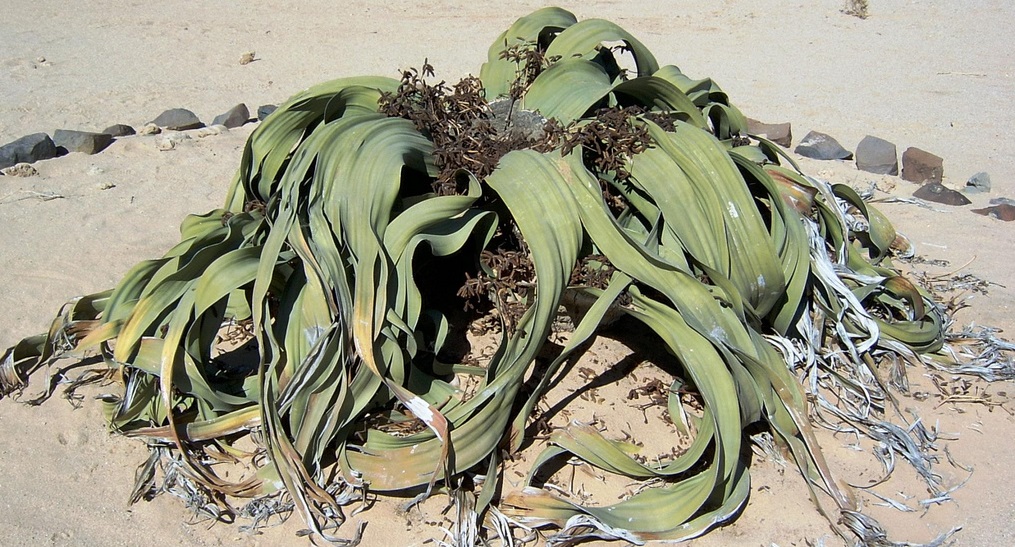
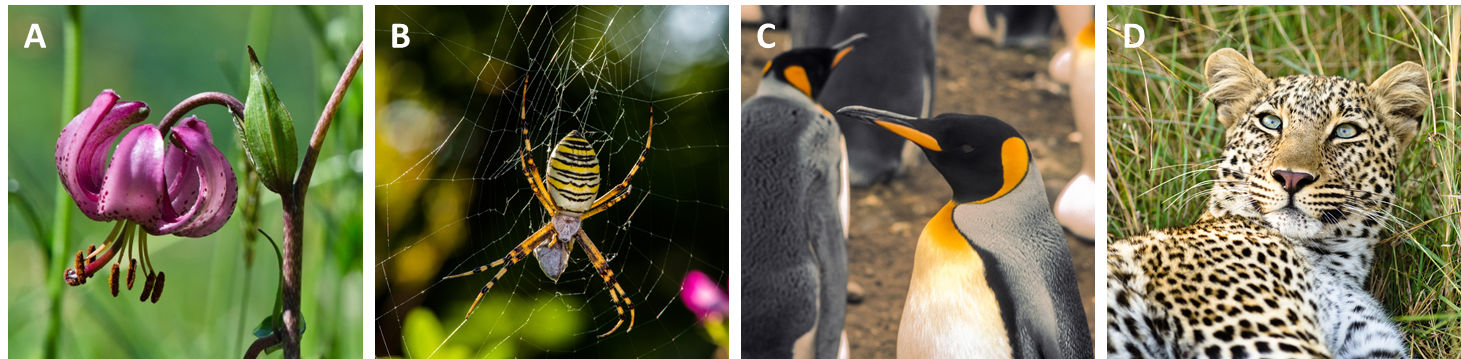
Species diversity is the most intuitive aspect of biodiversity. We can easily distinguish a lily, a spider, a penguin or a leopard (Figure 2). However, the scientific definition of a species is not straightforward. According to the zoologist and systematist Guillaume Lecointre: ‘In nature, there are no species. There are only reproductive barriers. It is we who create species based on a theoretical model.’ [2]
Biologists therefore use several complementary criteria: morphology, reproduction, ecology, phylogenetic relationships and genome comparison. A species may be regarded as an evolutionary lineage distinct from other lineages, even if its boundaries are sometimes difficult to establish. Species are thus biological and historical realities, but their delineation is based on hypotheses that may be revised as new data become available.
2.2 How many species live on Earth?
We are still a long way from knowing all the species. The Catalogue of Life [3] provides two complementary datasets. Its annual reference version, which is more rigorously vetted but still incomplete, listed around 2.2 million species in 2025. Its expanded version, which draws on a wider range of sources and is updated frequently, lists around 2.5 million species in 2026 [3]. These figures change as new discoveries are made and taxonomic revisions are carried out (Table 1).
Table 1. Number of species currently recorded and estimates of the actual diversity of the main groups. Main sources: Catalogue of Life 2025–2026 [3] ; Mora et al. (2011) [4] ; Niskanen et al. (2023) [5] for recent estimates for fungi; Borsch et al. [6] for known and unknown species of vascular plants and bryophytes. The estimates are based on different methods and dates and should not be added together.
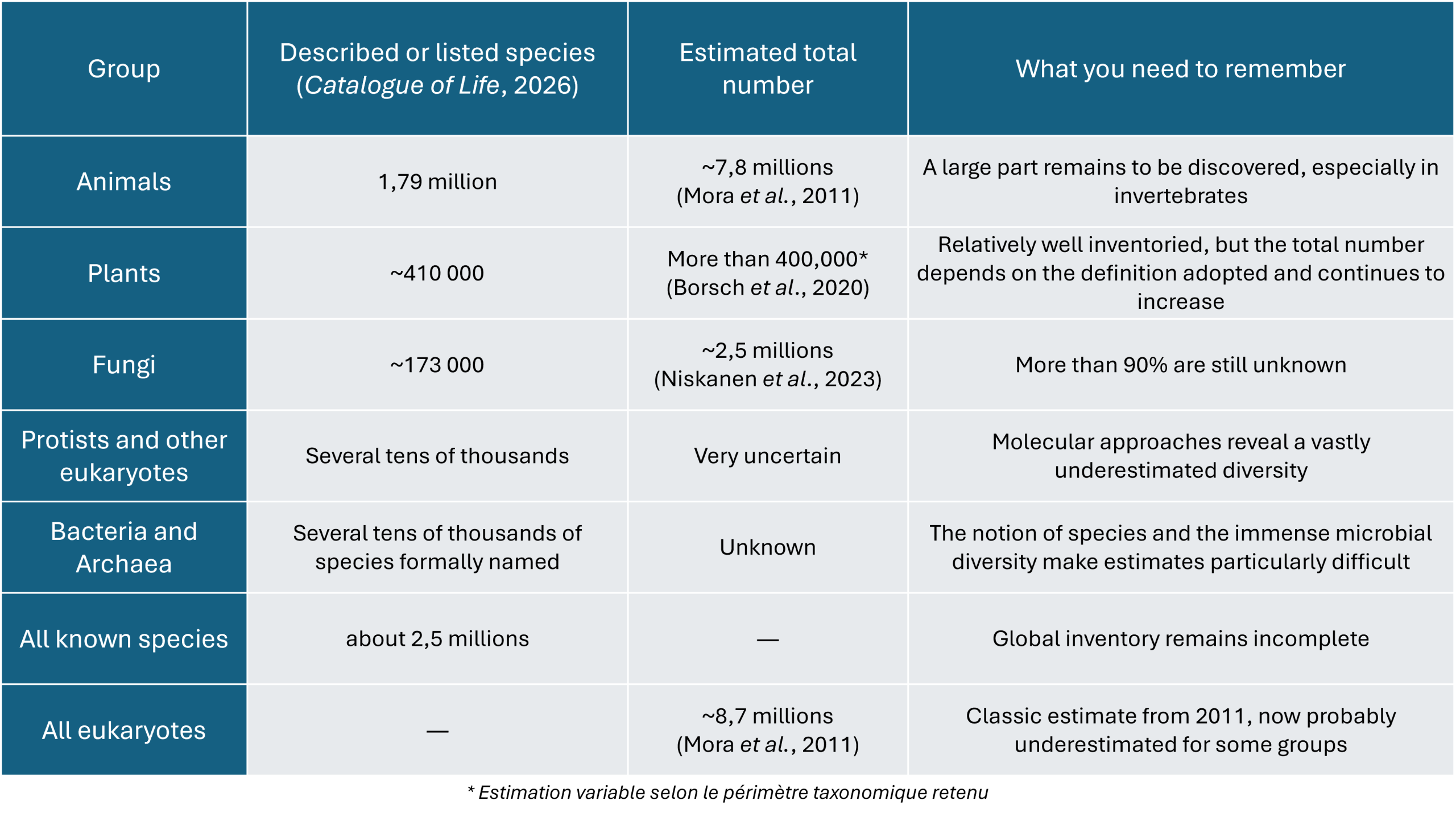
A frequently cited estimate puts the number of eukaryotic species at 8.7 ± 1.3 million, but the uncertainty varies greatly between groups [4]. More than 90 per cent of fungal species may still be unnamed. For bacteria and archaea, molecular methods reveal immense diversity, often known only through environmental DNA sequences; there is therefore no reliable total for all living organisms.
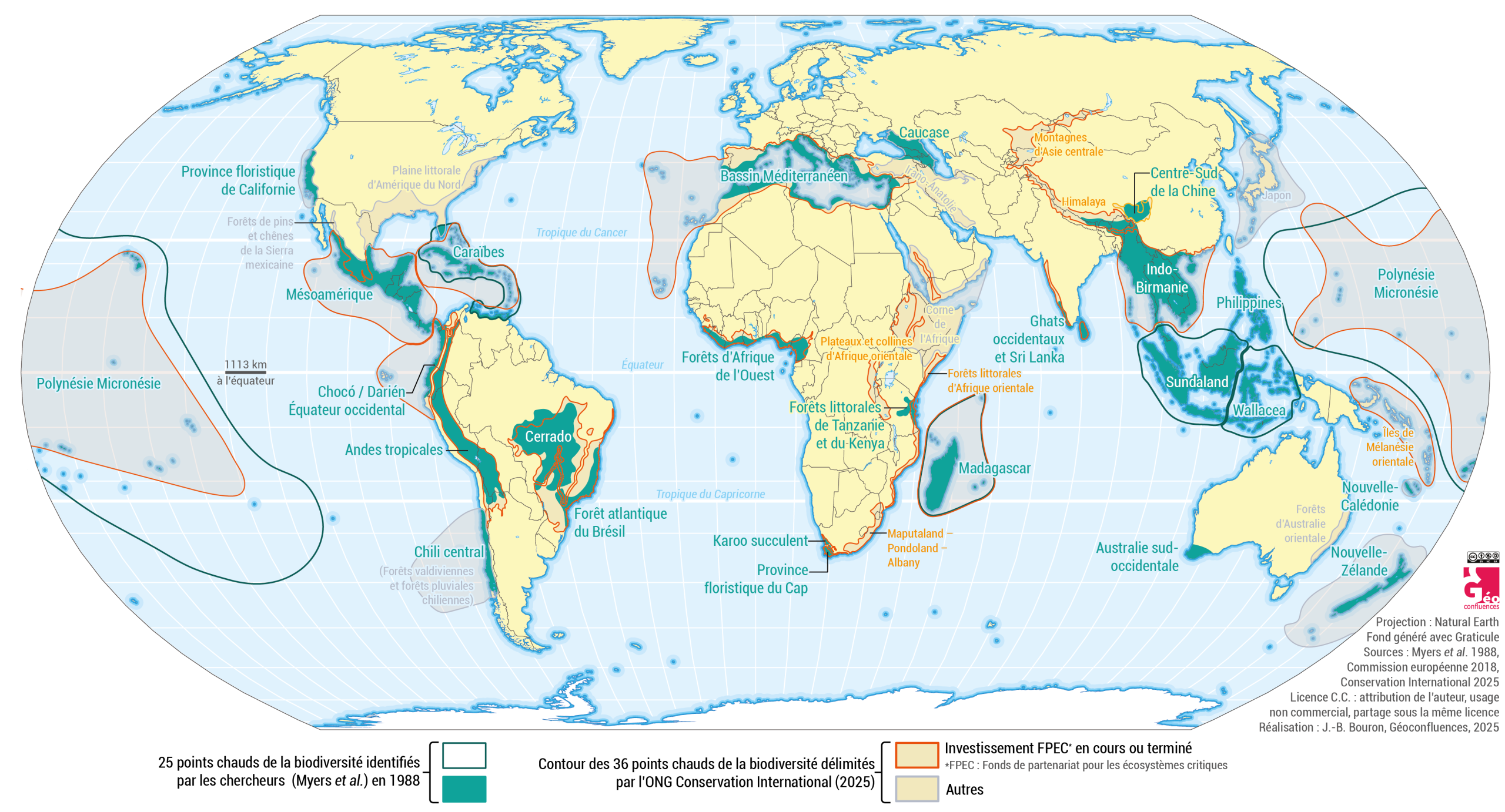
Species are not distributed evenly across the globe. Tropical regions, certain mountain ranges, islands and coral reefs are home to a high level of diversity and numerous endemic species, i.e. those found nowhere else.
The concept of a biodiversity ‘hotspot’ refers more specifically to a terrestrial region that is both irreplaceable and under severe threat. To be recognised as such, it must be home to at least 1,500 endemic vascular plant species and have lost at least 70 per cent of its original natural vegetation. The 36 currently recognised hotspots now cover only around 2.5 per cent of the world’s land area in their remaining natural habitats, yet they are home to more than half of all endemic plant species and nearly 43 per cent of endemic terrestrial vertebrate species.
This classification helps to identify areas where conservation actions can simultaneously protect numerous species with restricted ranges. However, it is neither an exhaustive map of global biodiversity nor a ranking of the value of all ecosystems: the polar regions, marine environments or certain areas that are less species-rich but essential for their ecological functioning may also constitute conservation priorities (Figure 3) [7].
2.3 Naming and classifying species
Describing and naming species is essential for cataloguing them and sharing knowledge. Since Linnaeus, each species has been given a scientific name comprising the genus and the specific epithet. Early classifications were based primarily on observable characteristics. Linnaeus, in particular, classified plants according to the structure of their reproductive organs: the stamens and pistils.
In the 19th century, the study of fossils and the recognition of extinctions – to which Georges Cuvier contributed significantly [8] – challenged the idea that species were fixed and eternal. The theory of evolution subsequently transformed classifications profoundly: today, they seek to represent kinship relationships and the history of lineages. Any unit recognised within a classification system — whether a species, genus, family or broader group — constitutes a taxon. The names, boundaries and position of taxa within the classification system may be revised as new morphological or molecular data become available (see The species for the palaeontologist).
3. Diversity within species
3.1 Individual variation and phenotype
Individuals of the same species share many characteristics, but they are not identical. They differ in terms of their genetic makeup, age, sex, developmental history and the conditions to which they have been exposed. The sum of their observable characteristics constitutes their phenotype: morphology, anatomy, physiology or behaviour.
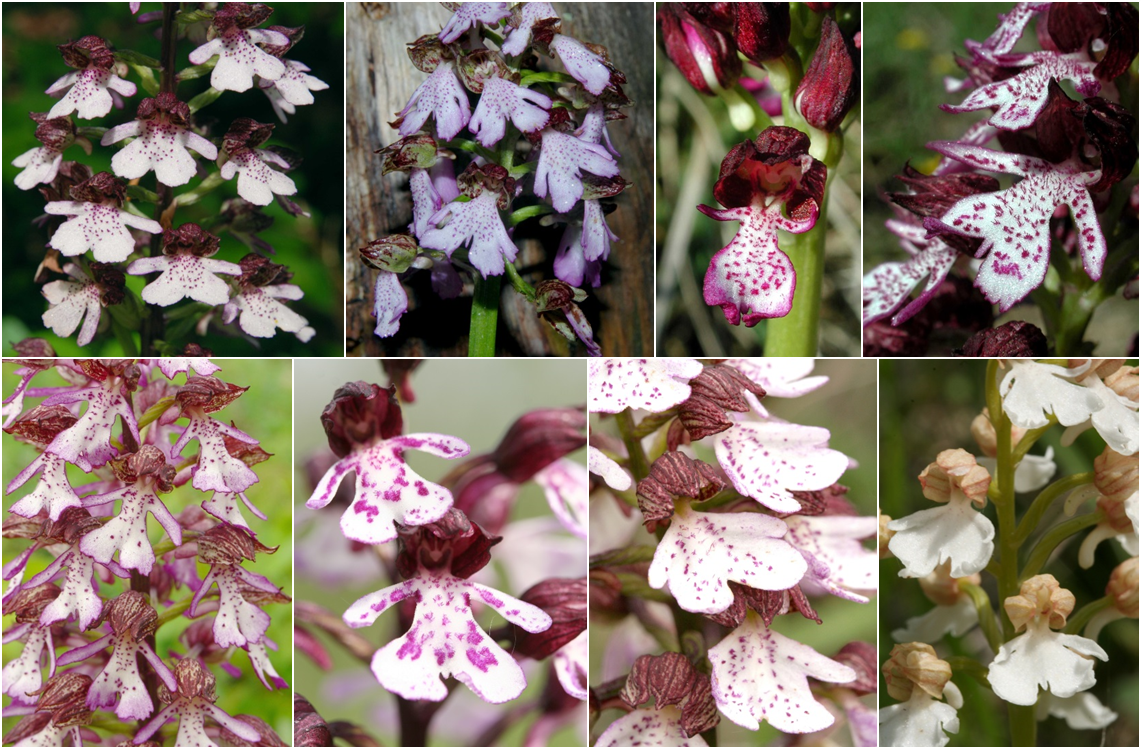
Figure 4 illustrates this variability among several purple orchids: the shape of the labellum and the distribution of the purple spots differ from one flower to another. Diversity within species is not limited to visible characteristics. It also encompasses numerous molecular, physiological and behavioural properties.
3.2 Genetic diversity and population evolution
Genetic diversity refers to differences in DNA sequence between individuals and populations. It is driven by mutations and, in sexually reproducing organisms, by recombination. The frequency of variants then changes as a result of natural selection, genetic drift — which is particularly significant in small populations — and gene flow between populations.
The different versions of the same gene are called alleles. When several alleles coexist within a population, this is referred to as genetic polymorphism. These variations may be neutral, disadvantageous or, under certain conditions, may favour survival and reproduction (see Genetic polymorphism and selection).
In a given environment, certain heritable traits may increase the chances of survival or reproduction. The associated variants then tend to become more common over successive generations. It is populations that evolve: individuals do not change simply because they need to adapt.
Genetic diversity can help a population respond to pathogens and environmental changes. However, it does not guarantee its adaptation: everything depends on the variants present, the traits involved, the size of the population and the rate of change. Biodiversity conservation must therefore take into account not only species, but also the abundance, distribution and diversity of their populations.
3.3 From population divergence to speciation
A population is a group of individuals of the same species living within a given area and capable of exchanging genes. Populations of the same species are not genetically identical: the frequency of their variants may differ depending on their history, population size and environmental conditions.
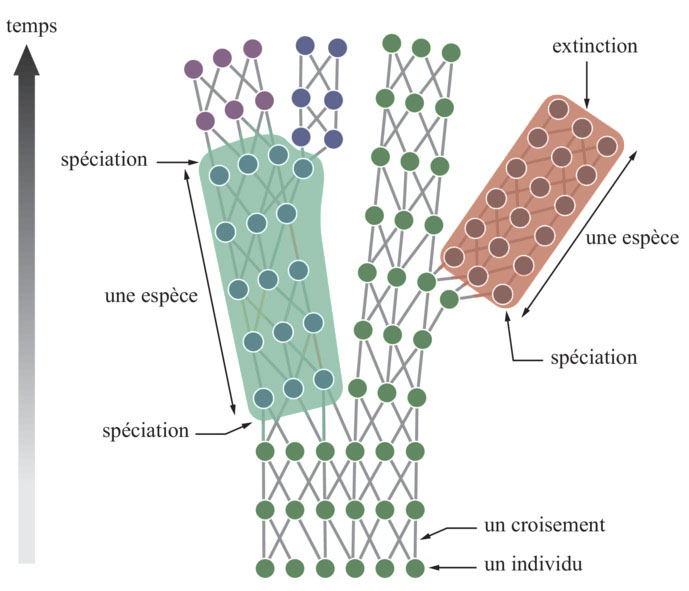
The phenotype also depends on epigenetic mechanisms that modify gene activity without altering their sequence. These play a major role in the development and plasticity of organisms. Some modifications may persist during cell division, sometimes into the next generation. Their evolutionary significance varies between organisms; they do not replace lasting genetic changes, but may contribute to certain responses to the environment.
4. Evolutionary diversity and the tree of life
Biodiversity tells a story. In a phylogenetic tree, each branch represents the divergence of lineages descended from a common ancestor. Present-day organisms are situated at the tips of the branches: none is the ancestor of another present-day organism, and all have followed their own evolutionary path. Many branches have died out: present-day species represent only a small fraction of the lineages that have appeared throughout the history of life. A clade comprises a common ancestor and all its descendants.
Trees are constructed by comparing morphological and anatomical characteristics and, increasingly, by analysing DNA, RNA and protein sequences. They constitute scientific hypotheses: the discovery of new organisms or the acquisition of more comprehensive genomic data may alter certain branches.
Video: A species apart: the leaf that hides the forest (ARTE) (in French)
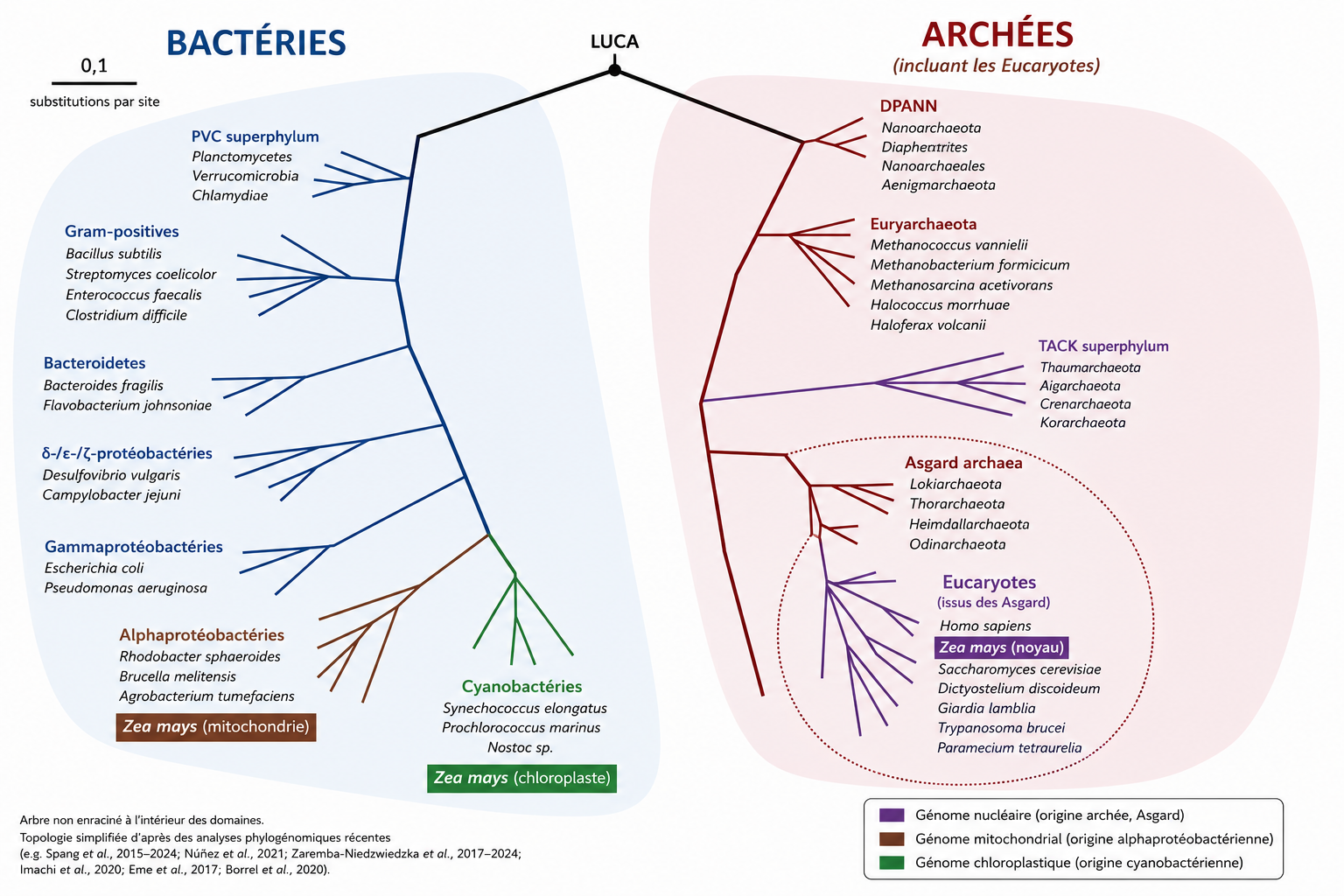
Two major endosymbioses have marked the evolutionary history of eukaryotes: mitochondria derive from an α-proteobacterium incorporated by an ancestor of the eukaryotes, whilst primary plastids derive from a cyanobacterium incorporated at a later stage by the ancestor of the Archaeplastida (Figure 6). The concept of the tree remains useful for representing the descent from ancestors, but horizontal gene transfer, hybridisation and endosymbiosis also create connections between lineages. The history of life therefore partly takes the form of a network (see Symbiosis and evolution: at the origin of the eukaryotic cell).
5. Ecosystem diversity
An ecosystem comprises a biotic component, consisting of the community of living organisms — or biocoenosis — and an abiotic component, corresponding to the biotope — the physical and chemical properties of the environment: light, temperature, water, air, soil and minerals. Its functioning depends on interactions between organisms, as well as between them and their environment. Its boundaries are not fixed: they depend on the issue being studied and the scale under consideration. A pond, a forest, a peat bog (see Peatlands and marshes, remarkable wetlands), a coral reef or a plot of farmland can thus be studied as ecosystems. On a smaller scale, the rumen of a ruminant, a piece of cheese or a decomposing organism also constitute systems in which organisms and their environment interact.
The diversity of ecosystems extends to terrestrial environments, inland waters and the oceans. Some are clearly visible; others remain largely unknown. Soils, for instance, harbour very rich communities of bacteria, archaea, fungi, protists and invertebrates (see Soil Biodiversity). The oceans, which cover more than 70 per cent of the Earth’s surface, are home to immense diversity, ranging from planktonic communities to organisms found in the deep sea and at hydrothermal vents (See When the Tara Oceans expedition explores plankton diversity and Black Smoker ecosystems). This microbial diversity, which remains largely unknown, nevertheless forms the functional basis of most ecosystems. Bacteria and archaea, through their extremely varied metabolism, carry out chemical transformations that are beyond the capabilities of multicellular organisms (atmospheric nitrogen fixation [see Plants that live on air], methane oxidation, sulphur oxidation and reduction, etc.). Without them, the major biogeochemical cycles would collapse.
5.1 Networks of ecological interactions
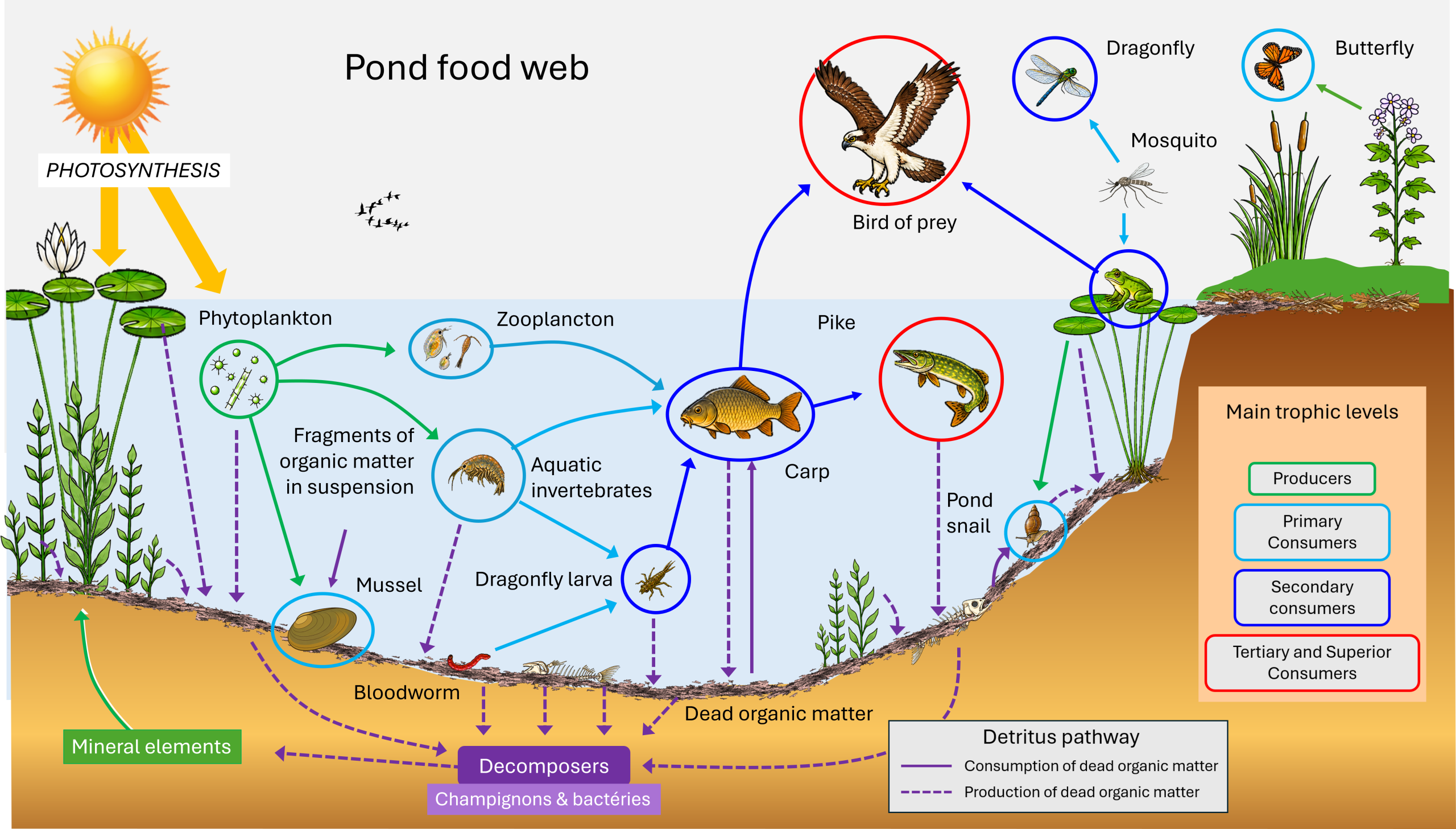
Organisms are linked through predation, herbivory, parasitism, competition, pollination, seed dispersal or symbiosis. A predator preys on several prey species; pollinators ensure the reproduction of plants; mycorrhizal fungi facilitate the uptake of water and mineral salts by plants. These interactions vary according to the environment and form complex networks (Figure 7).
5.2 Functional diversity
Not all species perform the same functions. Some produce organic matter; others consume or break it down. Some transport pollen or seeds; others physically alter their environment: beavers create wetlands, corals build reefs and earthworms aerate the soil. The complex networks formed by soil organisms contribute in particular to the decomposition of organic matter, the recycling of mineral elements, soil fertility and carbon storage (see Soil Biodiversity).
Functional diversity describes the variety of traits that determine how organisms use resources, respond to the environment and influence ecological processes. Several species may contribute to a similar function, which can cushion certain losses when they do not all respond in the same way to disturbances. However, they are not interchangeable: each possesses a unique combination of traits, a specific history and particular interactions. Numerous experiments show that high biodiversity often promotes productivity, complementarity in resource use and the maintenance of multiple functions, but the strength of these effects depends on the environment and the functions under consideration [11].
5.3 Matter is recycled, energy flows
At the base of most food webs are autotrophic organisms, capable of producing their own organic matter from carbon dioxide, water and mineral elements by using a source of energy. Plants, algae and certain bacteria thus constitute the primary producers. Animals, fungi and many microorganisms, on the other hand, are heterotrophs: they produce their organic matter from that of other organisms or from their remains. Herbivores that consume producers are called primary consumers; organisms that consume these herbivores are secondary consumers, which may in turn be eaten by tertiary consumers and other predators. This representation in terms of trophic levels is useful but simplified: many species are omnivorous or change their diet over the course of their lives, so that feeding relationships generally form networks rather than linear chains (Figure 8).
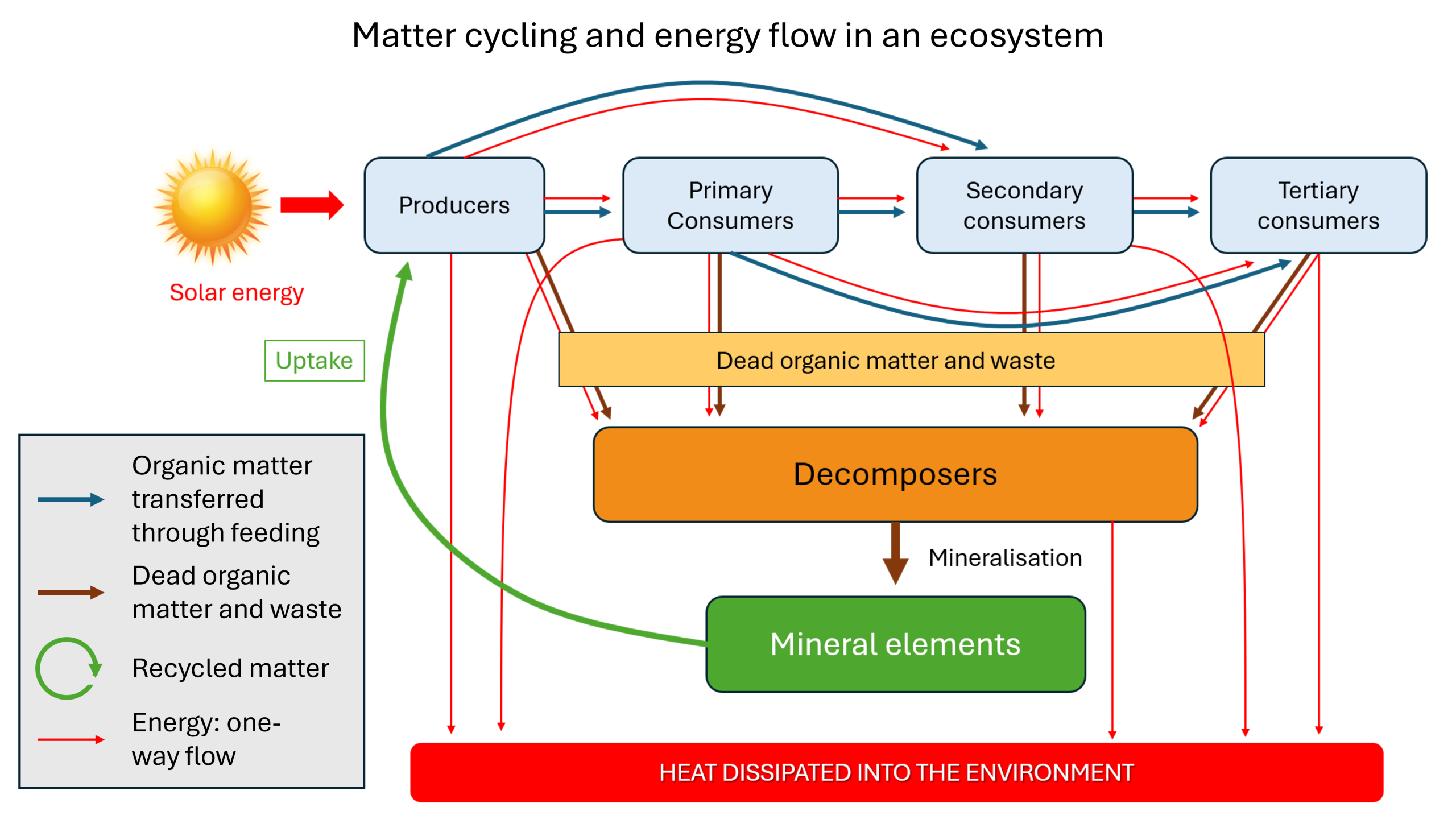
Energy, on the other hand, is not recycled. It most often enters ecosystems in the form of solar radiation captured by photosynthesis (see Shedding light on photosynthesis). It is transferred within food webs: part of it is used for metabolism, growth and reproduction, whilst another part is dissipated as heat. In deep-sea hydrothermal vents, primary production does not depend on light, but on the energy released by certain chemical reactions: this is chemosynthesis (see Microbes in extreme environments).
5.4 Ecosystem dynamics and resilience
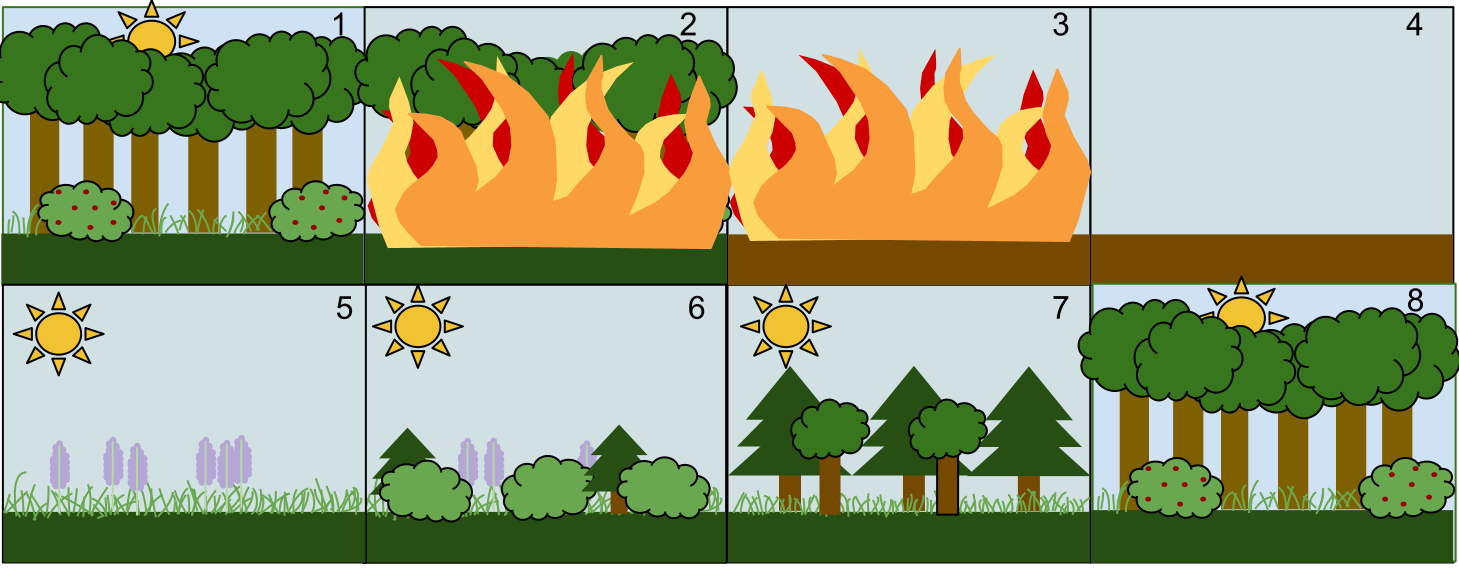
Organisms respond to their environment whilst transforming it. Plants alter light, humidity and soil; animals disperse nutrients and seeds; microorganisms control much of the decomposition process. A disturbance — such as a fire (Figure 9), storm, flood, drought, disease or pollution — alters the structure of the system, its resources or its environment. Its effects depend on its intensity, duration, frequency, extent and context.
Resistance refers to the capacity to undergo little change. Resilience denotes the capacity to recover or, in a broader sense, to absorb changes without shifting to a different operating regime. Following a disturbance, an ecosystem may therefore resist, recover partially or follow a new trajectory. It does not necessarily evolve towards a single final state.
6. Understanding and tracking biodiversity decline
Biodiversity is currently experiencing rapid declines, which are not limited to species extinction (see the focus article Assessing the scale of biodiversity collapse). These declines also affect population abundance, genetic diversity, range, ecological interactions and the state of habitats. Species may thus survive whilst becoming too rare to fully perform their functions within ecosystems.
Five major human-induced pressures are accelerating this decline and often interact with one another:
- Changes in land and marine use: conversion of tropical forests to soy or oil-palm plantations, coastal development, and seabed dredging.
- Direct exploitation: overfishing (e.g. the collapse of certain North Atlantic cod stocks), hunting and poaching, and excessive logging.
- Climate change: ocean warming and acidification, leading to widespread coral bleaching; the shift in the ranges of many species towards the poles or to higher altitudes.
- Pollution: agricultural fertilisers and pesticides, plastics, heavy metals, emerging contaminants (pharmaceuticals and PFAS).
- Invasive alien species: the deliberate or accidental introduction of species that can displace native species (e.g. the Louisiana crayfish in Europe, the tiger mosquito, which acts as a vector for pathogens).
These pressures do not simply add up: they reinforce one another. An already fragmented habitat thus becomes more vulnerable to climate change and biological invasions.
The number of species present in a habitat may even remain stable whilst its biodiversity declines. Specialised species disappear, replaced by generalist species, often identical from one area to another: this is known as biotic homogenisation. As a result, local species richness varies little, but the biological uniqueness of habitats diminishes.
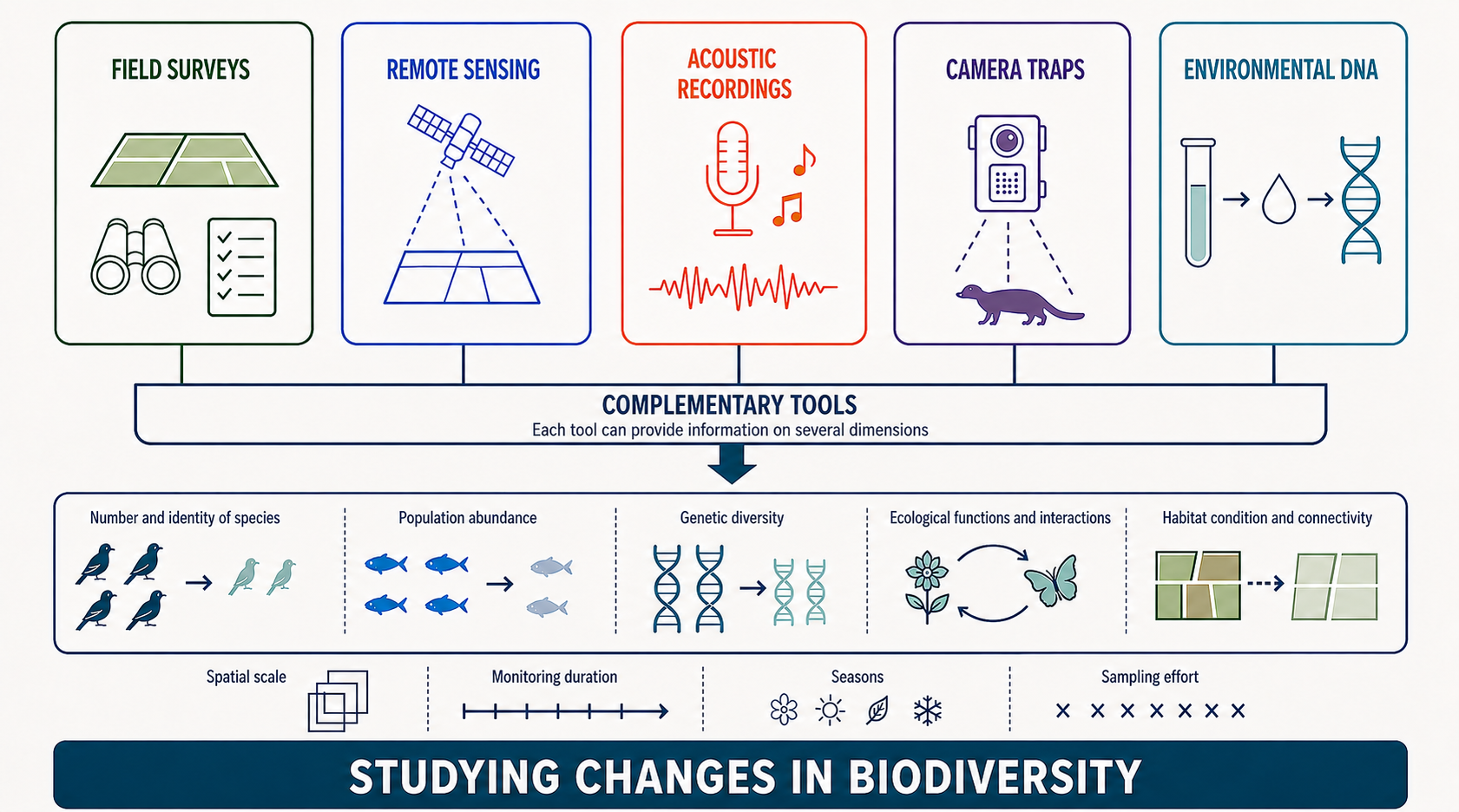
Measuring these changes therefore requires several complementary indicators: the number and identity of species, population abundance, genetic diversity, ecological functions and interactions, and the condition and connectivity of habitats. Field surveys are now supplemented by remote sensing, acoustic recordings, camera traps and environmental DNA analysis (see DNA barcodes to characterise biodiversity). Results must always be interpreted in the context of the scale of the study, the duration of monitoring, the seasons and the sampling effort (Figure 10).
7. Messages to remember
- Biodiversity is not limited to the number of species: it also encompasses their abundance, genetic diversity, evolutionary history, functions, interactions and the diversity of ecosystems.
- Around 2.5 million species are currently recorded, but a large proportion of life remains unknown, particularly amongst microorganisms and fungi.
- Biodiversity is distributed very unevenly across the planet; however, species-rich regions are not the only ones of great ecological importance.
- Genetic diversity contributes to populations’ capacity to evolve, though it does not, on its own, guarantee their adaptation to rapid changes.
- Species form networks of interactions on which the functioning, dynamics and certain resilience or recovery capacities of ecosystems depend.
- Changes in land and marine use, the direct exploitation of organisms, climate change, pollution and invasive alien species are accelerating the decline in biodiversity. These pressures often interact and reinforce one another’s effects.
References and notes
Cover image. Golden-breasted jacana walking on water lily leaves, Lake Baringo, Kenya [photo © Jacques Joyard]
[1] Convention on Biological Diversity (1992). Article 2: Use of terms. Source
[2] Lecointre G (2011) Les espèces, c’est nous qui les faisons ! Espèces 1, 68-72 (in french)
[3] Catalogue of Life (2025–2026). Annual and expanded versions of the global species catalogue. Source
[4] Mora C. et al. (2011). How Many Species Are There on Earth and in the Ocean? PLoS Biology 9, e1001127. Source
[5] Niskanen T. et al. (2023). Pushing the Frontiers of Biodiversity Research: Unveiling the Global Diversity, Distribution, and Conservation of Fungi. Annual Review of Environment and Resources, 48, 149–176. Source
[6] Borsch, T. et al. (2020), World Flora Online: Placing taxonomists at the heart of a definitive and comprehensive global resource on the world’s plants. TAXON, 69: 1311-1341. https://doi.org/10.1002/tax.12373. Source
[7] Géoconfluences, d’après Myers N., Mittermeier R.A., Mittermeier C.G., da Fonseca G.A.B. & Kent J. (2000). Biodiversity hotspots for conservation priorities. Nature, 403, 853-858. DOI, Commission européenne et Conservation International, 2025.
[8] Lewis and Clark Trail Alliance. (2021, May 8). Georges Cuvier. Discover Lewis & Clark. Source
[9] Lecointre G. (2009). Comprendre et enseigner la classification du vivant. Belin. Source (In french)
[10] Spang A. et al. (2015). Complex archaea that bridge the gap between prokaryotes and eukaryotes. Nature, 521, 173-179 – Zaremba-Niedzwiedzka K. et al. (2017). Asgard archaea illuminate the origin of eukaryotic cellular complexity. Nature 541, 353-358 – Imachi H. et al. (2020). Isolation of an archaeon at the prokaryote-eukaryote interface. Nature, 577, 519-525.
[11] Tilman D., Isbell F. & Cowles J.M. (2014). Biodiversity and Ecosystem Functioning. Annual Review of Ecology, Evolution, and Systematics 45, 471-493. Source – Cardinale B.J. et al. (2012). Biodiversity loss and its impact on humanity. Nature, 486, 59-67. Notice PubMed
The Encyclopedia of the Environment by the Association des Encyclopédies de l'Environnement et de l'Énergie (www.a3e.fr), contractually linked to the University of Grenoble Alpes and Grenoble INP, and sponsored by the French Academy of Sciences.
To cite this article: JOYARD Jacques (September 1, 2026), What is biodiversity?, Encyclopedia of the Environment, Accessed September 7, 2026 [online ISSN 2555-0950] url : https://www.encyclopedie-environnement.org/en/life/what-is-biodiversity-2/.
The articles in the Encyclopedia of the Environment are made available under the terms of the Creative Commons BY-NC-SA license, which authorizes reproduction subject to: citing the source, not making commercial use of them, sharing identical initial conditions, reproducing at each reuse or distribution the mention of this Creative Commons BY-NC-SA license.