



The Asgard Archaea Revolution
PDF1. Prokaryotes distinct from bacteria
Until the 1970s, biologists believed that all microorganisms lacking a nucleus belonged to a single large group: bacteria. This view was overturned by discoveries that reshaped our understanding of the tree of life and, several decades later, shed light on the origin of eukaryotic cells.
In 1977, the microbiologist Carl Woese and his colleague George Fox made a major discovery. By analysing 16S ribosomal RNA, a molecule found in all living things, they demonstrated that certain microorganisms, previously classified as bacteria, actually formed a completely different group: the archaea [1].
This discovery revolutionised biology for three key reasons.
Firstly, it led to a complete revision of the tree of life: before Woese, all prokaryotes (organisms without a nucleus) were grouped under the term ‘bacteria’. We now know that bacteria and archaea constitute two lineages as distantly related to one another as bacteria are from eukaryotes. Secondly, it has profoundly altered our understanding of evolution: the diversity of life is older and more extensive than previously thought. Archaea are not simply a special type of bacterium: they constitute a lineage as distinct from bacteria as eukaryotes are from them. Finally, it has opened up a new field in microbial ecology. Archaea inhabit virtually all environments:
- in extreme environments (scorching hydrothermal vents, hypersaline lakes, highly acidic environments);
- but also in the oceans, soils and sediments;
- and even in anaerobic (oxygen-free) environments rich in organic matter, particularly in the digestive tracts of many animals.
What exactly distinguishes them from bacteria?
Archaea do not have peptidoglycan in their cell walls. Their membrane lipids are linked to glycerol via ether bonds, unlike the lipids of bacteria and eukaryotes, which use ester bonds. Above all, their molecular machinery — RNA polymerase, the protein translation mechanism and histone-like proteins — is much closer to that of eukaryotes (cells with a nucleus, such as our own) than to that of bacteria.
Table 1. Comparison of eukaryotic and prokaryotic cells (see ‘Symbiosis and evolution: at the origin of the eukaryotic cell’).

For nearly forty years, archaea were essentially regarded as the third domain of life. The discovery of the Asgard archaea was to profoundly alter this view.
2. ‘Eukaryotic’ genes in prokaryotic microbes
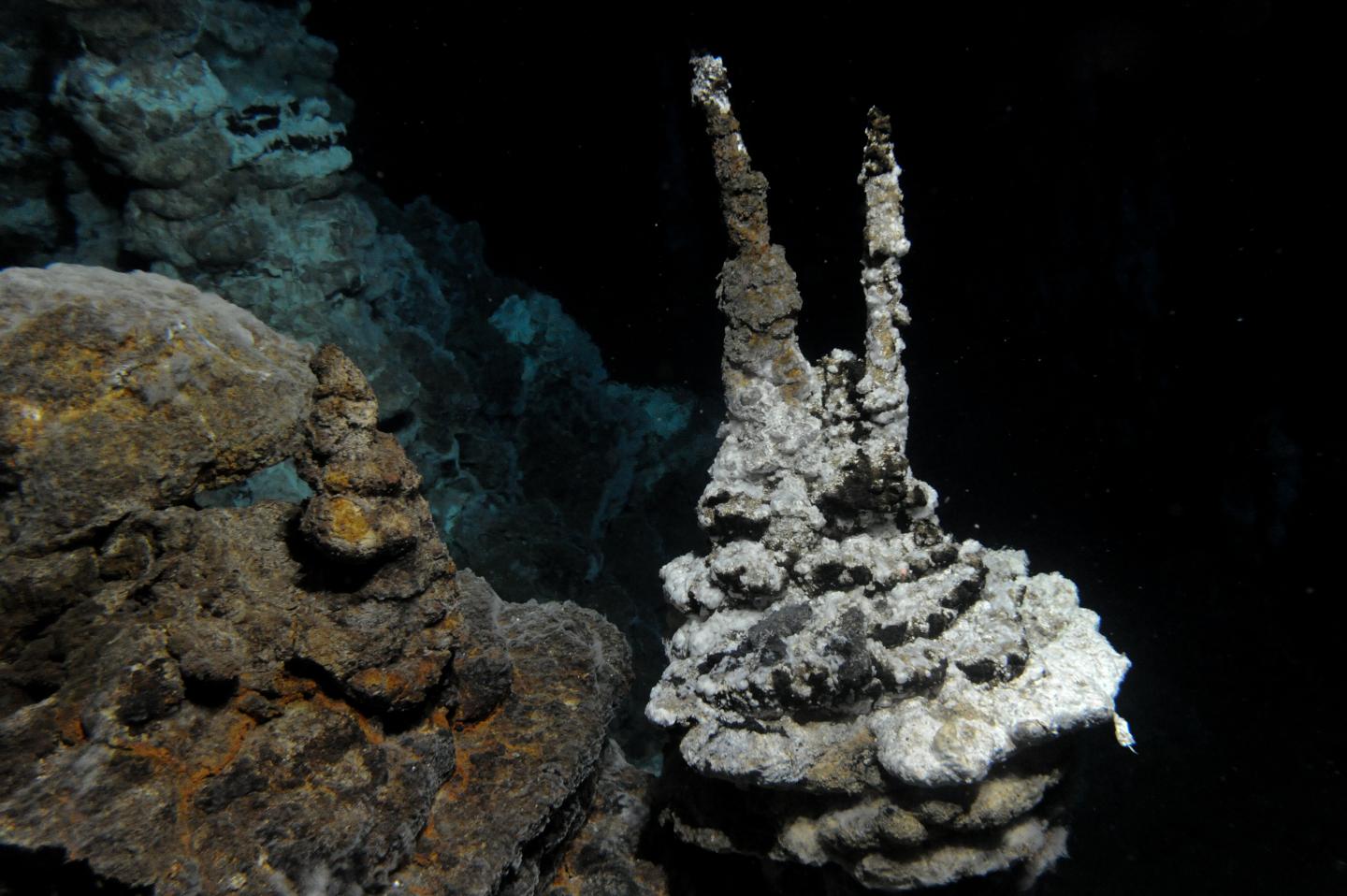
This genome contained numerous genes previously considered to be specific to eukaryotes: for example, proteins involved in the cytoskeleton, membrane remodelling and the regulation of numerous cellular processes. These eukaryotic signature proteins (ESPs) suggest a close link between these archaea and the origin of complex cells. The presence of these proteins does not mean that Asgard archaea possess a cellular organisation comparable to that of eukaryotes. Rather, it indicates that certain molecular elements, which would later be incorporated into the eukaryotic cell, already existed prior to eukaryogenesis. The currently known Asgard archaea constitute the group most closely related to the archaeal lineage from which eukaryotes originated. The vast majority of phylogenomic analyses indicate that eukaryotes emerged within the Archaea, from a branch related to the Asgard.
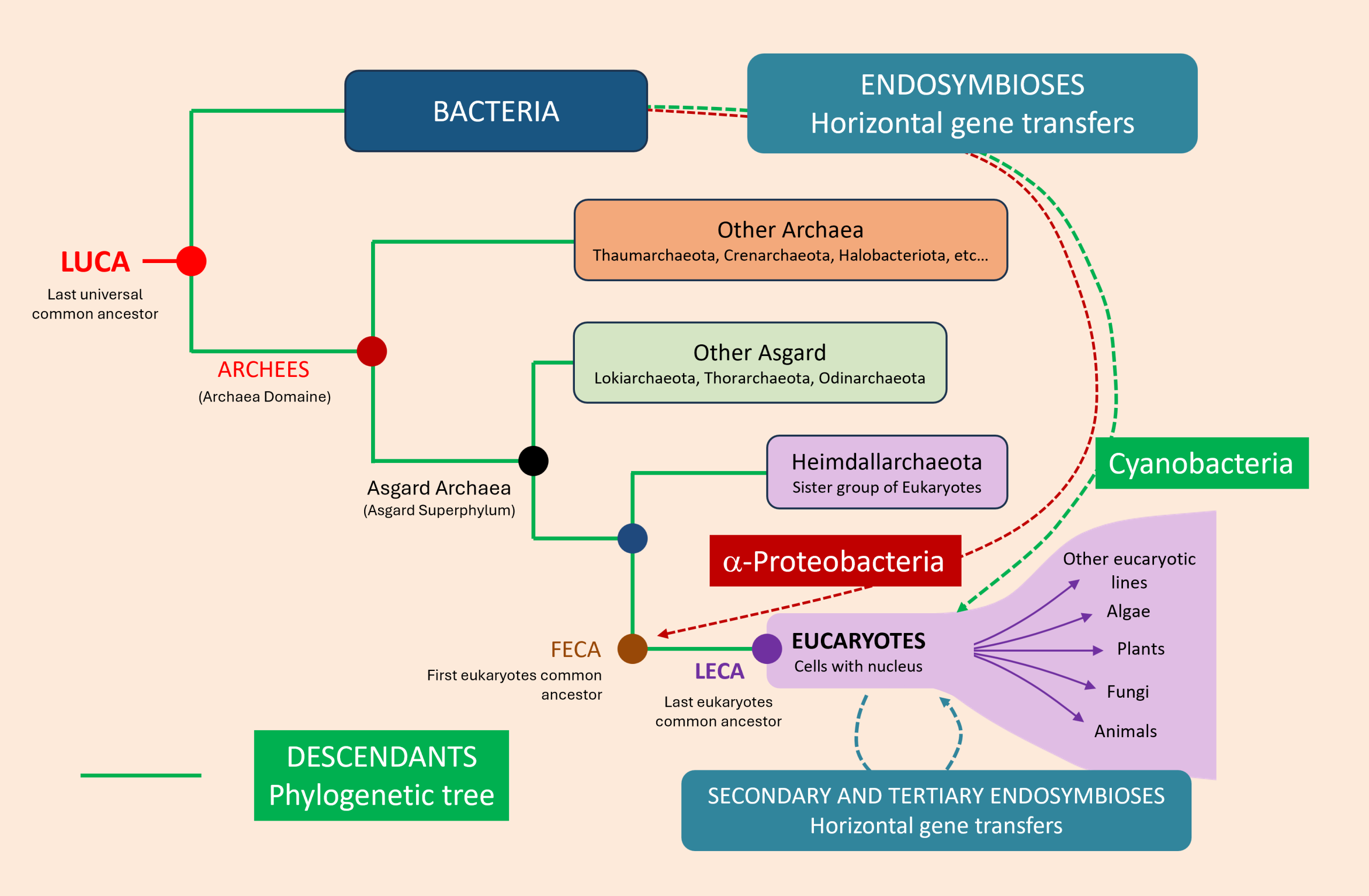
Other related lineages were quickly identified (Heimdallarchaeota, Thorarchaeota, Odinarchaeota, etc.). Together, they form the Asgard archaeal supergroup. Thanks to metagenomics (direct sequencing of environmental DNA without culture), scientists have been able to study these organisms, which for a long time could not be cultured in the laboratory.
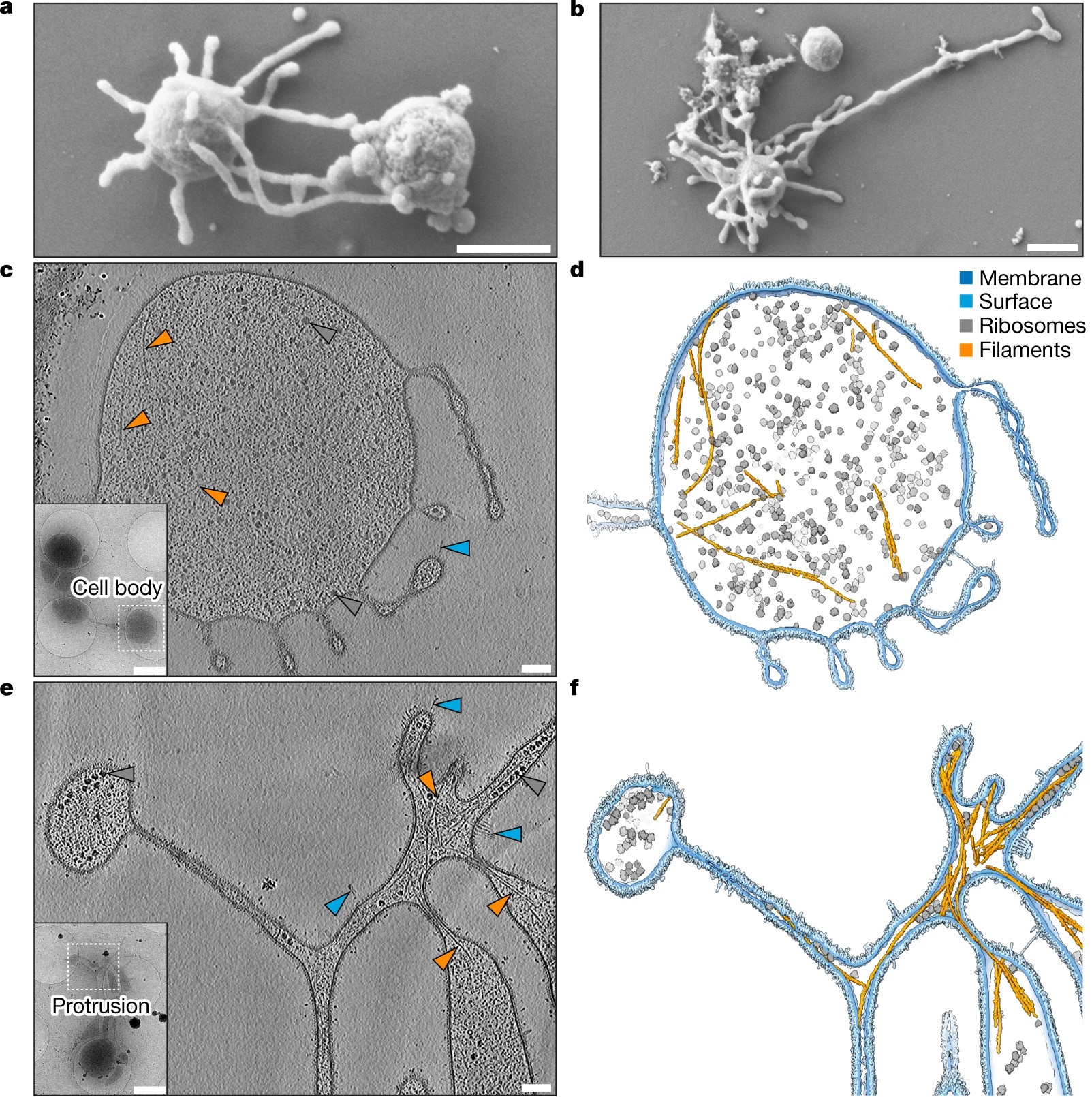
Analyses of hundreds of Asgard genomes have identified more than 500 families of proteins homologous to characteristic eukaryotic proteins involved, in particular, in vesicular trafficking, ubiquitin and the cytoskeleton, showing that several elements of eukaryotic complexity already existed in their archaeal ancestor.
3. A new model of the origin of eukaryotes

The data currently available point to the following scenario: an archaeon related to Asgard lived in close interaction with various bacteria. One of these, an oxygen-breathing α-proteobacterium, became a permanent symbiont before evolving into a mitochondrion. Massive gene transfers subsequently reshaped the host’s genome, whilst the nucleus and the endomembrane system gradually developed. Recent research (2026) shows that the Asgards provided the majority of the cellular genes conserved in the LECA, whilst the α-proteobacterial contribution mainly concerns energy-related functions [10]. Figure 4 schematically summarises the cellular characteristics of the LECA [8].
Why was this transition so exceptional?
The emergence of eukaryotes occurred only once in the history of life. The Asgard group shows that the host was not a simple, ‘passive’ cell, but one that was already pre-adapted, equipped with tools (cytoskeleton, ability to form vesicles) that enabled the mitochondrion to be integrated permanently. The increased energy supplied by mitochondria made it possible to sustain larger genomes, produce more proteins and support unprecedented cellular complexity.
Many questions remain unanswered: did the nucleus form to separate transcription from translation in response to the massive influx of bacterial genes? Did viruses play a role in gene transfer or the formation of the nucleus? The exact position of the eukaryotic root within the Asgard tree — close to the Heimdallarchaeota or an even closer group, the Wukongarchaeota — is itself the subject of active debate [11]. Future cultures of Asgard archaea and genomic analyses will continue to refine this scenario (see Symbiosis and evolution: at the origin of the eukaryotic cell).
Asgard archaea have profoundly transformed our understanding of the origin of eukaryotes. They show that the eukaryotic cell did not appear suddenly, but is the result of a long evolutionary history that began within an already remarkably complex lineage of archaea, and was subsequently transformed by the enduring integration of an α-proteobacterium that became a mitochondrion. Over the past decade or so, these microorganisms have become key witnesses to one of the greatest transitions in the history of life. Their discovery is a prime example of how metagenomics, phylogenomics and experimental microbiology continue to reshape our understanding of evolution.
Notes & references
Thumbnail. Promethearchaeum syntrophicum, also known as Lokiarchaeota sp. MK-D1. SEM images of MK-D1 cells producing long, branching membrane protrusions. Scale bars, 1 μm. [Source: Imachi, H., Nobu, M.K., Nakahara, N. et al. Isolation of an archaeon at the prokaryote–eukaryote interface. Nature 577, 519–525 (2020). https://doi.org/10.1038/s41586-019-1916-6, CC BY 4.0 licence via Wikimedia Commons]
[1] Woese, C. R., & Fox, G. E. (1977). Phylogenetic structure of the prokaryotic domain: The primary kingdoms. Proceedings of the National Academy of Sciences, 74(11), 5088–5090.
[2] Spang A, Saw JH, Jørgensen SL, Zaremba-Niedzwiedzka K, Martijn J, Lind AE, van Eijk R, Schleper C, Guy L, Ettema TJG. Complex archaea that bridge the gap between prokaryotes and eukaryotes. Nature. 14 May 2015;521(7551):173–179. doi: 10.1038/nature14447.
[3] Zaremba-Niedzwiedzka, K. et al. Asgard archaea shed light on the origin of eukaryotic cellular complexity. Nature 541, 353–358 (2017). https://doi.org/10.1038/nature21031
[4] Imachi, H., Nobu, M.K., Nakahara, N. et al. Isolation of an archaeon at the prokaryote–eukaryote interface. Nature 577, 519–525 (2020). https://doi.org/10.1038/s41586-019-1916-6
[5] Rodrigues-Oliveira, T., Wollweber, F., Ponce-Toledo, R.I. et al. Actin cytoskeleton and complex cell architecture in an Asgard archaeon. Nature 613, 332–339 (2023). https://doi.org/10.1038/s41586-022-05550-y
[6] Cox R, Papoulas O, Shril S … (2026) A protein interactome for the last eukaryotic common ancestor illuminates the biochemical basis of modern genetic diseases. Cell Genomics, 2026; 6
[7] Koumandou, V. L., Wickstead, B., Ginger, M. L., van der Giezen, M., Dacks, J. B., & Field, M. C. (2013). Molecular palaeontology and complexity in the last eukaryotic common ancestor. Critical Reviews in Biochemistry and Molecular Biology, 48(4), 373–396. https://doi.org/10.3109/10409238.2013.821444
[8] Richards TA, Eme L, Archibald JM, Leonard G, Coelho SM, de Mendoza A, Dessimoz C, Dolezal P, Fritz-Laylin LK, Gabaldón T, Hampl V, Kops GJPL, Leger MM, Lopez-Garcia P, McInerney JO, Moreira D, Muñoz-Gómez SA, Richter DJ, Ruiz-Trillo I, Santoro AE, Sebé-Pedrós A, Snel B, Stairs CW, Tromer EC, van Hooff JJE, Wickstead B, Williams TA, Roger AJ, Dacks JB, Wideman JG. Reconstructing the last common ancestor of all eukaryotes. PLoS Biol. 25 November 2024;22(11):e3002917. doi: 10.1371/journal.pbio.3002917. PMID: 39585925; PMCID: PMC11627563.
[9] Sagan, L. On the origin of mitosing cells. Journal of Theoretical Biology, 14(3), 225–274 (1967).
[10] Tobiasson, V., Luo, J., Wolf, Y.I. et al. Dominant contribution of Asgard archaea to eukaryogenesis. Nature 650, 141–149 (2026). https://doi.org/10.1038/s41586-025-09960-6
[11] Eme, L. et al. Inference and reconstruction of the Heimdallarchaeal ancestry of eukaryotes. Nature 618, 992–999 (2023). https://doi.org/10.1038/s41586-023-06186-2