




Biotic pests and forest decline
PDFForest decline reflects the growing vulnerability of forests to global change (See Forests facing global environmental change). Whilst abiotic stresses (drought, heatwaves, frost) often act as triggers, it is mainly biotic pests that cause mass mortality: bark beetles, defoliating caterpillars, fungi, nematodes or bacteria.
1. Wood-boring and defoliating insects
- Bark beetles (Figure 1)
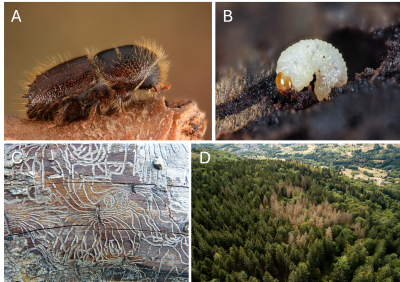
Figure 1. The spruce bark beetle (Ips typographus, Linnaeus, 1758) is an insect of the order Coleoptera. Larval galleries leave clearly recognisable traces beneath the bark. A. Female spruce bark beetle [Source © Gilles San Martin, CC BY-SA 2.0 licence, via Wikimedia Commons]; B. Bark beetle larva [Source © Gilles San Martin, CC BY-SA 2.0 licence, via Wikimedia Commons]; C. Galleries left by bark beetle larvae [Source © Andrea Bonifazi, CC BY-SA 4.0 licence via Wikimedia Commons]; D. Forest of bark beetle-infested spruce trees (centre) in the Vosges. [Source © Michel L. Vosges, CC0 licence, via Wikimedia Commons]
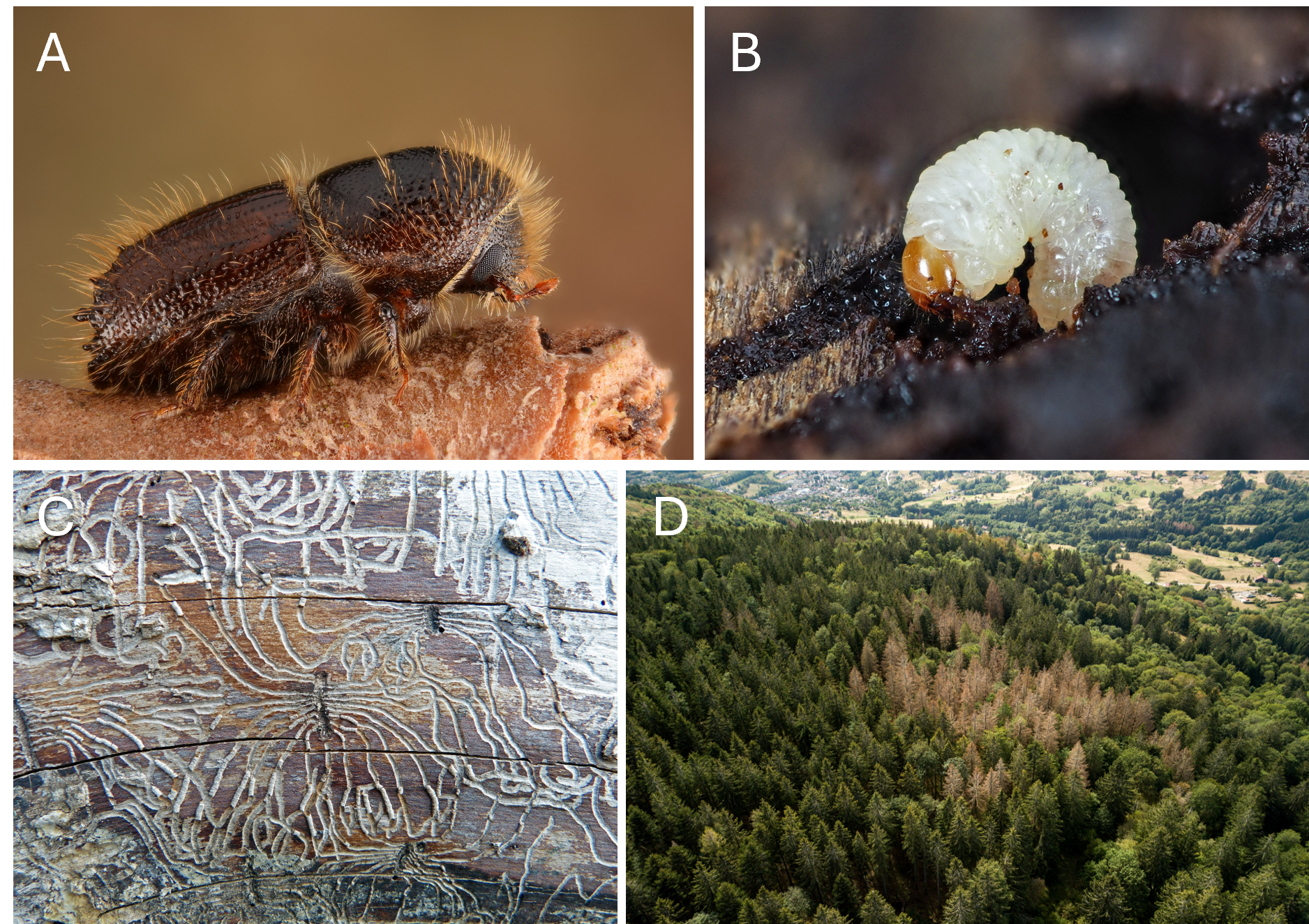
Bark beetles (such as the spruce bark beetle, Ips typographus) are small wood-boring beetles that burrow tunnels beneath the bark of trees, restricting or halting sap flow. In addition to direct damage, some carry fungi that also contribute to blocking the vascular tissue, rapidly causing the tree’s death.
Global warming allows bark beetles to complete up to two additional reproductive cycles per year, exponentially increasing their population [1] and extending attacks over several months. The resulting tree mortality provides further opportunities for these insects to proliferate, creating a vicious cycle.
In Canada, in the 2000s, bark beetles caused the death of nearly 15 million hectares of conifers in a single area. No longer regulated by the cold of winter, their population increased a hundredfold in just a few years, overwhelming the defences of even healthy trees.
- Processionary caterpillars (Figure 2)
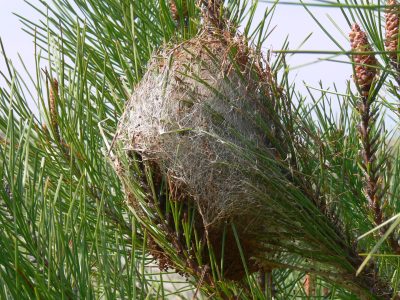
Figure 2. Nest of processionary caterpillars. [Source © Eiffel at French Wikipedia, CC BY-SA 1.0, via Wikimedia Commons].
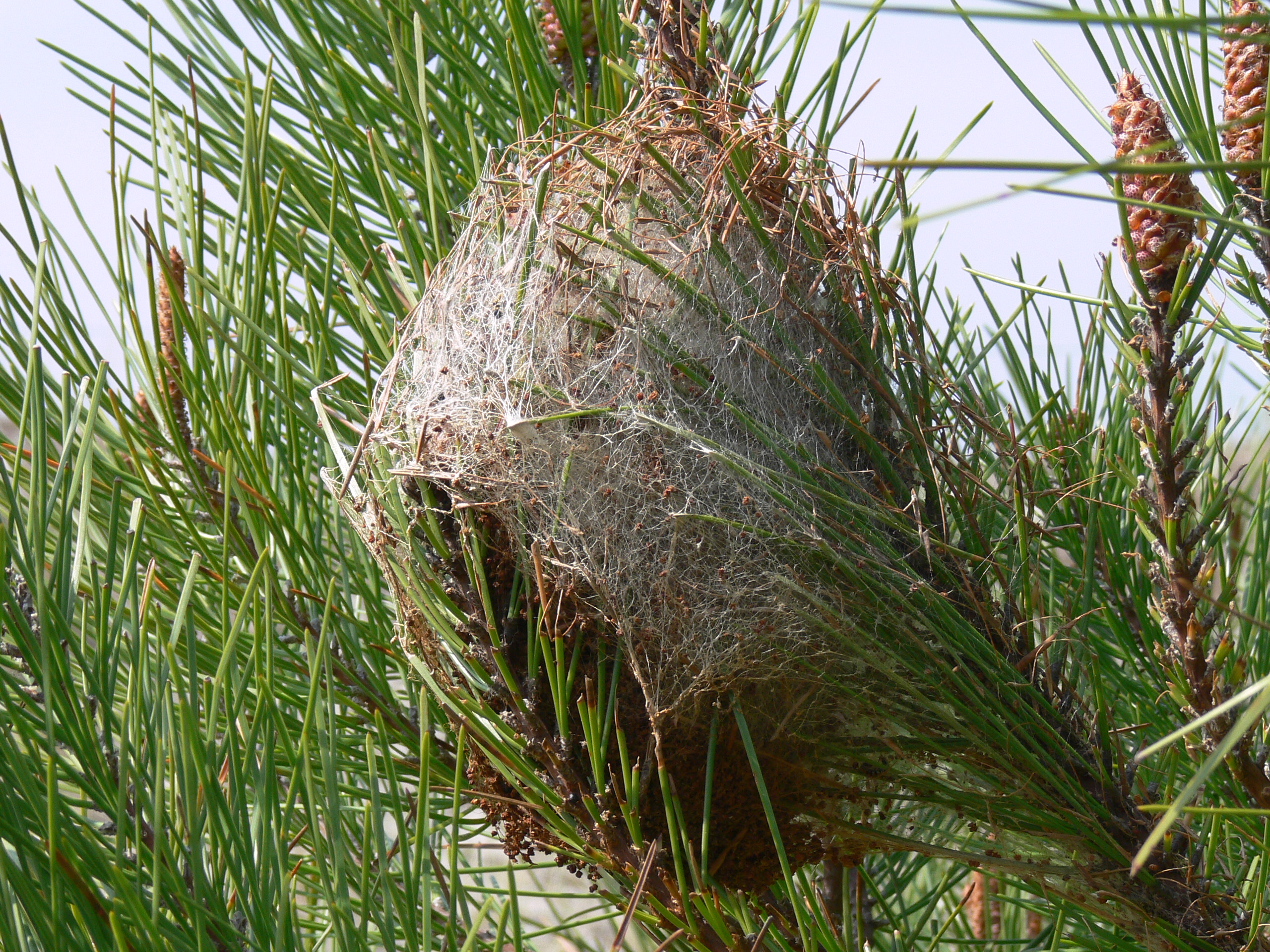
The significant decline in winter cold provides the processionary caterpillar with both a high survival rate and an extended period of activity. Over 50 years, its population density has increased, and it has spread 300 km in latitude and 300 metres in altitude.
Thus, the decline of the Scots pine in south-eastern France is largely determined by the dominant effects of two major pests: mistletoe, which is also favoured by the warmth, and the processionary caterpillar [2] .
2. Invasive pathogens and parasites (globalisation)
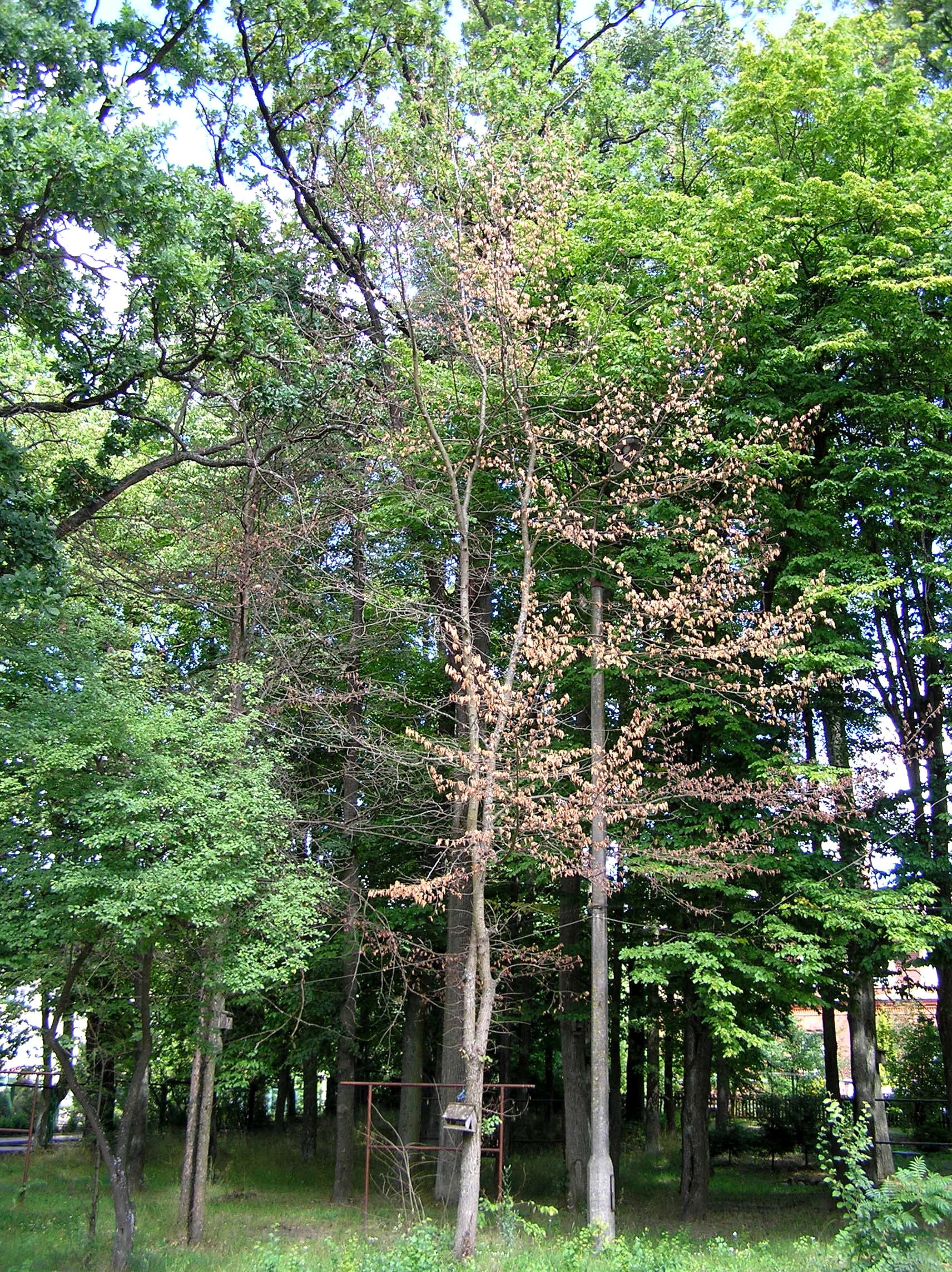
- Dutch elm disease (Figure 3): Imported from North America in shipments of logs exported to England, it killed 95% of Europe’s elm populations in the 1970s.
- Maritime pine scale insect: Imported from the Maghreb via young seedlings intended for reforestation, it has destroyed over 90% of the maritime pines in the Provençal mountains (nearly 100,000 ha) since the 1960s, causing a veritable local economic and ecological disaster.
- Ash dieback: Imported from Asia, it reached Western Europe via Poland. It is decimating French stands, spreading very rapidly since its appearance in 2010 (See Figure 12, (See Forests facing global environmental change).
- Maple sooty mould (Cryptostroma corticale): Introduced from North America to England (1945), then to France (1950s), this fungus is one of the main causes of maple decline, particularly in sycamore, threatening the diversity of forest stands. It spends part of its life cycle within the tree’s tissues (as an endophyte) without causing any symptoms or visible external damage. It becomes pathogenic following water stress in its host, eventually leading to the tree’s death. This is a typical example of biotic dieback being triggered by abiotic stress.
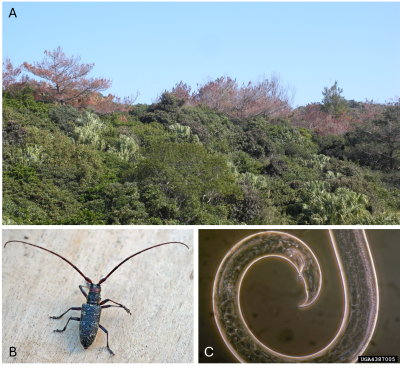
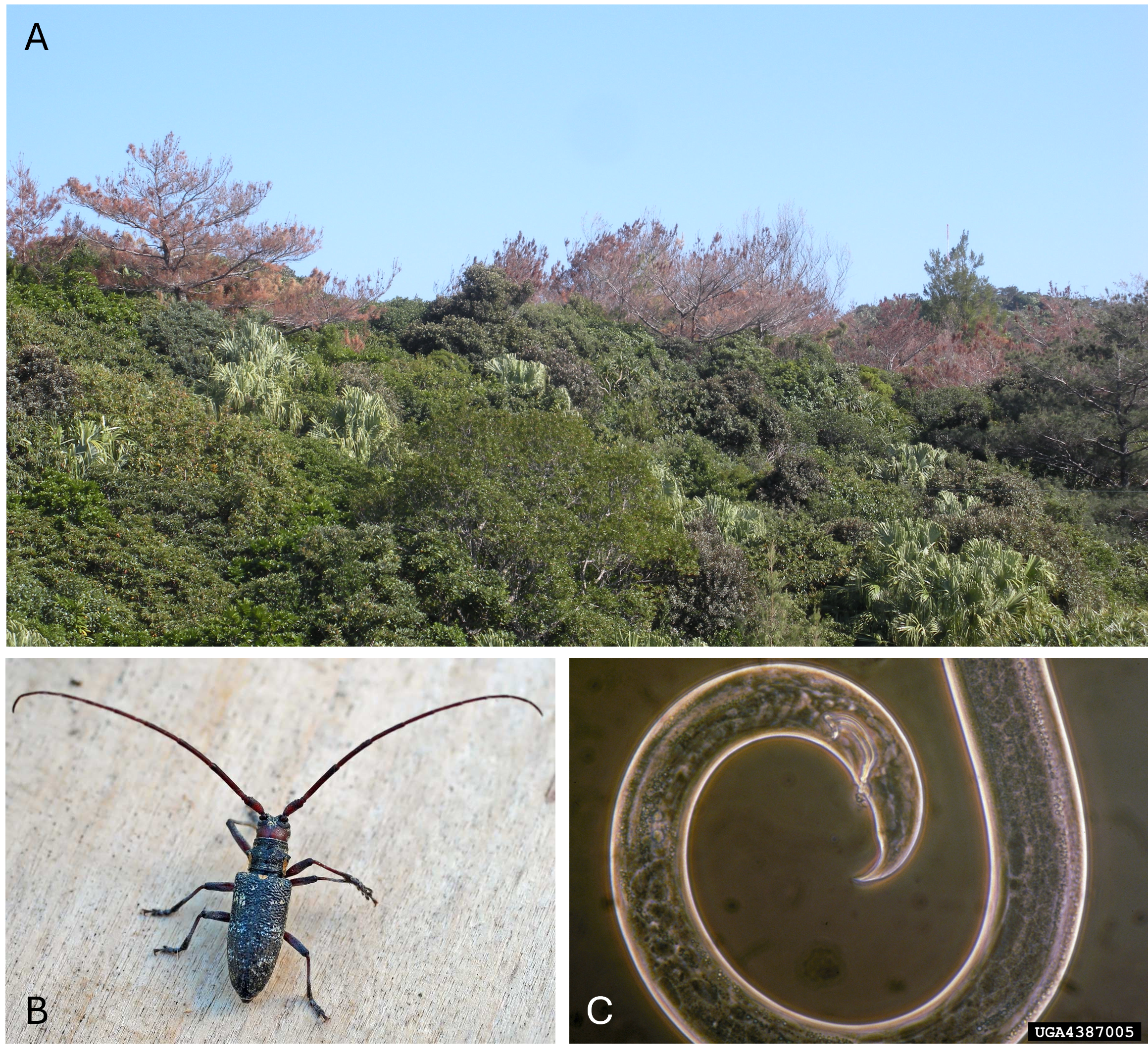
Figure 4. A, The pine wood nematode (Bursaphelenchus xylophilus) is destroying pine trees in Japan, on the Bonin Islands, on Chichijima Island [Photo source ©タクナワン; Own work, CC0 licence]. B, Male Monochamus galloprovincialis galloprovincialis (Olivier, 1795), a wood-boring beetle that plays an important ecological role by accelerating the conversion of wood into forest humus. However, it can act as a vector for the pine wood nematode. [Source © entomartIn, DR]; C, pine wood nematode (Bursaphelenchus xylophilus) [Photo source © L.D. Dwinell, USDA Forest Service, Bugwood.org – CC BY 3.0 licence]. - Pine wood nematode: Two outbreaks have recently been detected in the Landes de Gascogne forest [3]. This parasite, of American origin, is capable of wreaking havoc in the country’s largest forests should it escape from this initial site, again with potentially devastating economic and ecological consequences. Since its introduction to Japan in 1905, it has caused the loss of 95% of the country’s pine resources. Wood-boring beetles are very likely the vectors for its spread (Figure 4).
The decline of forest species is therefore a complex phenomenon linked to interactions between numerous climatic, abiotic, biotic and human factors. Each case remains specific (species, location within the range, silvicultural history, soil, management, etc.). There is no one-size-fits-all solution, but appropriate silvicultural approaches can significantly enhance the resistance and resilience of most stands to current dominant stresses (See forthcoming article ‘Forests facing climate change: risks and solutions’).
Notes et references
Thumbnail. Bark beetle damage on a spruce trunk [Source © photo Thomas Bresson, CC BY 4.0, via Wikimedia Commons]
[1] Saintonge F-X, Gillette M, Blaser S, Queloz V & Leroy Q. (2022). The situation and management of the European spruce bark beetle crisis in late 2021 in eastern France, Switzerland and Wallonia. Revue forestière française 73, 619–641. https://doi.org/10.20870/revforfr.2021.7201
[2] Lemaire J, Vennetier M, Prévosto B, & Cailleret M. (2022). Interactive effects of abiotic factors and biotic agents on Scots pine dieback: A multivariate modelling approach in south-east France. Forest Ecology and Management 526, 120543.
[3] https://draaf.nouvelle-aquitaine.agriculture.gouv.fr/un-foyer-de-nematode-du-pin-detecte-sur-la-commune-de-seignosse-le-prefet-de-a3874.html