




Some Pioneers of Ecology
PDFShortly after the onset of the First Industrial Revolution (1760–1830), the 19th century saw the emergence of the first signs of an awareness, driven by a handful of naturalist men and women, of the importance of preserving the planet for the well-being of humankind. A prime example is the German explorer and geographer Alexander von Humboldt.
1. Alexander von Humboldt, the founding father of ecology
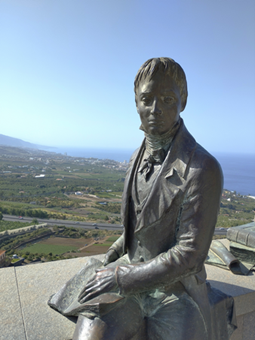
Alexander von Humboldt (1769–1859) [1], born in Berlin, was a naturalist, geologist and geographer who undertook remarkable explorations, primarily in the Americas (1799–1804) but also in North-East Asia (1829).
In June 1799, Alexander von Humboldt set out on his longest expedition, departing from Spain. After a brief stopover in the Canary Islands (Figure 1), he arrived in South America in July 1799 and landed in Venezuela. The following year (1800), during an expedition to the Lake Valencia region, he observed the damage caused by colonial plantations: brutal deforestation and intensive water consumption leading to soil depletion. Humboldt was one of the first to grasp the essential role of forests in ecosystems and in climate regulation.
In the following years, he travelled to Colombia via Cuba (1800–1801), then to Peru (1802) and Ecuador (1803). It was there that he identified the cold Pacific current running along the coast from south to north, now known as the Humboldt Current. He then visited Mexico (1803) before reaching the east coast of the USA, passing through Cuba again (1804). Throughout his travels, he kept highly detailed travel journals, recording observations on astronomy, meteorology (temperature changes, air pressure, atmospheric gases) and geology. He also catalogued numerous species of animals and plants. A large part of his discoveries was published in Travels to the Equinoctial Regions of the New Continent.
Humboldt developed a forward-thinking vision: he conceived of nature as a dynamic system in which interactions between species and their environment constantly transform the ecosystem. During his years in Paris (1798 and then from 1804 to 1827), he associated with many renowned scientists. An excellent teacher and brilliant orator, he disseminated his ideas through numerous lectures. However, following his death, his work gradually fell into obscurity by the end of the 19th century before being rediscovered in the 20th century.
2. George Perkins Marsh, John Muir and the creation of national parks
- George Perkins Marsh (1801–1882) – (Figure 2)

George Marsh was convinced that the future of the planet depended on the direction humanity would take regarding the conservation and use of natural resources. He was particularly interested in trees and forests, which, in his view, profoundly influence the environment, particularly in terms of temperature (evapotranspiration) and precipitation. Forests are essential to the hydrological cycle, particularly by reducing erosion, and trees act as a useful water reservoir when part of them (leaves) or the tree itself dies. When human activities lead to the destruction of forests, rainfall becomes devastating, leading to soil desertification.
George P. Marsh played a key role in the creation, in 1872, of Yellowstone Park, the first national park in the United States, and also worked towards the creation in 1885, shortly after his death, of the Adirondack Park (New York State).
George Marsh, overlooked by the academic world and little known to the general public, can also be considered a pioneer of ecology: he was convinced that the human species is closely dependent on its environment and must, therefore, exercise its power over nature in a measured manner.
The issue of the destruction of certain natural environments by humans once brought George Marsh into close contact with the French anarchist geographer Elysée Reclus (see paragraph 3), with whom he corresponded actively between 1868 and 1871 [3] . Marsh’s rather metaphysical view of nature subsequently distanced him from Reclus’s secular ethics, not to mention the latter’s involvement in the Paris Commune.
Finally, George Marsh’s environmentalist commitments inspired John Muir, who sought to preserve nature untouched by human activity, by pushing for the creation of national parks in the United States.
- John Muir (1838–1914) – (Figure 3)
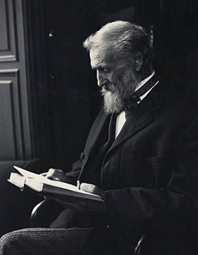
John Muir was determined to preserve the Yosemite region and used his connections with Robert Underwood Johnson, editor of The Century Magazine, to ensure that a bill was presented to Congress granting Yosemite the status of a national park, modelled on Yellowstone National Park.
The bill was passed by Congress on 30 September 1890, but it left Yosemite Valley and Mariposa Grove under the control of the State of California. Muir then helped to establish an environmental organisation in San Francisco in 1892 called the Sierra Club, dedicated to the protection of the Sierra Nevada.
In 1903, John Muir invited President Theodore Roosevelt to camp with him for a few days in Yosemite Valley and convinced him to include the valley within a national park, a move which was ratified by Congress in 1905.
3. Élisée Reclus, Octavia Hill and social ecology
- Élisée Reclus (1830–1905) – (Figure 4)

In the years that followed, Élisée Reclus took an interest in the working class and joined the ‘First International’ in 1864. He became an anarchist through his contact with Bakunin around 1868 and, at the same time, published the two volumes of a seminal work, La Terre, description des phénomènes de la vie du globe (The Earth: A Description of the Phenomena of Life on the Globe). He stepped up his political and military activities during the Franco-Prussian War of 1870 and joined the National Guard during the Paris Commune uprising in 1871. Taken prisoner in April 1871, he was released in March 1872 but banished from the country until March 1879. He lived in Switzerland beyond the date of his amnesty, until 1890. During this period, he established himself as a libertarian communist.
Élisée Reclus nevertheless continued his scholarly work, beginning in 1875 the 19-volume work Nouvelle Géographie Universelle (1875–1893). This monumental work brought him worldwide fame and earned him three honours: in 1891, the annual Grand Medal of Honour from the Société de Topographie de France; in 1892, the Grand Gold Medal from the Société de Géographie de Paris; and, in 1893, the annual Gold Medal from the Royal Geographical Society in London. In 1892, he moved to Belgium to teach geography at the Free University of Brussels, but in 1898 he founded the Geographical Institute within the New Free University of Brussels. His final work, L’Homme et la Terre (Man and the Earth), begun in 1895, was published in six volumes after his death in 1905.
Élisée Reclus, an advocate of social geography, or even social ecology, championed the search for a balanced place for the human species within the natural environment, building bridges between biology, sociology, urban planning and the environment.
- Octavia Hill (1838–1912) – (Figure 5)
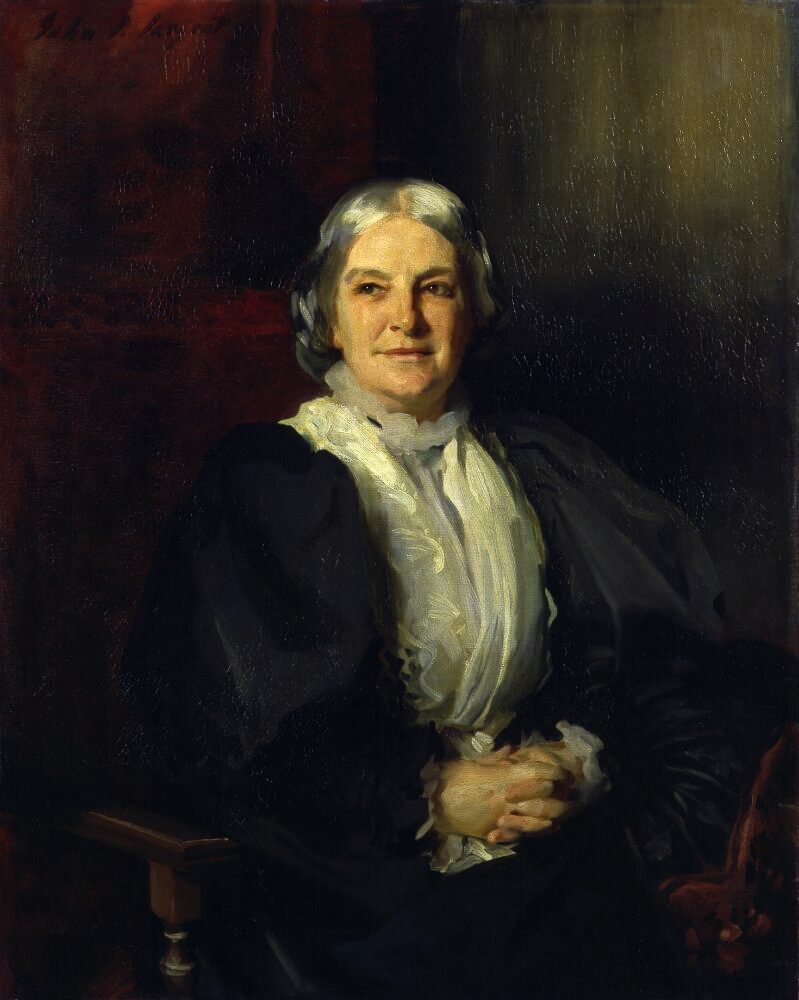
In 1876, Octavia Hill founded, with her sister Miranda, the Kyrle Society (Society for the Promotion of Beauty and Well-being in Life), which embraced music and literature but also devoted significant attention to green spaces. Octavia Hill was not particularly interested in the ecosystem itself but rather advocated for the creation or preservation of natural environments that safeguarded the natural heritage.
She set out her ideas in her book Our Common Land, published in 1877. By advocating for the right to communal ownership of preserved spaces, often linked to historical significance, she can be regarded as the pioneer of a true social ecology. Octavia Hill thus played a part in the creation in 1895 of the National Trust for Places of Historic Interest or Natural Beauty to preserve the natural and historical heritage in the face of the damage caused by the Industrial Revolution.
Octavia Hill also fought against urban air pollution by playing a leading role in the founding of a committee against London’s air pollution (the Fog and Smoke Committee) in 1880, uniting the fight against pollution and the defence of nature in a single cause (See also Focus on Air Pollution and Trees).
Notes et references
Thumbnail. Part of the painting Octavia Hill in 1898 by John Singer Sargent (1856–1925). [Source: John Singer Sargent, Public domain, via Wikimedia Commons]
[1] Fumey G (2022). Was the naturalist Alexander von Humboldt the ‘inventor’ of ecology? The Conversation 22 November 2022.
[2] Schlierer H (2025). George P. Marsh, pioneer of environmental protection in the 19th century. The Conversation 15/08/2025.
[3] Pelletier P (2020). Elysée Reclus and George Perkins Marsh: convergence and divergence. Annales de Géographie, 732, 104–127. DOI 10.3917/ag.732.0104
[4] Mathis C-F (2025). Octavia Hill: a pioneering fight for the environment of the poorest. The Conversation, 2 September 2025.