



The pioneers of the endosymbiotic theory
PDFAt the beginning of the 20th century, the origin of eukaryotic cells [1] was one of biology’s greatest mysteries. How could such a complex cell – possessing a nucleus, mitochondria and, in plants, chloroplasts – have emerged from the much simpler microorganisms that then dominated the Earth?
The now-accepted idea that certain organelles originated from ancient bacteria did not become established overnight. It is the result of a long series of intuitions, observations and controversies spanning more than a century. Several biologists had glimpsed a truth that biology was not yet able to prove.
1. From lichens to the birth of the concept of symbiosis
Paradoxically, the story begins far from the cell, on rocks and tree bark.
In 1867, the Swiss botanist Simon Schwendener put forward a revolutionary idea: a lichen is not a single organism, but a close association between a fungus and an alga. He wrote: ‘A lichen consists of two organisms living together.’
A discovery met with scepticism
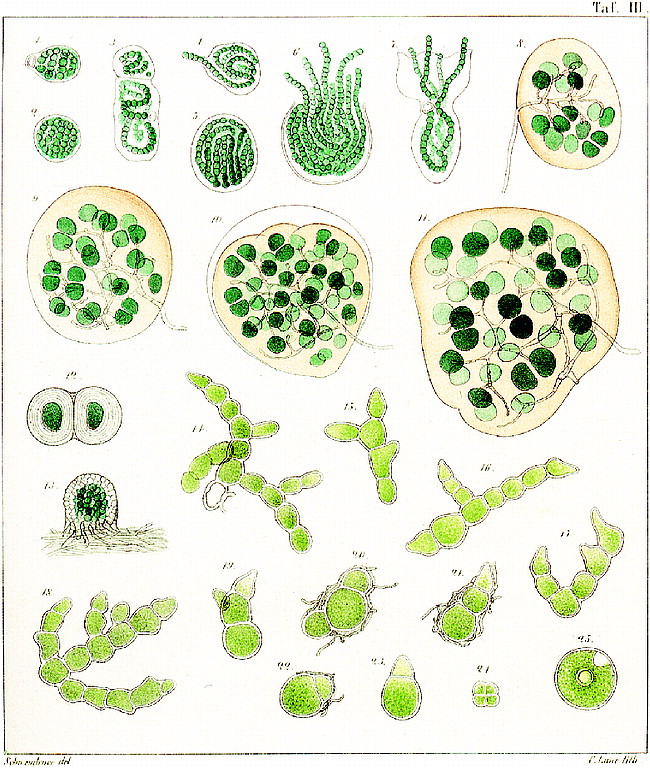
A few years later, in 1877, the German biologist Albert Bernhard Frank, known for his work on mycorrhizae, realised that such associations were far more widespread than had previously been imagined. To describe them, he coined the term ‘Symbiotismus’ – the origin of the word ‘symbiosis’ – to refer to organisms living together, regardless of the benefits or disadvantages each derives from the relationship.
The concept was subsequently popularised by Heinrich Anton de Bary, whose work Die Erscheinung der Symbiose (1879) [3] helped to spread this new way of understanding relationships between organisms.
Thus arose the fundamental idea that sustainable cooperation between different species can be a driving force behind evolution.
2. Schimper: symbiosis enters the cell
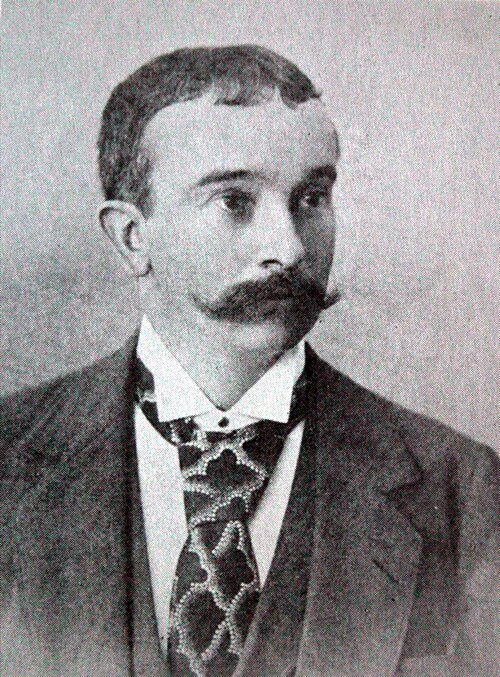
In 1883, whilst studying plant cells, Schimper observed that chloroplasts (which he termed chloroplastides) multiply solely through the division of pre-existing chloroplasts and that the cell never produces them de novo. Their mode of multiplication resembles that of bacteria.
In a remark that has since become famous, Schimper wrote: ‘If it can be proved that chloroplastides are not merely organelles of the plant cell, but autonomous organisms, then green plants would be nothing more than the union of a colourless organism with a microbe endowed with chlorophyll.’
At a time when nothing was known about DNA or molecular biology, this insight was remarkably bold.
3. Mereschkowski and symbiogenesis
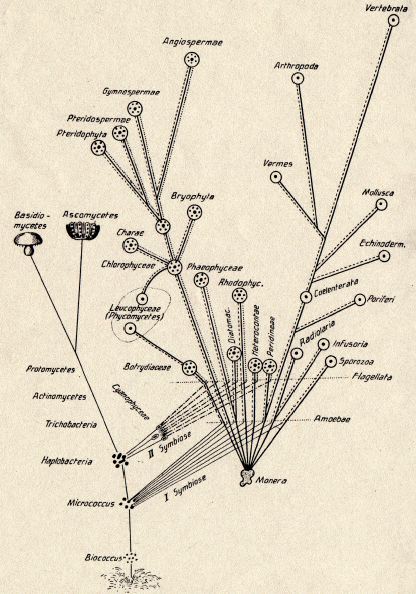
In his article Über Natur und Ursprung der Chromatophoren im Pflanzenreiche, he proposed that chloroplasts (which he termed chromatophores) derived from ancient cyanobacteria (known at the time as blue-green algae) that had been engulfed and subsequently retained by a primitive host cell [4]. He had this brilliant insight: ‘Chromatophores were once independent organisms.
Instead of being digested, these bacteria are thought to have established a lasting relationship with their host: the host provided them with protection and nutrients, whilst they supplied it with the products of photosynthesis.
In 1910, Mereschkowski coined the term ‘symbiogenesis’, referring to the emergence of new organisms through the long-term integration of symbiotic partners.
For the first time, cooperation became a genuine evolutionary mechanism.
4. Paul Portier and the bacterial origin of mitochondria
Whilst Schimper and Mereschkowski were primarily interested in chloroplasts, the French physiologist Paul Portier was the first to extend this idea to mitochondria.
In his book Les Symbiotes (1918) [5], he argued that these organelles were former respiratory bacteria that had become indispensable to the functioning of animal cells: ‘the eukaryotic cell is a lasting association between several organisms’.
This hypothesis far exceeded the experimental capabilities of the time: at the beginning of the 20th century, proving that an organism was a bacterium required the ability to culture it independently. However, mitochondria and chloroplasts, having become entirely dependent on their host cell, could no longer survive in isolation. This explains the failure of Portier, who sought to culture mitochondria using the standard tools of microbiology.
In the absence of conclusive experimental evidence, the hypotheses of Mereschkowski [6], and Portier gradually fell into oblivion for nearly half a century.
5. Ivan Wallin and ‘symbionticism’
In the United States, in the 1920s, the American anatomist Ivan Wallin, a professor at the University of Colorado, attempted to verify Portier’s hypothesis experimentally by isolating mitochondria in order to culture them outside any living cell. After several failed attempts, he reported in 1924 that he had succeeded in obtaining a culture from the liver of a newborn rabbit and concluded: ‘Mitochondria are, in reality, bacterial organisms, symbiotically associated with the tissues of higher organisms.’ This interpretation proved to be incorrect, as his purported mitochondrial cultures were never confirmed.
He summarised his work in Symbionticism and the Origin of Species (1927) [7], in which he coined the term ‘symbionticism’ to describe the acquisition of bacterial symbionts as the driving force behind the emergence of new species. As with Portier, his cultures were accused of being nothing more than contaminations — a valid criticism, since mitochondria cannot survive outside the host cell. Wallin, in turn, was dismissed by the scientific community, and his work fell into oblivion. The endosymbiotic theory remains as difficult to accept as ever!
6. Boris Kozo-Polyansky (1890–1957): symbiogenesis as an evolutionary principle
In 1924, the Russian botanist Boris Kozo-Polyansky published a work entitled Symbiogenesis: A New Principle of Evolution [8], in which he went beyond the hypotheses put forward by Mereschkowski, Portier and Wallin on the symbiotic origin of chloroplasts and mitochondria. He proposed that symbiogenesis – the long-term acquisition of one organism by another, followed by their functional integration – constitutes a general mechanism of evolutionary innovation. For Kozo-Polyansky, these associations create new biological organisations upon which natural selection subsequently acts; they therefore do not contradict Darwinism, but rather enrich its mechanisms. Kozo-Polyansky’s contribution is particularly original: he demonstrates that symbiogenesis does not contradict natural selection but constitutes a source of innovation upon which selection subsequently acts.
This perspective anticipates several concepts now widely accepted, notably the role of lineage fusions, gene transfers and sustained interactions between organisms in major evolutionary transitions. Long overlooked because his work, published in Russian, was not translated into English until 2010, Kozo-Polyansky is now regarded as one of the leading theorists of symbiogenesis and a forerunner of the modern theory of endosymbiosis. However, the main reason for the neglect of this work is most likely the fact that biologists of the time were largely hostile to symbiotic hypotheses.
7. Lynn Margulis: the evidence from modern biology
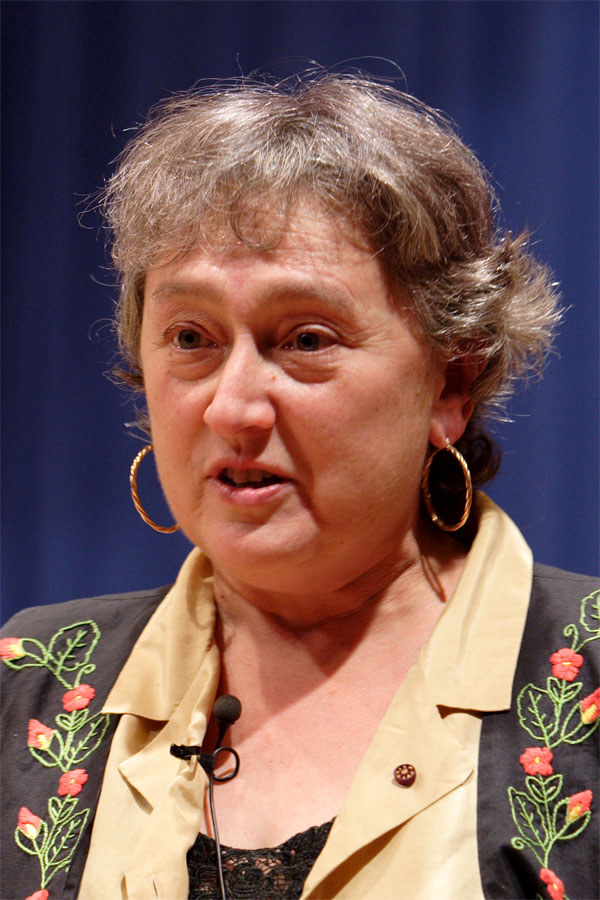
In 1966, the American geneticist Lynn Margulis submitted her manuscript On the Origin of Mitosing Cells to numerous scientific journals. Fifteen of them rejected it, deeming the hypothesis insufficiently substantiated or too speculative. Finally published in 1967, this article would go on to become one of the most influential in 20th-century evolutionary biology [9].
Lynn Margulis suggests that several factors contributed to the development of the eukaryotic cell:
- a motile bacterium (the origin of flagella, a hypothesis now abandoned);
- an aerobic bacterium (the precursor to the mitochondrion);
- and, in plants, a cyanobacterium (the precursor to the chloroplast).
Today, only the bacterial origin of mitochondria and chloroplasts is widely accepted. At that time, archaea had not yet been discovered: all organisms lacking a nucleus were still grouped under the term ‘prokaryotes’. It was only after the discovery of archaea by Carl Woese in 1977, followed by the discovery of Asgard archaea in the 21st century, that the host of the aerobic bacterium is now interpreted as an archaeon related to the Asgard group, whilst the endosymbiont was recognised as an α-proteobacterium.
In her book Origin of Eukaryotic Cells (1970), Margulis helped to vindicate the insights of Schimper, Mereschkowski, Portier and Wallin, now supported by solid evidence.
Margulis would later summarise the essence of her theory with a phrase that has remained famous: ‘Life did not take over the globe by combat, but by networking’.
8. From Asgard archaea to the modern view of eukaryogenesis
Recent discoveries in phylogenomics have profoundly reshaped this scenario. Comparative genomic analyses now show that eukaryotes most likely arose within a lineage of archaea related to the Asgard archaea, now considered to be the closest known relatives of eukaryotes.
From this perspective, mitochondrial endosymbiosis is no longer simply the association of two microorganisms. It constitutes the founding event that profoundly transformed an ancestral archaeon into the first eukaryotic cell. The discoveries concerning the Asgard archaea have not invalidated the endosymbiotic theory; rather, they have placed it within a much more precise evolutionary framework by identifying the probable archaeal host that acquired the ancestor of the mitochondrion. They thus demonstrate that the endosymbiotic theory remains the foundation of our modern understanding of the origin of eukaryotes and one of the pillars of evolutionary biology.
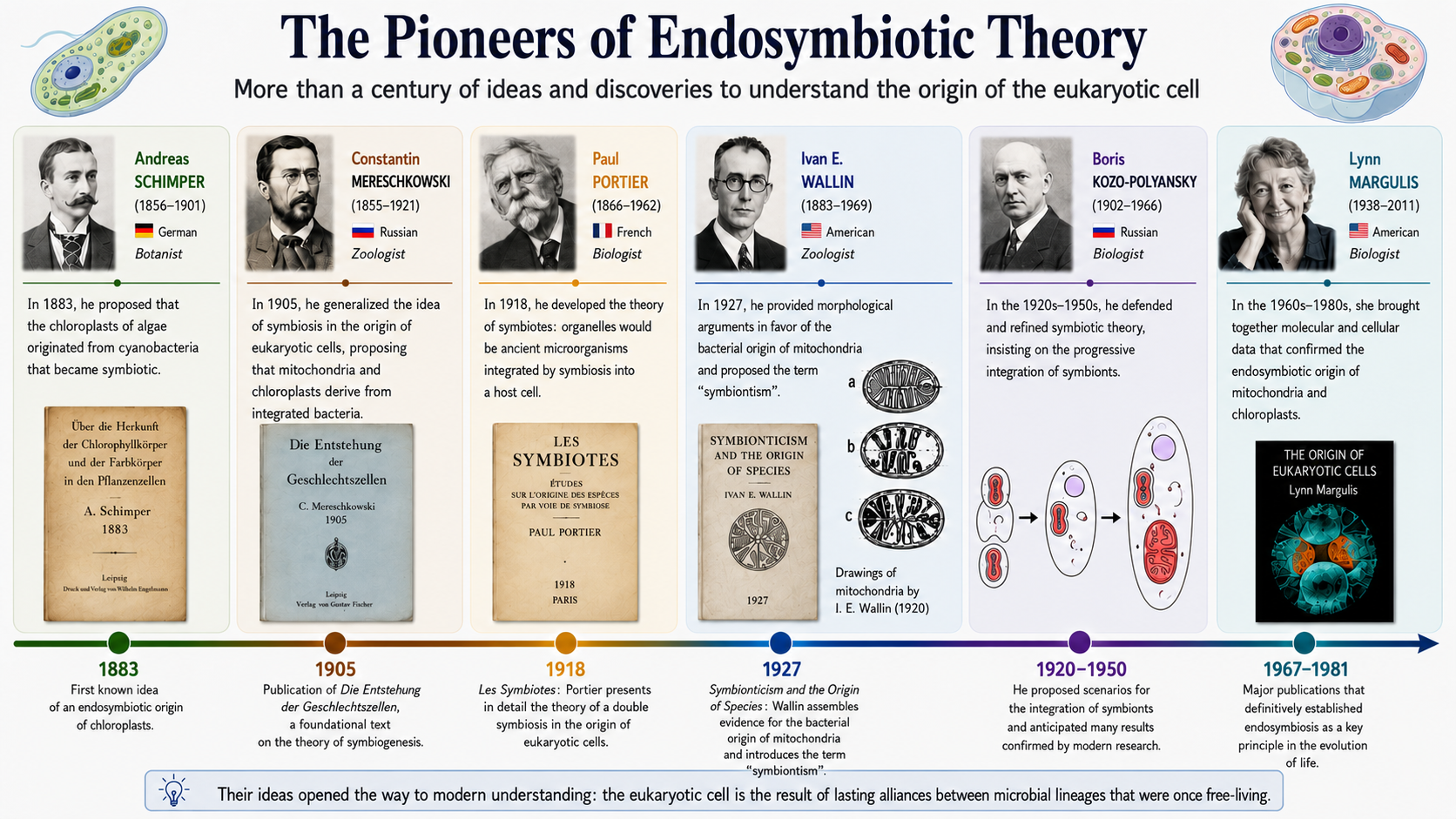
Recent discoveries concerning Asgard archaea and reconstructions of the eukaryotic ancestor show that the insights of Schimper, Mereschkowski, Portier, Wallin, Kozo-Polyansky and Margulis were remarkably visionary. They illustrate how a scientific idea can take nearly a century to be fully demonstrated. The history of the endosymbiotic theory thus illustrates how science progresses (Figure 5). An idea born from the observation of lichens in the 19th century was gradually expanded upon thanks to microscopy, biochemistry, molecular genetics and, later, phylogenomics. Each of these disciplines added another piece to the jigsaw, eventually enabling us to reconstruct, with increasing precision, one of the most significant transitions in the history of life.
Notes & references
Thumbnail. Diagram of chloroplast endosymbiosis.
[1] The distinction between prokaryotes and eukaryotes was proposed in 1925 by the Pasteur Institute scientist Edouard Chatton (who named these two cell types): Chatton E. (1938). Titles and scientific works (1906–1937). Sette, Sottano, Italy. The history of the circumstances in which Chatton established the concept of prokaryotes and eukaryotes is described by Sapp J. (2005) ‘The Prokaryote-Eukaryote Dichotomy: Meanings and Mythology’, Microbiol Mol Biol Rev. 69, 292–305.
[2] Honneger R. (2000). Simon Schwendener (1829–1919) and the Dual Hypothesis of Lichens. The Bryologist 103(2), pp. 307–313
[3] de Bary A (1879) Die Erscheinung der Symbiose. Published by Karl J. Trübner, Strasbourg
[4] Mereschkowsky, C. 1905 On the Nature and Origin of Chromatophores in the Plant Kingdom. Biol. Centralbl. 25, 593–604; translated by Martin W, Kowallik K. (1999) Annotated English translation of Mereschkowsky’s 1905 paper On the Nature and Origin of Chromatophores in the Plant Kingdom. Eur. J. Phycol. 34, 287–295.
[5] Portier P. (1918) Les Symbiotes. Masson (ed.), Paris.
[6] Merschkovski and Portier cannot be placed on the same footing. Merschkovski made racist and anti-Semitic remarks and was charged in 1914 with sexual assault on minors, which probably contributed to his work being forgotten (Sapp J., 1994, *Evolution by Association: A History of Symbiosis*, Oxford University Press). Portier, on the other hand, was wrongly accused of methodological incompetence and turned his attention to marine biology.
[7] Wallin I. E. (1927) Symbionticism and the Origin of Species. Williams & Wilkins, Baltimore.
[8] Kozo-Polyansky B. (1924) Symbiogenesis: A New Principle of Evolution (first published in Russian)
[9] Lynn Margulis also did justice to the pioneers. She translated or unearthed the forgotten texts of Mereschkowski, Portier and Wallin, thereby bringing to a close a scientific adventure spanning more than a century. She proved that these men were visionaries who had simply been right too soon.