



生物塑料:面向可持续未来的绿色材料

PDF

 传统塑料的大规模生产与广泛使用,持续威胁着有限的化石燃料资源和生态环境。为应对日益严峻的生态挑战,各类可持续解决方案正不断涌现。其中,一项长期方案是以生物塑料及其他环境友好型材料替代化石基塑料。生物塑料是指全部或部分由生物质制成、或具有生物降解性,或同时具备这两种属性的塑料材料。此类替代塑料的生产既考虑消费者对产品的需求,也回应可持续发展要求,能够降低对化石燃料的依赖,并缓解塑料废弃物过度消费与管理不善造成的环境负担。未来数十年,材料创新有望在废物管理中发挥重要作用,并吸引产业界的大量投资。


1. 不容忽视的塑料问题

 在一个寻常的早晨,人们尚未出门,往往已经在不经意间接触了数十次塑料。洗手池旁的牙刷、早餐的包装、手中的手机、衣物中的合成纤维——塑料已悄然融入现代生活。塑料之所以成功,在于其用途广泛:质量轻、耐久、成本低,并且具有极强的可设计性。

 然而,这种便利也付出了代价,而其后果直到今天才逐渐充分显现。塑料主要源自化石燃料,其曾经备受推崇的耐久性如今已转化为长期环境负担(图1) [1]。一个仅使用十分钟的塑料袋,可能在环境中存留数百年。随着时间推移,大型塑料制品在阳光、热和机械作用下发生碎裂,逐步形成微塑料——这些微小颗粒如今已循环于河流、海洋、土壤,甚至我们呼吸的空气之中(参见 Plastic pollution at sea: the seventh continent)。

 这些微塑料已不再局限于遥远的海洋。研究已在海产品(参见 The oyster, the sentinel of a coastline to be preserved)、饮用水和农田土壤中检测到微塑料,由此引发了人们对其长期生态影响和人体健康影响的担忧。 与此同时,全球塑料产量仍在增长,年产量已超过4亿吨,而得到有效回收的比例仅约9% [2]

 面对日益加剧的危机,科学界与产业界正在重新审视一个根本问题:能否设计出兼具塑料优点、又不会留下如此持久环境足迹的材料?一种富有前景的答案,正是快速发展的新型材料——生物塑料 [3]

图1. 微塑料(MPs)的来源、迁移路径及环境循环。聚乙烯(PE)、聚丙烯(PP)、聚苯乙烯(PS)、聚氯乙烯(PVC)、聚对苯二甲酸乙二醇酯(PET)、聚酰胺(PA)、聚(ε-己内酯)(PCL)。[Source: figure inspired in part from ref. [1], created by EEnv using elements with Creative commons rights, and AI-generated (Grok) image].

2. 生物塑料:新一代材料

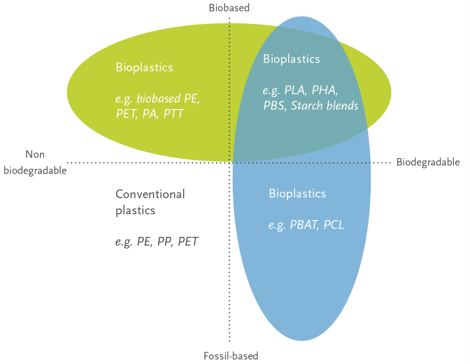
图2. 基于原料来源和生物降解性的塑料材料分类体系。[Source: figure from European Bioplastics ref. [4]]

 乍看之下,“生物塑料”似乎是一个直观的概念,即由生物来源制成的塑料。事实上,它所指的是一个更为复杂且多样的材料家族。生物塑料并非由某一种单一属性界定,而是一个更宽泛的概念:它们是源自可再生生物资源、或被设计为可生物降解,或同时具备这两种属性的塑料(图2) [4].

 这一区分至关重要。一些生物塑料由玉米、甘蔗或木薯等植物制成,以可再生原料取代化石基原料,更准确地称为生物基塑料。另一些塑料则经过专门设计,可在特定环境条件下经微生物作用分解为二氧化碳、水和生物质等天然物质,这类塑料称为可生物降解塑料。第三类材料则兼具上述两种特征,既来源于可再生资源,又具有生物降解性。

 然而,这些类别往往彼此交叉,即使对相关知识有所了解的消费者也容易产生混淆。例如,生物基塑料如果未被设计为可降解材料,其行为可能与传统塑料完全相同,并长期存留于环境中。反之,一些可生物降解塑料仍源自化石燃料,但经过设计后可在适宜条件下分解。

 理解这一细微差别十分重要。它提醒我们,生物塑料并不是单一的“绿色”解决方案,而是由多种材料构成的连续谱系;每种材料都有自身的环境权衡与潜在效益。

3.为何需要生物塑料?推动可持续替代材料发展的动力

 全球对传统塑料的依赖与化石燃料开采密切相关。从资源开采到生产和废弃物处置,每一种塑料制品都具有难以察觉的碳足迹。随着需求持续增长,不可再生资源和废物管理系统所承受的压力也不断加剧。

 在快速城市化地区,这一挑战尤为突出。废物管理系统往往难以跟上发展速度,管理不善的塑料废物因而泄漏至河流和海洋。与此同时,公众对塑料污染的认识显著提高,进一步推动了对可持续替代材料的需求。

 生物塑料已成为向循环经济广泛转型的一部分。循环经济旨在尽可能减少废物、重复利用材料并回收其价值。生物塑料的潜力不仅在于替代化石资源,也在于重新审视材料的整个生命周期。

 例如,研究表明,以生物基材料取代相当比例的传统塑料,每年可减少数亿吨二氧化碳当量的温室气体排放。这说明生物塑料不仅可能有助于减少废物,也可在减缓气候变化方面发挥作用。

 不过,生物塑料并非旨在取代所有传统塑料。相反,它被视为整体解决方案中的一环,与回收利用、废物减量和更合理的产品设计相互补充。

4.如何利用生物质制造生物基塑料

 要理解生物塑料,不妨从材料科学家的视角出发。塑料的本质并不取决于其来源,而取决于其分子结构。无论源自石油还是植物,所有塑料都是聚合物,即由重复分子单元组成的长链;其结构决定了材料的强度、柔韧性、透明度和耐久性。

 生物基塑料遵循相同的基本原理,但其起点截然不同:不是炼油厂,而是生命系统。

 这一过程始于生物质——植物、藻类等通过光合作用从大气中捕获二氧化碳。碳随后以淀粉纤维素木质素等天然聚合物或以单糖的形式储存。

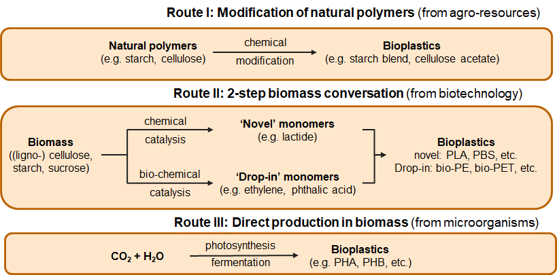
图3. 按生产路径划分的生物基聚合物分类。[Source: adapted by the author from refs [5 & 6]).
从材料角度看,这些物质富含羟基(–OH)和羧基(–COOH)等官能团,因而具有较高的化学反应活性,适合转化为聚合物前体。与相对惰性的化石烃类不同,生物质为新材料设计提供了化学性质丰富且灵活的平台。

 在这一阶段,挑战并非原料是否充足,而是如何实现转化:即如何将这些天然分子转变为结构可控、性能可预测的材料。如图3所示这一转化可通过三条生产路径 [5],[6]完成。下文将分别讨论这些路径所代表的不同分子结构干预程度。

4.1天然聚合物的直接利用与改性

 最简单的方法是从自然界已有的聚合物入手(图4),其中应用最广泛的是淀粉和纤维素。
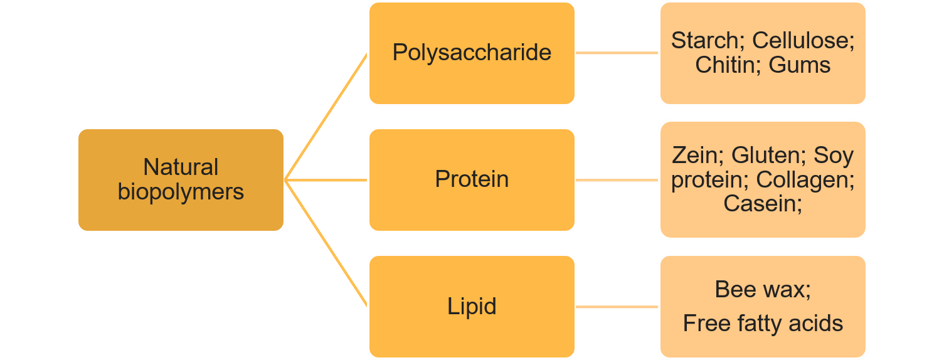
图4. 用于生物塑料生产的天然生物聚合物。[Source: ref. [3]]
然而,天然聚合物通常不能直接满足多数应用要求。例如,淀粉具有由直链淀粉和支链淀粉构成的半结晶结构,因而质脆且对水分敏感。要将其转化为可用塑料,必须进行物理和化学改性,常见方法是加入甘油等增塑剂。这些小分子可插入聚合物链之间,削弱分子间作用力并提高材料柔韧性

 这一过程可制得热塑性淀粉(TPS),该材料能够采用挤出或注塑成型等传统塑料加工技术进行加工。

 同样,纤维素是地球上储量最丰富的天然聚合物之一。其广泛的氢键作用和高度结晶结构赋予材料优异的机械强度与刚度,但其加工性能较差。通过化学改性制得醋酸纤维素等衍生物后,纤维素可加工成薄膜、纤维和模塑制品。

 从材料科学角度看,这条路径的核心是调控分子间相互作用与结晶度,以调整材料的力学性能。

4.2  单体转化并重新聚合

 一种适用范围更广且广泛采用的方法,是先将生物质分解为较小的分子(单体),再将其重新构建为具有目标性能的新型聚合物。

图5. 聚乳酸(PLA)制备过程示意图。[Source ref. [3]].
聚乳酸(PLA)是其中最重要的实例之一,也是商业化最成功的生物塑料之一(图5)。该过程始于从玉米、甘蔗或木薯等可再生原料中提取糖类。微生物发酵这些糖类后生成乳酸;乳酸是一种同时含有羟基(–OH)和羧基(–COOH)官能团的小分子。随后,乳酸经脱水过程转化为丙交酯,再通过聚合反应(最常采用开环聚合)生成高分子量 PLA。

 所得材料具有与 PET 等传统塑料相似的性能,包括透明、刚性和表面光亮,因而适用于多种包装用途。PLA 的玻璃化转变温度较低(约60°C),因此耐热性相对有限,但可通过聚合物改性、共混合纤维增强提高其性能。目前,PLA 广泛用于一次性食品包装、水瓶、杯子、农用薄膜、购物袋、卫生用品和3D打印材料。此外,PLA 被认为是最易发生生物降解的热塑性塑料之一,进一步巩固了其作为传统化石基塑料可持续替代材料的地位。

 这条路径体现了生物塑料的一项重要优势,即分子设计的灵活性。通过控制单体组成、立体化学和分子量,科学家可以针对具体应用设计聚合物。

 另一个重要实例是生物基聚乙烯(bio-PE)。其生产过程先将糖发酵产生的生物乙醇转化为乙烯,再进行聚合。值得注意的是,bio-PE 与化石基 PE 的化学结构完全相同,这表明无需改变材料性能也可以实现可持续性。

4.3 聚合物的微生物转化

 与生物过程结合最紧密的方法,是将微生物用作“细胞工厂”。某些细菌能够天然合成聚羟基脂肪酸酯(PHA)等聚合物,作为能量储存物质。

 在营养受限而碳源过量的条件下,这些微生物会在细胞内积累 PHA。随后可提取这些聚合物,并将其加工为塑料材料。

 从材料科学角度看,PHA 尤具吸引力,因为它兼具生物降解性、生物相容性和可调控的力学性能。根据单体组成的不同,PHA 可表现为刚性塑料或柔性塑料。

 这条路径也为构建废弃资源循环系统提供了可能。研究人员正日益探索将食物废物、农业残余物乃至有机废水用作微生物发酵的碳源,从而将废物流转化为有价值的材料 [7],[8],[9]

5.环境效益与局限性

生物塑料描绘了一个颇具吸引力的应用前景:使材料更好地契合自然循环。通过使用可再生资源,生物塑料可以降低对化石燃料的依赖。在某些情况下,其生产过程产生的温室气体排放更低,尤其是当生物质在生长过程中吸收二氧化碳时。

 生物塑料在生命终结阶段也可具有更灵活的处理方式。某些生物塑料专为堆肥处理而设计,可在受控条件下分解为天然组分。另一些生物塑料则可纳入现有回收体系,特别是化学结构与传统塑料相同的“即用型”生物塑料。

 然而,这一愿景也伴随着一定的局限性。生物降解性并非所有生物塑料共有的属性,也不会在任何条件下都发生。许多可生物降解塑料需要工业堆肥环境,即特定的温度、水分和微生物活性,才能有效分解。在海洋或土壤等自然环境中,其降解速度可能慢得多。

图6. 废物管理层级体系中的生物塑料废物管理方案。[Source: AI-generated figure by the author using ChatGPT, adapted from ref . [10]]

 此外,还存在更广泛的可持续性问题。部分原料依赖于集约化农业生产,因此不可避免地与土地利用、水资源配置及粮食生产等形成竞争关系,进而引发资源配置不合理等问题。另外,生物塑料的成本仍高于传统塑料,而现有废物管理系统尚不能充分处理种类多样的生物塑料废物流(图6) [10] 。例如,尽管 PLA 广泛用于可生物降解包装,但多数现有回收设施是针对 PET 等传统塑料设计的。当 PLA 进入 PET 回收流时,会污染再生材料并降低产品质量,这表明当前废物管理系统处理多样化生物塑料废物的能力仍然有限 [11]

 简而言之,生物塑料前景可期,但并非完美。其环境绩效在很大程度上取决于生产、使用及生命终结阶段的管理策略

6.生物塑料目前的应用领域

 尽管面临上述挑战,生物塑料已经进入日常产品 [12],[13],[14],[15] 。包装仍是最主要的应用领域,约占全球生物塑料产量的一半。从食品容器和薄膜到一次性餐具,生物塑料尤其适用于废物产生量较高的短寿命塑料制品。
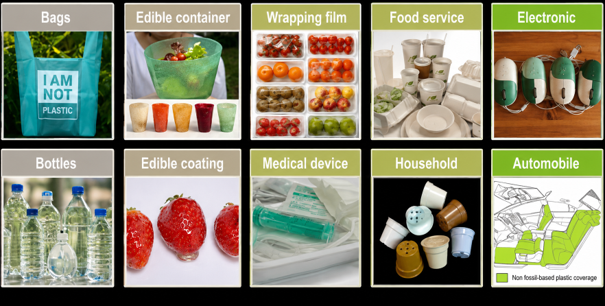
图7. 生物塑料的多种应用。[Source: adapted from ref. [3]]

 在农业领域,可生物降解地膜有助于减少塑料在土壤中的累积。在医疗领域,生物塑料可用于可吸收缝合线和药物递送系统;其能够在体内安全降解,是一项重要优势。

 材料创新也在不断拓展应用边界。由海藻制成的可食用包装可替代一次性包装材料;以鳄梨种子制成的生物塑料吸管可将食品废物转化为实用产品。甚至一些实验性项目——从可生物降解的3D打印材料,到 COVID-19 疫情期间以生物塑料制造的个人防护装备——也体现了这类材料的多用途特性。

 这些实例说明了一个关键问题:生物塑料并不局限于小众应用。在环境需求和技术进步的共同推动下,其应用正逐步拓展至多个领域。

7.迈向生物塑料未来所面临的挑战

 向生物塑料转型并非简单更换材料,而是需要系统性变革(图8)。

 一项关键挑战在于,生物塑料目前尚不能全面替代传统塑料。在许多应用中,生物塑料仍无法达到传统塑料经过数十年技术优化后形成的强度、耐久性、柔韧性和耐热性的综合平衡。因此,生物塑料是否适用取决于各类应用的具体要求。
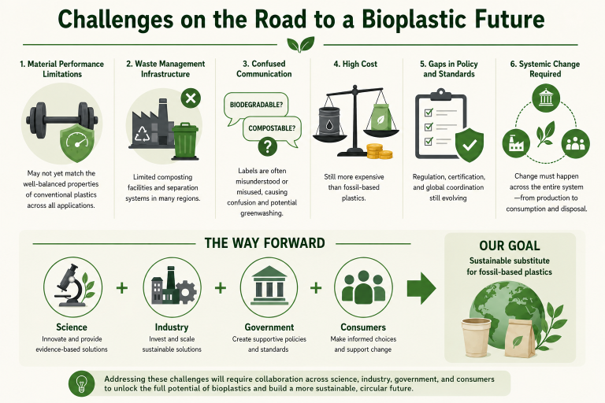
图8. 迈向生物塑料未来所面临的挑战。[Source: AI-generated figure by the author using ChatGPT]

 废物管理基础设施是另一项主要障碍。许多地区缺乏工业堆肥设施,也没有将生物塑料与传统塑料有效分离的系统。两类材料混合后,可能干扰传统的回收系统。

 信息沟通同样面临挑战。“可生物降解”“可堆肥”等标签常被误解或误用,容易引发消费者混淆,甚至在某些情况下成为“漂绿”行为的工具。科学研究表明,生物降解取决于特定条件;若缺乏这些条件,即使是可生物降解塑料也可能长期存留于环境中。

 经济因素也发挥着作用。化石基塑料受益于数十年来形成的基础设施、规模效应和成本效率。相比之下,生物塑料仍处于发展阶段,其生产成本往往更高。政策框架和行业标准正在不断演进,但监管、认证和全球协同方面仍存在缺口。

 应对这些挑战,需要科学界、产业界和政府之间开展协作,同时也需要消费者的知情和参与。

8.未来展望:重新审视我们与材料的关系

 生物塑料的发展仍在继续,而快速创新正在塑造其未来。研究人员正在开发强度和耐热性更高的新型聚合物。生物技术进步使利用微生物和酶更高效、更可持续地生产塑料成为可能。

 最富前景的变化或许是将生物塑料纳入资源循环系统。未来的材料可能从设计之初就考虑重复使用、回收或安全生物降解,以取代“获取—制造—丢弃”的线性模式。原料也可能越来越多地来自废物流,甚至来自捕集的二氧化碳,从而进一步降低环境影响。

 与此同时,产业投资不断增长,显示出市场对可持续材料长期潜力的信心。

 生物塑料展示了另一种未来图景:材料设计不仅考虑使用性能,也考虑其在自然系统中的归宿。它有望减少对化石燃料的依赖、降低排放,并重塑我们对塑料废物的认知。

 然而,生物塑料并非万能方案。塑料污染危机十分复杂,任何单一方案都不足以解决。真正可持续的未来将依赖多种策略协同推进,包括减少不必要的塑料使用、改善废物管理、遵循循环经济原则重新设计产品,以及持续推动材料科学创新。

 归根结底,向生物塑料转型并不只是用一种材料替代另一种材料,而是要重新构建我们与所依赖材料之间的关系,并认识到当下的便利不应以牺牲未来为代价。

9.核心要点

  • 传统塑料的成功也正是其弊端所在:凭借极强的通用性和耐久性,传统塑料已遍及日常生活;但其化石燃料来源和持久性造成了严重污染,尤其是已广泛扩散的微塑料,而目前仅约9%的塑料得到有效回收。
  • 微塑料污染是一项日益严重的威胁,其范围从遥远海洋延伸至饮用水和农田土壤,引发了人们对长期生态影响和人体健康影响的担忧。
  • “生物塑料”可提供部分解决方案。该术语描述一个复杂多样的材料家族,其成员可由生物体来源原料制成(生物基)、具有生物降解性,或兼具二者。
  • 生物塑料可应对若干核心问题:降低对化石燃料的依赖,显著减少温室气体排放,支持循环经济,并较传统塑料提供更灵活的寿命终结处理方式,如堆肥、回收或安全降解。
  • 生物基塑料可通过三条主要路径生产:天然聚合物的直接利用与改性、转化为单体后聚合,以及微生物生产。
  • 生物塑料已经进入日常产品,相关技术创新正在快速推进。
  • 生物降解需要特定环境,同时必须相应调整废物管理程序。
  • 生物塑料前景可期,但并非完美:其优势包括可再生性和较低的碳足迹;但仍存在局限——生物降解往往需要工业条件,部分原料可能与粮食生产竞争,成本较高,而现有废物系统难以妥善管理此类材料,并存在污染回收物流的风险。
  • 真正可持续的未来将依赖多种策略协同实施:减少不必要的塑料使用、改善废物管理,并按照循环原则重新设计产品。

  • 注释与参考文献

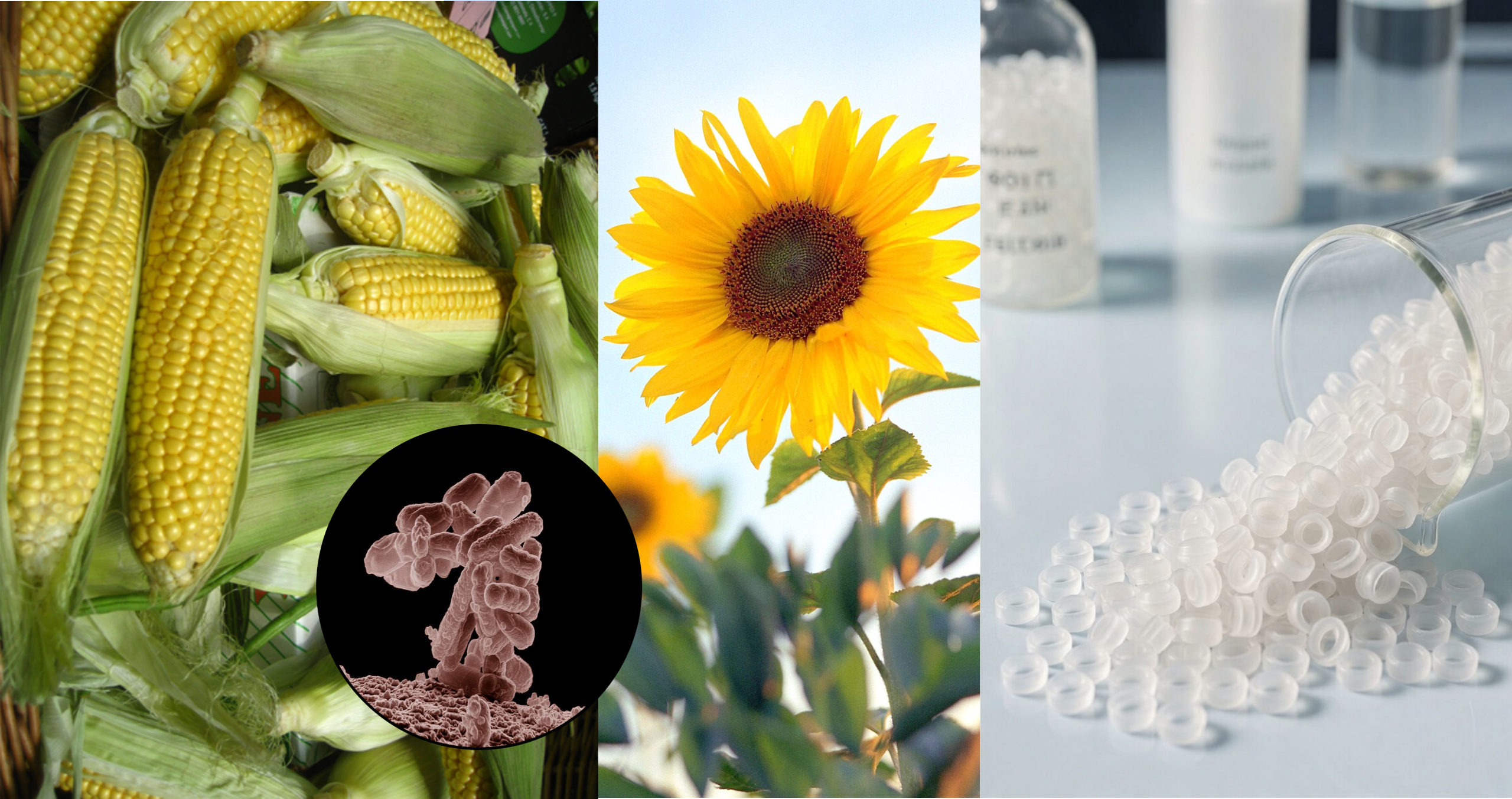
    封面图片:生物塑料的一些来源。[来源:图片由以下图像组成:玉米(Photo © Jeremy Keith from Brighton & Hove, United Kingdom, CC BY 2.0, via Wikimedia Commons)、向日葵(Photo © T. Voekler, CC BY-SA 3.0, via Wikimedia Commons)、大肠杆菌(Photo © Photo by Eric Erbe, digital colorization by Christopher Pooley, both of USDA, ARS, EMU., Public domain, via Wikimedia Commons)和生物塑料颗粒(AI-generated image using Grok)]。

[1] Zhao, YX., Song, KW., Li, WJ. et al., 2026, Migration, transformation, and ecological effects of microplastics in aquatic ecosystems. Ecol Process 15, 28. https://doi.org/10.1186/s13717-026-00681-w

[2] Houssini, K., Li, J., & Tan, Q., 2025. Complexities of the global plastics supply chain revealed in a trade-linked material flow analysis. Communications Earth & Environment, 6(1), 257.

[3] Xue, W., 2023. Bioplastics: potential substitution to fossil-based plastics. Marine Plastics Abatement, 371–431.

[4] European Bioplastics, 2020. What are bioplastics? [WWW Document]. URL https://www.european-bioplastics.org/bioplastics/ (accessed 10.6.21).

[5] Brodin, M., Vallejos, M., Opedal, M.T., Area, M.C., Chinga-Carrasco, G., 2017. Lignocellulosics as sustainable resources for production of bioplastics – A review. J. Clean. Prod. 162, 646–664. https://doi.org/https://doi.org/10.1016/j.jclepro.2017.05.209

[6] Storz, H., Vorlop, K.-D., 2013. Bio-based plastics: status, challenges and trends. Landbauforsch. Appl. Agric. For. Res. 4, 321–332. https://doi.org/10.3220/LBF_2013_321-332

[7] Mannina, G., Presti, D., Montiel-Jarillo, G., Carrera, J., Suárez-Ojeda, M.E., 2020. Recovery of polyhydroxyalkanoates (PHAs) from wastewater: A review. Bioresour. Technol. 297, 122478. https://doi.org/10.1016/J.BIORTECH.2019.122478

[8] Bhatia, S.K., Otari, S. V., Jeon, J.M., Gurav, R., Choi, Y.K., Bhatia, R.K., Pugazhendhi, A., Kumar, V., Rajesh Banu, J., Yoon, J.J., Choi, K.Y., Yang, Y.H., 2021. Biowaste-to-bioplastic (polyhydroxyalkanoates): Conversion technologies, strategies, challenges, and perspective. Bioresour. Technol. 326, 124733. https://doi.org/10.1016/J.BIORTECH.2021.124733

[9] Chong, J.W.R., Khoo, K.S., Yew, G.Y., Leong, W.H., Lim, J.W., Lam, M.K., Ho, Y.-C., Ng, H.S., Munawaroh, H.S.H., Show, P.L., 2021a. Advances in production of bioplastics by microalgae using food waste hydrolysate and wastewater: A review. Bioresour. Technol. 342, 125947. https://doi.org/10.1016/J.BIORTECH.2021.125947

[10] Saalah, S., Saallah, S., Rajin, M., & Yaser, A. Z., 2020. Management of biodegradable plastic waste: A review. Advances in Waste Processing Technology, 127-143.

[11] Niaounakis, M., 2019. Recycling of biopolymers–the patent perspective. European Polymer Journal, 114, 464-475.

[12] Barrett, A., 2018a. Vegan, Biodegradable and Compostable Glitter. Bioplastics News; Barrett, A., 2018b. Lactips is a Milk-Based Biodegradable and Water-Soluble Packaging. Bioplastics News; Barrett, A., 2018c. First House on Mars will be Made from Bioplastics.

[13] Patel, P., 2020. The time is now for edible packaging. Chem. News.

[14] Carlson, C., 2020. Alice Potts makes bioplastic face shields from food waste. dezeen.

[15] Ye, C., Voet, V.S.D., Folkersma, R., Loos, K., 2021. Robust Superamphiphilic Membrane with a Closed-Loop Life Cycle. Adv. Mater. 33, 2008460. https://doi.org/https://doi.org/10.1002/adma.202008460 ; Ye, Y., 2021. Chinese PPE makers become greener, trying to limit pollution. Clobal Times.


环境百科全书由环境和能源百科全书协会出版 (www.a3e.fr),该协会与格勒诺布尔阿尔卑斯大学和格勒诺布尔INP有合同关系,并由法国科学院赞助。

引用这篇文章: XUE Wenchao (2026年7月30日), 生物塑料:面向可持续未来的绿色材料, 环境百科全书,咨询于 2026年8月9日 [在线ISSN 2555-0950]网址: https://www.encyclopedie-environnement.org/zh/physique-zh/bioplastics-green-polymers-sustainable-future/.

环境百科全书中的文章是根据知识共享BY-NC-SA许可条款提供的,该许可授权复制的条件是:引用来源,不作商业使用,共享相同的初始条件,并且在每次重复使用或分发时复制知识共享BY-NC-SA许可声明。
Bioplastics: green polymers for a sustainable future

Extensive production and universal use of conventional plastics have posed a persistent threat to both the limited fossil fuel resource and the environment. To address the growing ecological challenge, sustainable solutions are emerging. One long-term solution is to replace fossil-based plastics with alternatives such as bioplastics and other eco-friendly materials. Bioplastics are known as plastic materials that are wholly or partially bio-based, biodegradable, or both. The production of such substitute plastics considers consumer’s needs for the products, addresses sustainability demand, reduces reliance on fossil fuels, and relieves the environmental burden due to over-consumption and mismanagement of plastic litter. Material innovations are expected to play a vital role in waste management over the coming decades and attract significant investment from industry.


1. The plastic problem we cannot ignore

On a typical morning, before leaving the house, most people interact with plastic dozens of times without even noticing. The toothbrush by the sink, the packaging around breakfast, the phone in hand, the synthetic fibres in clothing—plastic has quietly woven itself into the fabric of modern life. Its success lies in its versatility: lightweight, durable, inexpensive, and endlessly adaptable.

But this convenience has come at a cost that is only now becoming fully visible. Plastics are largely derived from fossil fuels, and their durability—once celebrated—has turned into a long-term environmental burden (Figure 1) [1]. A plastic bag used for ten minutes may persist in the environment for hundreds of years. Over time, larger plastic items fragment under sunlight, heat, and mechanical forces, gradually breaking down into microplastics—tiny particles that now circulate through rivers, oceans, soils, and even the air we breathe (See Plastic pollution at sea: the seventh continent).

These microplastics are no longer confined to distant oceans. They have been detected in seafood (See The oyster, sentinel of the coastline to be preserved), drinking water, and agricultural soils, raising concerns about long-term ecological and human health impacts. Meanwhile, global plastic production continues to rise, exceeding four hundreds of millions of tonnes annually, with only a fraction about 9% effectively recycled [2].

Faced with this growing crisis, scientists and industries are rethinking a fundamental question: can we design materials that offer the benefits of plastic without leaving such a lasting footprint? One promising answer lies in a new and rapidly evolving class of materials—bioplastics [3].

Figure 1. Sources, transport pathways, and environmental cycling of microplastics (MPs). Polyethylene (PE), Polypropylene (PP), Polystyrene (PS), Polyvinyl chloride (PVC), Polyethylene terephthalate (PET), Polyamide (PA), Poly (ε-caprolactone) (PCL). [Source, figure inspired in part from ref. [1], created by EEnv using elements under Creative commons licence, and AI-generated (Grok) image].

2. Bioplastics, a new generation of materials

Figure 2. Materials coordination system of plastics based on their feedstock sources and biodegradability. [Source European Bioplastics (ref [4]), DR]
At first glance, the term “bioplastics” sounds straightforward : plastic made from biological sources. In reality, it describes a much more complex and diverse family of materials. Bioplastics are not defined by a single property but by a broader concept: they are plastics that are either derived from renewable biological resources, designed to biodegrade, or both (Figure 2) [4].

This distinction is crucial. Some bioplastics are made from plants such as corn, sugarcane, or cassava, replacing fossil-based feedstocks with renewable ones. Those are more specifically called bio-based plastics. Others are engineered to break down through microbial activity into natural substances like carbon dioxide, water, and biomass—but only under specific environmental conditions. Those are called biodegradable.  A third group combines both characteristics, offering renewable origins and biodegradability.

Yet, these categories often overlap in ways that can confuse even well-informed consumers. A bio-based plastic, for instance, may behave exactly like conventional plastic and persist in the environment if it is not designed to degrade. Conversely, some biodegradable plastics are still derived from fossil fuels but engineered to break down under the right conditions.

Understanding this nuance matters. It reminds us that bioplastics are not a single “green” solution, but rather a spectrum of materials, each with its own environmental trade-offs and potential benefits.

3. Why do we need bioplastics? The push for sustainable alternatives

The global reliance on conventional plastics is deeply tied to fossil fuel extraction. Every plastic product carries an invisible carbon footprint—from resource extraction to production and disposal. As demand continues to grow, so does the strain on non-renewable resources and waste management systems.

In rapidly urbanizing regions, the challenge is especially visible. Waste systems often struggle to keep up, leading to mismanaged plastic waste that leaks into rivers and oceans. At the same time, public awareness of plastic pollution has surged, creating pressure for more sustainable alternatives.

Bioplastics have emerged as part of this broader transition toward a circular economy—one that seeks to reduce waste, reuse materials, and recover value wherever possible. Their potential lies not only in replacing fossil resources but also in rethinking the lifecycle of materials.

For example, studies suggest that substituting a significant portion of conventional plastics with bio-based alternatives could reduce greenhouse gas emissions by hundreds of millions of tonnes of CO₂ equivalents annually. This highlights their potential role not just in waste reduction, but also in climate mitigation.

Still, bioplastics are not intended to replace all conventional plastics. Instead, they are increasingly viewed as one piece of a larger puzzle—complementing recycling, waste reduction, and smarter product design.

4. How bio-based plastics are made from biomass

To understand bioplastics, it helps to think like a materials scientist. At its core, plastic is not defined by where it comes from, but by how its molecules are built. Whether derived from oil or plants, all plastics are polymers—long chains of repeating molecular units whose structure determines strength, flexibility, transparency, and durability.

Bio-based plastics follow the same fundamental principle, but they begin their journey in a very different place: not in oil refineries, but in living systems.

The story starts with biomass—plants, algae, or organic waste—that capture carbon dioxide from the atmosphere through photosynthesis. This carbon is stored in the form of natural polymers such as starch, cellulose, and lignin, or as simple sugars.

Figure 3. Classification of bio-based polymers based on their production routes. [Source: adapted from refs [5] & [6]].
From a materials perspective, these substances are rich in functional groups (such as hydroxyl –OH and carboxyl –COOH groups), which make them chemically reactive and suitable for transformation into polymer precursors. Unlike fossil hydrocarbons, which are relatively inert, biomass offers a chemically versatile platform for designing new materials.

At this stage, the challenge is not availability, but conversion: how to transform these naturally occurring molecules into materials with controlled structure and predictable performance. This is done through three production pathways, as sketched in figure 3 [5],[6]. Each route represents a different level of intervention in the molecular structure, as discussed next.

4.1 Direct use and modification of natural polymers

The simplest approach is to start with polymers that already exist in nature (Figure 4). Starch and cellulose are the most widely used examples.

Figure 4. Natural biopolymers applied for bioplastic production. [Source: adapted from ref. [3]].
However, natural polymers are not immediately suitable for most applications. Starch, for instance, has a semi-crystalline structure composed of amylose and amylopectin, which makes it brittle and sensitive to moisture. To transform it into a usable plastic, it must be physically and chemically modified—often by adding plasticizers such as glycerol. These small molecules insert themselves between polymer chains, reducing intermolecular forces and increasing flexibility.

This process produces what is known as thermoplastic starch (TPS), a material that can be processed using conventional plastic techniques such as extrusion or injection moulding.

Similarly, cellulose— one of the most abundant natural polymers on Earth—exhibits extensive hydrogen bonding and a highly crystalline structure, which impart excellent mechanical strength and stiffness. However, it is poorly processable. Chemical modification into derivatives like cellulose acetate allows it to be reshaped into films, fibres, and moulded products.

From a materials science viewpoint, this pathway is about modifying intermolecular interactions and crystallinity to tune mechanical properties.

4.2  Conversion to monomers and polymerization

A more versatile and widely used approach involves breaking biomass down into smaller molecules (monomers) and then rebuilding them into new polymers with tailored properties.

Figure 5. Schematic representation of polylactic acid (PLA) fabrication process. [Source: adapted from ref. [3]].
One of the most important examples is polylactic acid (PLA), one of the most commercially successful bioplastics (Figure 5). The process begins with sugars extracted from renewable feedstocks such as corn, sugarcane, or cassava. These sugars are fermented by microorganisms to produce lactic acid—a small molecule containing both hydroxyl (OH) and carboxyl (COOH) functional groups. The lactic acid is then converted into lactide through a dehydration process and subsequently polymerized, most commonly via ring-opening polymerization, to form high-molecular-weight PLA.

The resulting material exhibits properties like conventional plastics such as PET, including transparency, rigidity, and a glossy appearance, making it suitable for a wide range of packaging applications. Although PLA has relatively low heat resistance due to its low glass transition temperature (around 60°C), its performance can be enhanced through polymer modification, blending, and fiber reinforcement. Today, PLA is widely used in disposable food packaging, bottles, cups, agricultural films, shopping bags, hygiene products, and 3D-printing materials. In addition, PLA is recognized as one of the most readily biodegradable thermoplastics, further strengthening its role as a sustainable alternative to conventional fossil-based plastics.

This pathway highlights a key advantage of bioplastics: molecular design flexibility. By controlling monomer composition, stereochemistry, and molecular weight, scientists can engineer polymers for specific applications.

Another important example is bio-polyethylene (bio-PE), produced by converting bioethanol (from sugar fermentation) into ethylene, which is then polymerized. Interestingly, bio-PE is chemically identical to fossil-based PE—demonstrating that sustainability can be achieved without changing material properties.

4.3 Microbial production of polymers

The most biologically integrated approach involves using microorganisms as living factories. Certain bacteria naturally synthesize polymers such as polyhydroxyalkanoates (PHAs) as energy storage materials.

Under nutrient-limited conditions with excess carbon, these microorganisms accumulate PHAs inside their cells. The polymers are later extracted and processed into plastic materials.

From a materials science perspective, PHAs are particularly interesting because they combine biodegradability, biocompatibility, and tunable mechanical properties. Depending on their monomer composition, they can behave like rigid plastics or flexible elastomers.

This pathway also opens the door to circular systems. Researchers are increasingly exploring the use of food waste, agricultural residues, and even wastewater as carbon sources for microbial fermentation—transforming waste streams into valuable materials [7],[8],[9].

5. Environmental benefits and limitations

Bioplastics offer a compelling vision: materials that align more closely with natural cycles. By using renewable resources, they can reduce dependence on fossil fuels. In some cases, their production results in lower greenhouse gas emissions, especially when biomass absorbs carbon dioxide during growth.

Their end-of-life options can also be more flexible. Certain bioplastics are designed for composting, where they break down into natural components under controlled conditions. Others can be integrated into existing recycling systems, particularly “drop-in” bioplastics that share the same chemical structure as conventional plastics.

However, this vision comes with important caveats. Biodegradability is not a universal property, nor does it occur under all conditions. Many biodegradable plastics require industrial composting environments—specific temperatures, moisture levels, and microbial activity—to break down effectively. In natural environments like oceans or soils, degradation can be much slower.

Figure 6. Bioplastic waste management options within the waste management hierarchy [Source: AI-generated figure by the author using ChatGPT, adapted from ref. [10]]
There are also broader sustainability concerns. Some feedstocks rely on intensive agriculture, raising questions about land use, water consumption, and potential competition with food production. Costs remain higher than conventional plastics, and waste management systems are not yet fully equipped to handle diverse bioplastic streams (Figure 6) [10]. For example, although PLA is widely used in biodegradable packaging, most existing recycling facilities are designed for conventional plastics such as PET. When PLA enters the PET recycling stream, it can contaminate recycled materials and reduce product quality, highlighting the limited capacity of current waste management systems to handle diverse bioplastic waste streams [11].

In short, bioplastics are promising, but not perfect. Their environmental performance depends heavily on how they are produced, used, and managed at the end of their life.

6. Where bioplastics are used today

Despite these challenges, bioplastics are already making their way into everyday products [12],[13],[14],[15] (Figure 7). Packaging remains the dominant sector, accounting for nearly half of global bioplastic production. From food containers and films to disposable cutlery, bioplastics are particularly suited to short-life applications where waste volumes are high.

Figure 7. Various applications of bioplastics. [Source: adapted from ref. [3]]
In agriculture, biodegradable mulch films are helping reduce plastic accumulation in soils. In medicine, bioplastics are used for absorbable sutures and drug delivery systems, where their ability to safely degrade inside the body is a major advantage.

Innovation is also pushing boundaries in unexpected ways. Edible packaging made from seaweed can replace single-use wrappers. Bioplastic straws derived from avocado seeds transform food waste into functional products. Even experimental projects—from biodegradable 3D-printed materials to bioplastic-based personal protective equipment during the COVID-19 pandemic—demonstrate the versatility of these materials.

These examples illustrate a key point: bioplastics are not confined to niche applications. They are gradually expanding into multiple sectors, driven by both environmental need and technological progress.

7. Challenges on the road to a bioplastic future

Transitioning to bioplastics is not simply a matter of switching materials. It requires systemic change (Figure 8).

A key challenge is that bioplastics cannot yet serve as a universal replacement for conventional plastics. In many applications, they still do not offer the same well-optimized combination of strength, durability, flexibility, and heat resistance that conventional plastics have achieved through decades of technological refinement. As a result, the suitability of bioplastics depends on the specific requirements of each application.

Figure 8. Challenge on the road to a bioplastic future. [Source: AI-generated figure by the author using ChatGPT]
Waste management infrastructure is another major hurdle. Many regions lack industrial composting facilities or systems to separate bioplastics from conventional plastics. When mixed, these materials can disrupt recycling processes.

There is also the issue of communication. Labels such as “biodegradable” or “compostable” are often misunderstood or misused, leading to confusion and, in some cases, greenwashing. As the science shows, biodegradation depends on specific conditions, and without them, even biodegradable plastics can persist in the environment.

Economic factors play a role as well. Fossil-based plastics benefit from decades of infrastructure, scale, and cost efficiency. Bioplastics, by comparison, are still developing and often more expensive to produce. Policy frameworks and standards are evolving, but gaps remain in regulation, certification, and global coordination.

Addressing these challenges will require collaboration across science, industry, and government—along with informed participation from consumers.

8. Future outlook: rethinking our relationship with materials

The story of bioplastics is still being written, and its next chapters are shaped by rapid innovation. Researchers are developing new polymers with improved strength and heat resistance. Advances in biotechnology are enabling the use of microorganisms and enzymes to produce plastics more efficiently and sustainably.

Perhaps most promising is the shift toward integrating bioplastics into circular systems. Instead of a linear “take–make–dispose” model, future materials may be designed from the outset for reuse, recycling, or safe biodegradation. Feedstocks may increasingly come from waste streams or even captured carbon dioxide, further reducing environmental impact.

At the same time, industry investment is growing, signalling confidence in the long-term potential of sustainable materials.

Bioplastics offer a glimpse into a different future—one where materials are designed not only for performance, but also for their place within natural systems. They have the potential to reduce reliance on fossil fuels, lower emissions, and reshape how we think about plastic waste.

Yet, they are not a silver bullet. The plastic pollution crisis is too complex for any single solution. A truly sustainable future will depend on a combination of strategies: reducing unnecessary plastic use, improving waste management, redesigning products for circularity, and continuing to innovate in material science.

In the end, the shift toward bioplastics is not just about replacing one material with another. It is about reimagining our relationship with the materials we depend on—and recognizing that convenience today should not come at the expense of tomorrow.

9. Messages to remember

  • ‘Conventional plastics’ success is also their curse: Extremely versatile and durable, they’ve become ubiquitous in daily life, but their fossil-fuel origins and persistence create massive pollution, especially microplastics that now spread everywhere, with only ~9% of plastic effectively recycled.
  • Pollution by micro-plastics is a growing threat, from distant oceans to drinking water and agricultural soils, raising concerns about long-term ecological and human health impacts.
  • “Bioplastics” provide partial solutions. This term describes a complex and diverse family of materials, either produced from leaving organisms (bio-based), either biodegradable, or both.
  • Bioplastics address core problems: They reduce reliance on fossil fuels, can lower greenhouse gas emissions significantly, support a circular economy, and offer more flexible end-of-life options (composting, recycling, or safe degradation) compared to traditional plastics.
  • Bio-based plastics can be produced through three main pathways: direct use and modification of natural polymers, conversion to monomers and polymerization, or microbial production.
  • Bioplastics are already making their way into everyday products, and rapid innovation is in progress.
  • Biodegradation requires specific environments and waste management procedures need to be adapted.
  • Bioplastics are promising but not perfect: Benefits include renewability and lower carbon footprints, but limitations remain—biodegradation often requires industrial conditions, some feedstocks compete with food production, costs are higher, and current waste systems struggle to manage them properly (risk of contamination in recycling).
  • A truly sustainable future will depend on a combination of strategies: reducing unnecessary plastic use, improving waste management, redesigning products for circularity.

    Notes & references

    Cover image. Some sources of bioplastics. [Source: Figure made of images representing: corn (Photo © Jeremy Keith from Brighton & Hove, United Kingdom, CC BY 2.0, via Wikimedia Commons), sunflower (Photo © T. Voekler, CC BY-SA 3.0, via Wikimedia Commons), E. coli (Photo © Photo by Eric Erbe, digital colorization by Christopher Pooley, both of USDA, ARS, EMU., Public domain, via Wikimedia Commons), Bioplastics pellets (AI-generated image using Grok)].

[1] Zhao, YX., Song, KW., Li, WJ. et al., 2026, Migration, transformation, and ecological effects of microplastics in aquatic ecosystems. Ecol Process 15, 28. https://doi.org/10.1186/s13717-026-00681-w

[2] Houssini, K., Li, J., & Tan, Q., 2025. Complexities of the global plastics supply chain revealed in a trade-linked material flow analysis. Communications Earth & Environment, 6(1), 257.

[3] Xue, W., 2023. Bioplastics: potential substitution to fossil-based plastics. Marine Plastics Abatement, 371–431.

[4] European Bioplastics, 2020. What are bioplastics? [WWW Document]. URL https://www.european-bioplastics.org/bioplastics/ (accessed 10.6.21).

[5] Brodin, M., Vallejos, M., Opedal, M.T., Area, M.C., Chinga-Carrasco, G., 2017. Lignocellulosics as sustainable resources for production of bioplastics – A review. J. Clean. Prod. 162, 646–664. https://doi.org/https://doi.org/10.1016/j.jclepro.2017.05.209

[6] Storz, H., Vorlop, K.-D., 2013. Bio-based plastics: status, challenges and trends. Landbauforsch. Appl. Agric. For. Res. 4, 321–332. https://doi.org/10.3220/LBF_2013_321-332

[7] Mannina, G., Presti, D., Montiel-Jarillo, G., Carrera, J., Suárez-Ojeda, M.E., 2020. Recovery of polyhydroxyalkanoates (PHAs) from wastewater: A review. Bioresour. Technol. 297, 122478. https://doi.org/10.1016/J.BIORTECH.2019.122478

[8] Bhatia, S.K., Otari, S. V., Jeon, J.M., Gurav, R., Choi, Y.K., Bhatia, R.K., Pugazhendhi, A., Kumar, V., Rajesh Banu, J., Yoon, J.J., Choi, K.Y., Yang, Y.H., 2021. Biowaste-to-bioplastic (polyhydroxyalkanoates): Conversion technologies, strategies, challenges, and perspective. Bioresour. Technol. 326, 124733. https://doi.org/10.1016/J.BIORTECH.2021.124733

[9] Chong, J.W.R., Khoo, K.S., Yew, G.Y., Leong, W.H., Lim, J.W., Lam, M.K., Ho, Y.-C., Ng, H.S., Munawaroh, H.S.H., Show, P.L., 2021a. Advances in production of bioplastics by microalgae using food waste hydrolysate and wastewater: A review. Bioresour. Technol. 342, 125947. https://doi.org/10.1016/J.BIORTECH.2021.125947

[10] Saalah, S., Saallah, S., Rajin, M., & Yaser, A. Z., 2020. Management of biodegradable plastic waste: A review. Advances in Waste Processing Technology, 127-143.

[11] Niaounakis, M., 2019. Recycling of biopolymers–the patent perspective. European Polymer Journal, 114, 464-475.

[12] Barrett, A., 2018a. Vegan, Biodegradable and Compostable Glitter. Bioplastics News; Barrett, A., 2018b. Lactips is a Milk-Based Biodegradable and Water-Soluble Packaging. Bioplastics News; Barrett, A., 2018c. First House on Mars will be Made from Bioplastics.

[13] Patel, P., 2020. The time is now for edible packaging. Chem. News.

[14] Carlson, C., 2020. Alice Potts makes bioplastic face shields from food waste. dezeen.

[15] Ye, C., Voet, V.S.D., Folkersma, R., Loos, K., 2021. Robust Superamphiphilic Membrane with a Closed-Loop Life Cycle. Adv. Mater. 33, 2008460. https://doi.org/https://doi.org/10.1002/adma.202008460 ; Ye, Y., 2021. Chinese PPE makers become greener, trying to limit pollution. Clobal Times.


环境百科全书由环境和能源百科全书协会出版 (www.a3e.fr),该协会与格勒诺布尔阿尔卑斯大学和格勒诺布尔INP有合同关系,并由法国科学院赞助。

引用这篇文章: XUE Wenchao (2026年6月30日), Bioplastics: green polymers for a sustainable future, 环境百科全书,咨询于 2026年8月9日 [在线ISSN 2555-0950]网址: https://www.encyclopedie-environnement.org/zh/physics/bioplastics-green-polymers-sustainable-future/.

环境百科全书中的文章是根据知识共享BY-NC-SA许可条款提供的,该许可授权复制的条件是:引用来源,不作商业使用,共享相同的初始条件,并且在每次重复使用或分发时复制知识共享BY-NC-SA许可声明。