


Bioplastics: green polymers for a sustainable future
PDF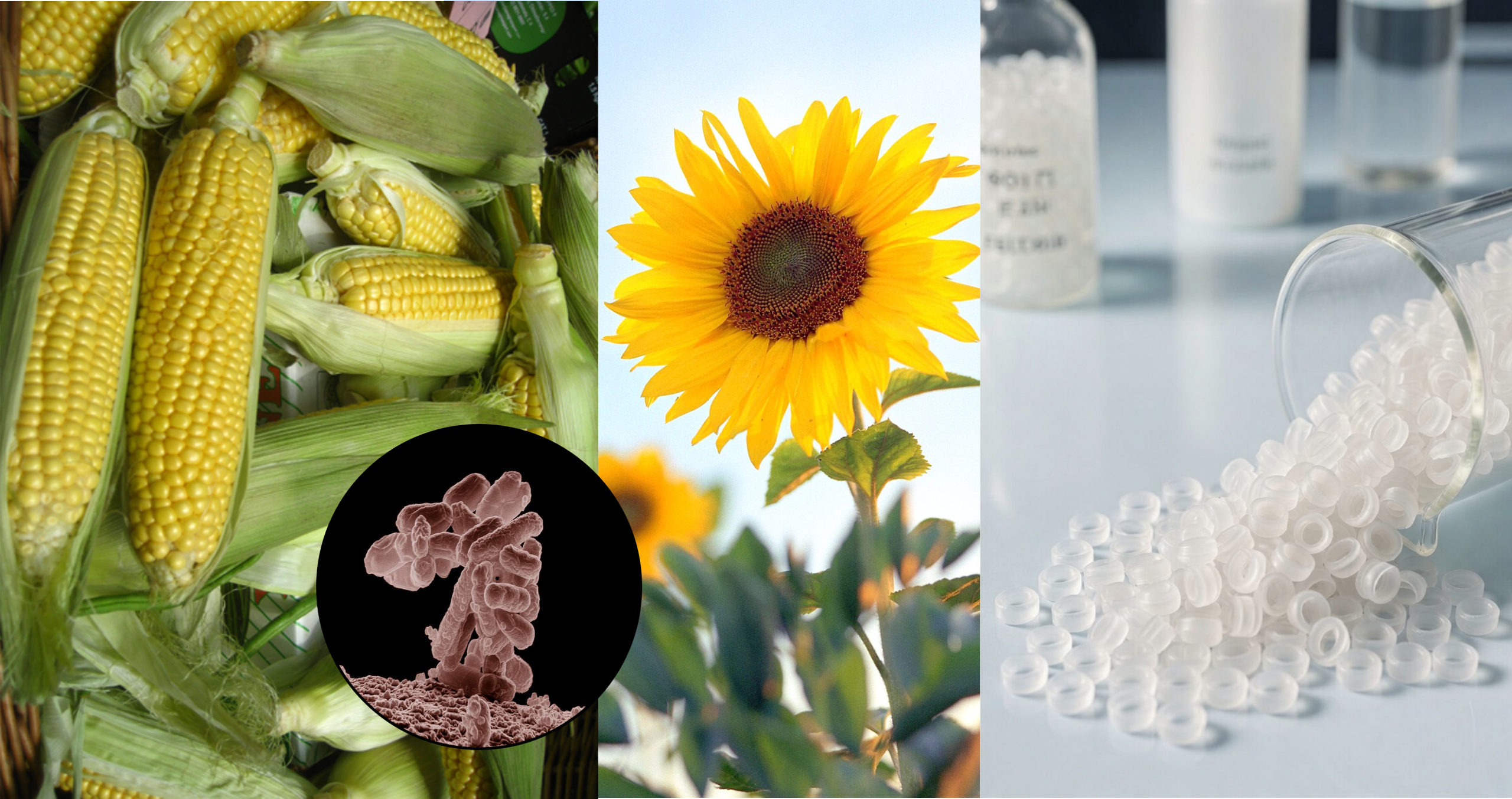
Extensive production and universal use of conventional plastics have posed a persistent threat to both the limited fossil fuel resource and the environment. To address the growing ecological challenge, sustainable solutions are emerging. One long-term solution is to replace fossil-based plastics with alternatives such as bioplastics and other eco-friendly materials. Bioplastics are known as plastic materials that are wholly or partially bio-based, biodegradable, or both. The production of such substitute plastics considers consumer’s needs for the products, addresses sustainability demand, reduces reliance on fossil fuels, and relieves the environmental burden due to over-consumption and mismanagement of plastic litter. Material innovations are expected to play a vital role in waste management over the coming decades and attract significant investment from industry.
- 1. The plastic problem we cannot ignore
- 2. Bioplastics, a new generation of materials
- 3. Why do we need bioplastics? The push for sustainable alternatives
- 4. How bio-based plastics are made from biomass
- 5. Environmental benefits and limitations
- 6. Where bioplastics are used today
- 7. Challenges on the road to a bioplastic future
- 8. Future outlook: rethinking our relationship with materials
- 9. Messages to remember
1. The plastic problem we cannot ignore
On a typical morning, before leaving the house, most people interact with plastic dozens of times without even noticing. The toothbrush by the sink, the packaging around breakfast, the phone in hand, the synthetic fibres in clothing—plastic has quietly woven itself into the fabric of modern life. Its success lies in its versatility: lightweight, durable, inexpensive, and endlessly adaptable.
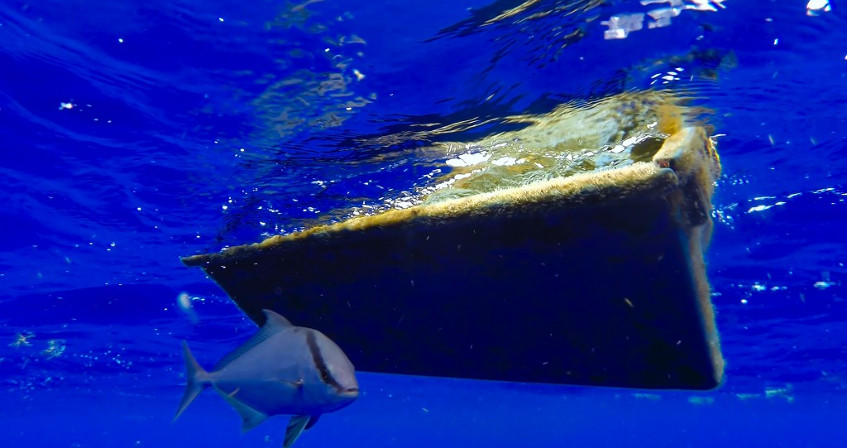
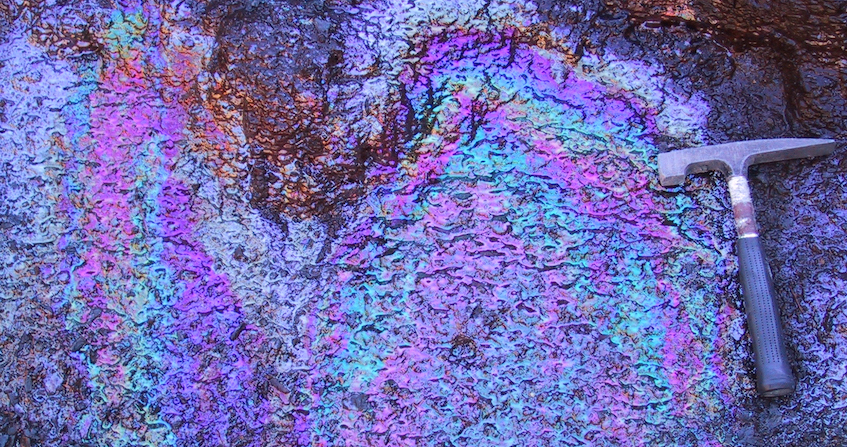
But this convenience has come at a cost that is only now becoming fully visible. Plastics are largely derived from fossil fuels, and their durability—once celebrated—has turned into a long-term environmental burden (Figure 1) [1]. A plastic bag used for ten minutes may persist in the environment for hundreds of years. Over time, larger plastic items fragment under sunlight, heat, and mechanical forces, gradually breaking down into microplastics—tiny particles that now circulate through rivers, oceans, soils, and even the air we breathe (See Plastic pollution at sea: the seventh continent).
These microplastics are no longer confined to distant oceans. They have been detected in seafood (See The oyster, sentinel of the coastline to be preserved), drinking water, and agricultural soils, raising concerns about long-term ecological and human health impacts. Meanwhile, global plastic production continues to rise, exceeding four hundreds of millions of tonnes annually, with only a fraction about 9% effectively recycled [2].
Faced with this growing crisis, scientists and industries are rethinking a fundamental question: can we design materials that offer the benefits of plastic without leaving such a lasting footprint? One promising answer lies in a new and rapidly evolving class of materials—bioplastics [3].

2. Bioplastics, a new generation of materials
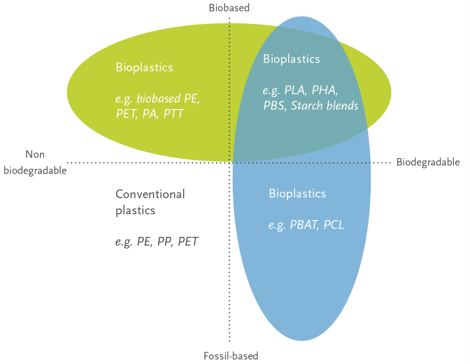
This distinction is crucial. Some bioplastics are made from plants such as corn, sugarcane, or cassava, replacing fossil-based feedstocks with renewable ones. Those are more specifically called bio-based plastics. Others are engineered to break down through microbial activity into natural substances like carbon dioxide, water, and biomass—but only under specific environmental conditions. Those are called biodegradable. A third group combines both characteristics, offering renewable origins and biodegradability.
Yet, these categories often overlap in ways that can confuse even well-informed consumers. A bio-based plastic, for instance, may behave exactly like conventional plastic and persist in the environment if it is not designed to degrade. Conversely, some biodegradable plastics are still derived from fossil fuels but engineered to break down under the right conditions.
Understanding this nuance matters. It reminds us that bioplastics are not a single “green” solution, but rather a spectrum of materials, each with its own environmental trade-offs and potential benefits.
3. Why do we need bioplastics? The push for sustainable alternatives
The global reliance on conventional plastics is deeply tied to fossil fuel extraction. Every plastic product carries an invisible carbon footprint—from resource extraction to production and disposal. As demand continues to grow, so does the strain on non-renewable resources and waste management systems.
In rapidly urbanizing regions, the challenge is especially visible. Waste systems often struggle to keep up, leading to mismanaged plastic waste that leaks into rivers and oceans. At the same time, public awareness of plastic pollution has surged, creating pressure for more sustainable alternatives.
Bioplastics have emerged as part of this broader transition toward a circular economy—one that seeks to reduce waste, reuse materials, and recover value wherever possible. Their potential lies not only in replacing fossil resources but also in rethinking the lifecycle of materials.
For example, studies suggest that substituting a significant portion of conventional plastics with bio-based alternatives could reduce greenhouse gas emissions by hundreds of millions of tonnes of CO₂ equivalents annually. This highlights their potential role not just in waste reduction, but also in climate mitigation.
Still, bioplastics are not intended to replace all conventional plastics. Instead, they are increasingly viewed as one piece of a larger puzzle—complementing recycling, waste reduction, and smarter product design.
4. How bio-based plastics are made from biomass
To understand bioplastics, it helps to think like a materials scientist. At its core, plastic is not defined by where it comes from, but by how its molecules are built. Whether derived from oil or plants, all plastics are polymers—long chains of repeating molecular units whose structure determines strength, flexibility, transparency, and durability.
Bio-based plastics follow the same fundamental principle, but they begin their journey in a very different place: not in oil refineries, but in living systems.
The story starts with biomass—plants, algae, or organic waste—that capture carbon dioxide from the atmosphere through photosynthesis. This carbon is stored in the form of natural polymers such as starch, cellulose, and lignin, or as simple sugars.
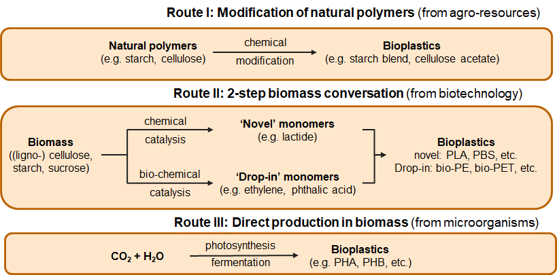
At this stage, the challenge is not availability, but conversion: how to transform these naturally occurring molecules into materials with controlled structure and predictable performance. This is done through three production pathways, as sketched in figure 3 [5],[6]. Each route represents a different level of intervention in the molecular structure, as discussed next.
4.1 Direct use and modification of natural polymers
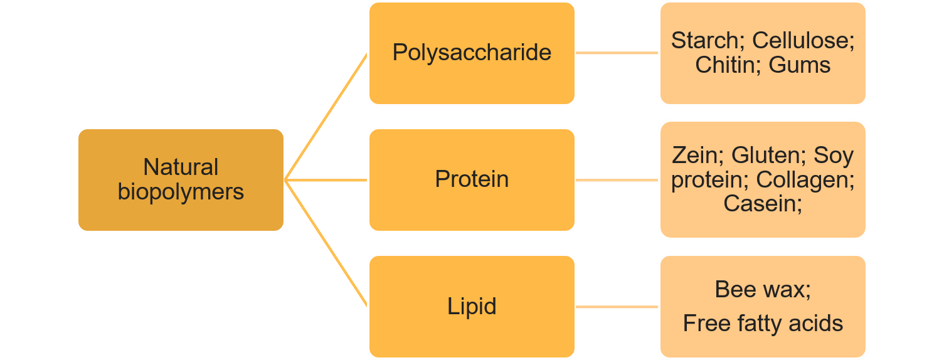
The simplest approach is to start with polymers that already exist in nature (Figure 4). Starch and cellulose are the most widely used examples.
This process produces what is known as thermoplastic starch (TPS), a material that can be processed using conventional plastic techniques such as extrusion or injection moulding.
Similarly, cellulose— one of the most abundant natural polymers on Earth—exhibits extensive hydrogen bonding and a highly crystalline structure, which impart excellent mechanical strength and stiffness. However, it is poorly processable. Chemical modification into derivatives like cellulose acetate allows it to be reshaped into films, fibres, and moulded products.
From a materials science viewpoint, this pathway is about modifying intermolecular interactions and crystallinity to tune mechanical properties.
4.2 Conversion to monomers and polymerization
A more versatile and widely used approach involves breaking biomass down into smaller molecules (monomers) and then rebuilding them into new polymers with tailored properties.

The resulting material exhibits properties like conventional plastics such as PET, including transparency, rigidity, and a glossy appearance, making it suitable for a wide range of packaging applications. Although PLA has relatively low heat resistance due to its low glass transition temperature (around 60°C), its performance can be enhanced through polymer modification, blending, and fiber reinforcement. Today, PLA is widely used in disposable food packaging, bottles, cups, agricultural films, shopping bags, hygiene products, and 3D-printing materials. In addition, PLA is recognized as one of the most readily biodegradable thermoplastics, further strengthening its role as a sustainable alternative to conventional fossil-based plastics.
This pathway highlights a key advantage of bioplastics: molecular design flexibility. By controlling monomer composition, stereochemistry, and molecular weight, scientists can engineer polymers for specific applications.
Another important example is bio-polyethylene (bio-PE), produced by converting bioethanol (from sugar fermentation) into ethylene, which is then polymerized. Interestingly, bio-PE is chemically identical to fossil-based PE—demonstrating that sustainability can be achieved without changing material properties.
4.3 Microbial production of polymers
The most biologically integrated approach involves using microorganisms as living factories. Certain bacteria naturally synthesize polymers such as polyhydroxyalkanoates (PHAs) as energy storage materials.
Under nutrient-limited conditions with excess carbon, these microorganisms accumulate PHAs inside their cells. The polymers are later extracted and processed into plastic materials.
From a materials science perspective, PHAs are particularly interesting because they combine biodegradability, biocompatibility, and tunable mechanical properties. Depending on their monomer composition, they can behave like rigid plastics or flexible elastomers.
This pathway also opens the door to circular systems. Researchers are increasingly exploring the use of food waste, agricultural residues, and even wastewater as carbon sources for microbial fermentation—transforming waste streams into valuable materials [7],[8],[9].
5. Environmental benefits and limitations
Bioplastics offer a compelling vision: materials that align more closely with natural cycles. By using renewable resources, they can reduce dependence on fossil fuels. In some cases, their production results in lower greenhouse gas emissions, especially when biomass absorbs carbon dioxide during growth.
Their end-of-life options can also be more flexible. Certain bioplastics are designed for composting, where they break down into natural components under controlled conditions. Others can be integrated into existing recycling systems, particularly “drop-in” bioplastics that share the same chemical structure as conventional plastics.
However, this vision comes with important caveats. Biodegradability is not a universal property, nor does it occur under all conditions. Many biodegradable plastics require industrial composting environments—specific temperatures, moisture levels, and microbial activity—to break down effectively. In natural environments like oceans or soils, degradation can be much slower.

In short, bioplastics are promising, but not perfect. Their environmental performance depends heavily on how they are produced, used, and managed at the end of their life.
6. Where bioplastics are used today
Despite these challenges, bioplastics are already making their way into everyday products [12],[13],[14],[15] (Figure 7). Packaging remains the dominant sector, accounting for nearly half of global bioplastic production. From food containers and films to disposable cutlery, bioplastics are particularly suited to short-life applications where waste volumes are high.
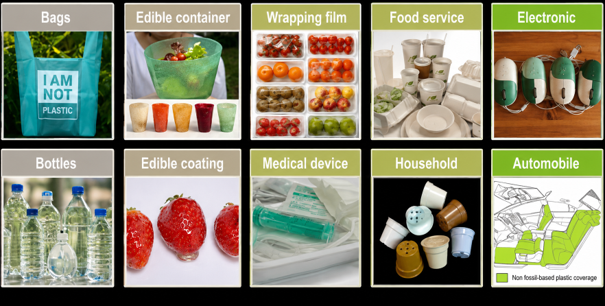
Innovation is also pushing boundaries in unexpected ways. Edible packaging made from seaweed can replace single-use wrappers. Bioplastic straws derived from avocado seeds transform food waste into functional products. Even experimental projects—from biodegradable 3D-printed materials to bioplastic-based personal protective equipment during the COVID-19 pandemic—demonstrate the versatility of these materials.
These examples illustrate a key point: bioplastics are not confined to niche applications. They are gradually expanding into multiple sectors, driven by both environmental need and technological progress.
7. Challenges on the road to a bioplastic future
Transitioning to bioplastics is not simply a matter of switching materials. It requires systemic change (Figure 8).
A key challenge is that bioplastics cannot yet serve as a universal replacement for conventional plastics. In many applications, they still do not offer the same well-optimized combination of strength, durability, flexibility, and heat resistance that conventional plastics have achieved through decades of technological refinement. As a result, the suitability of bioplastics depends on the specific requirements of each application.
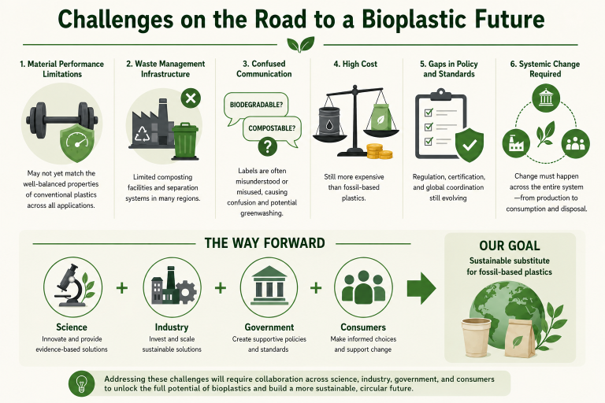
There is also the issue of communication. Labels such as “biodegradable” or “compostable” are often misunderstood or misused, leading to confusion and, in some cases, greenwashing. As the science shows, biodegradation depends on specific conditions, and without them, even biodegradable plastics can persist in the environment.
Economic factors play a role as well. Fossil-based plastics benefit from decades of infrastructure, scale, and cost efficiency. Bioplastics, by comparison, are still developing and often more expensive to produce. Policy frameworks and standards are evolving, but gaps remain in regulation, certification, and global coordination.
Addressing these challenges will require collaboration across science, industry, and government—along with informed participation from consumers.
8. Future outlook: rethinking our relationship with materials
The story of bioplastics is still being written, and its next chapters are shaped by rapid innovation. Researchers are developing new polymers with improved strength and heat resistance. Advances in biotechnology are enabling the use of microorganisms and enzymes to produce plastics more efficiently and sustainably.
Perhaps most promising is the shift toward integrating bioplastics into circular systems. Instead of a linear “take–make–dispose” model, future materials may be designed from the outset for reuse, recycling, or safe biodegradation. Feedstocks may increasingly come from waste streams or even captured carbon dioxide, further reducing environmental impact.
At the same time, industry investment is growing, signalling confidence in the long-term potential of sustainable materials.
Bioplastics offer a glimpse into a different future—one where materials are designed not only for performance, but also for their place within natural systems. They have the potential to reduce reliance on fossil fuels, lower emissions, and reshape how we think about plastic waste.
Yet, they are not a silver bullet. The plastic pollution crisis is too complex for any single solution. A truly sustainable future will depend on a combination of strategies: reducing unnecessary plastic use, improving waste management, redesigning products for circularity, and continuing to innovate in material science.
In the end, the shift toward bioplastics is not just about replacing one material with another. It is about reimagining our relationship with the materials we depend on—and recognizing that convenience today should not come at the expense of tomorrow.
9. Messages to remember
- ‘Conventional plastics’ success is also their curse: Extremely versatile and durable, they’ve become ubiquitous in daily life, but their fossil-fuel origins and persistence create massive pollution, especially microplastics that now spread everywhere, with only ~9% of plastic effectively recycled.
- Pollution by micro-plastics is a growing threat, from distant oceans to drinking water and agricultural soils, raising concerns about long-term ecological and human health impacts.
- “Bioplastics” provide partial solutions. This term describes a complex and diverse family of materials, either produced from leaving organisms (bio-based), either biodegradable, or both.
- Bioplastics address core problems: They reduce reliance on fossil fuels, can lower greenhouse gas emissions significantly, support a circular economy, and offer more flexible end-of-life options (composting, recycling, or safe degradation) compared to traditional plastics.
- Bio-based plastics can be produced through three main pathways: direct use and modification of natural polymers, conversion to monomers and polymerization, or microbial production.
- Bioplastics are already making their way into everyday products, and rapid innovation is in progress.
- Biodegradation requires specific environments and waste management procedures need to be adapted.
- Bioplastics are promising but not perfect: Benefits include renewability and lower carbon footprints, but limitations remain—biodegradation often requires industrial conditions, some feedstocks compete with food production, costs are higher, and current waste systems struggle to manage them properly (risk of contamination in recycling).
- A truly sustainable future will depend on a combination of strategies: reducing unnecessary plastic use, improving waste management, redesigning products for circularity.
Notes & references
Cover image. Some sources of bioplastics. [Source: Figure made of images representing: corn (Photo © Jeremy Keith from Brighton & Hove, United Kingdom, CC BY 2.0, via Wikimedia Commons), sunflower (Photo © T. Voekler, CC BY-SA 3.0, via Wikimedia Commons), E. coli (Photo © Photo by Eric Erbe, digital colorization by Christopher Pooley, both of USDA, ARS, EMU., Public domain, via Wikimedia Commons), Bioplastics pellets (AI-generated image using Grok)].
[1] Zhao, YX., Song, KW., Li, WJ. et al., 2026, Migration, transformation, and ecological effects of microplastics in aquatic ecosystems. Ecol Process 15, 28. https://doi.org/10.1186/s13717-026-00681-w
[2] Houssini, K., Li, J., & Tan, Q., 2025. Complexities of the global plastics supply chain revealed in a trade-linked material flow analysis. Communications Earth & Environment, 6(1), 257.
[3] Xue, W., 2023. Bioplastics: potential substitution to fossil-based plastics. Marine Plastics Abatement, 371–431.
[4] European Bioplastics, 2020. What are bioplastics? [WWW Document]. URL https://www.european-bioplastics.org/bioplastics/ (accessed 10.6.21).
[5] Brodin, M., Vallejos, M., Opedal, M.T., Area, M.C., Chinga-Carrasco, G., 2017. Lignocellulosics as sustainable resources for production of bioplastics – A review. J. Clean. Prod. 162, 646–664. https://doi.org/https://doi.org/10.1016/j.jclepro.2017.05.209
[6] Storz, H., Vorlop, K.-D., 2013. Bio-based plastics: status, challenges and trends. Landbauforsch. Appl. Agric. For. Res. 4, 321–332. https://doi.org/10.3220/LBF_2013_321-332
[7] Mannina, G., Presti, D., Montiel-Jarillo, G., Carrera, J., Suárez-Ojeda, M.E., 2020. Recovery of polyhydroxyalkanoates (PHAs) from wastewater: A review. Bioresour. Technol. 297, 122478. https://doi.org/10.1016/J.BIORTECH.2019.122478
[8] Bhatia, S.K., Otari, S. V., Jeon, J.M., Gurav, R., Choi, Y.K., Bhatia, R.K., Pugazhendhi, A., Kumar, V., Rajesh Banu, J., Yoon, J.J., Choi, K.Y., Yang, Y.H., 2021. Biowaste-to-bioplastic (polyhydroxyalkanoates): Conversion technologies, strategies, challenges, and perspective. Bioresour. Technol. 326, 124733. https://doi.org/10.1016/J.BIORTECH.2021.124733
[9] Chong, J.W.R., Khoo, K.S., Yew, G.Y., Leong, W.H., Lim, J.W., Lam, M.K., Ho, Y.-C., Ng, H.S., Munawaroh, H.S.H., Show, P.L., 2021a. Advances in production of bioplastics by microalgae using food waste hydrolysate and wastewater: A review. Bioresour. Technol. 342, 125947. https://doi.org/10.1016/J.BIORTECH.2021.125947
[10] Saalah, S., Saallah, S., Rajin, M., & Yaser, A. Z., 2020. Management of biodegradable plastic waste: A review. Advances in Waste Processing Technology, 127-143.
[11] Niaounakis, M., 2019. Recycling of biopolymers–the patent perspective. European Polymer Journal, 114, 464-475.
[12] Barrett, A., 2018a. Vegan, Biodegradable and Compostable Glitter. Bioplastics News; Barrett, A., 2018b. Lactips is a Milk-Based Biodegradable and Water-Soluble Packaging. Bioplastics News; Barrett, A., 2018c. First House on Mars will be Made from Bioplastics.
[13] Patel, P., 2020. The time is now for edible packaging. Chem. News.
[14] Carlson, C., 2020. Alice Potts makes bioplastic face shields from food waste. dezeen.
[15] Ye, C., Voet, V.S.D., Folkersma, R., Loos, K., 2021. Robust Superamphiphilic Membrane with a Closed-Loop Life Cycle. Adv. Mater. 33, 2008460. https://doi.org/https://doi.org/10.1002/adma.202008460 ; Ye, Y., 2021. Chinese PPE makers become greener, trying to limit pollution. Clobal Times.
The Encyclopedia of the Environment by the Association des Encyclopédies de l'Environnement et de l'Énergie (www.a3e.fr), contractually linked to the University of Grenoble Alpes and Grenoble INP, and sponsored by the French Academy of Sciences.
To cite this article: XUE Wenchao (August 17, 2026), Bioplastics: green polymers for a sustainable future, Encyclopedia of the Environment, Accessed October 7, 2026 [online ISSN 2555-0950] url : https://www.encyclopedie-environnement.org/en/physics/bioplastics-green-polymers-sustainable-future/.
The articles in the Encyclopedia of the Environment are made available under the terms of the Creative Commons BY-NC-SA license, which authorizes reproduction subject to: citing the source, not making commercial use of them, sharing identical initial conditions, reproducing at each reuse or distribution the mention of this Creative Commons BY-NC-SA license.