




Air pollution and trees
PDF1. Sources of air pollution
Although volcanic eruptions contribute to regular air pollution through the emission of toxic sulphur-based compounds, it is human activity that is inexorably responsible for the gradual and sustained increase in air pollution (See Air Pollution).
The Industrial Revolution, which began in the mid-18th century in England, led to an explosion in atmospheric pollution. The widespread use of coal in factories and for domestic heating caused episodes of intense pollution: the fumes were trapped in the lower atmosphere beneath a layer of warmer air (temperature inversion conditions). Episodes of toxic fog, a mixture of soot, sulphur dioxide (SO₂) and nitrogen oxides (coined ‘smog’ from the contraction of ‘smoke’ and ‘fog’), caused high mortality rates in England (1873 and 1952), as well as in Belgium (1930) and Pennsylvania (1948).
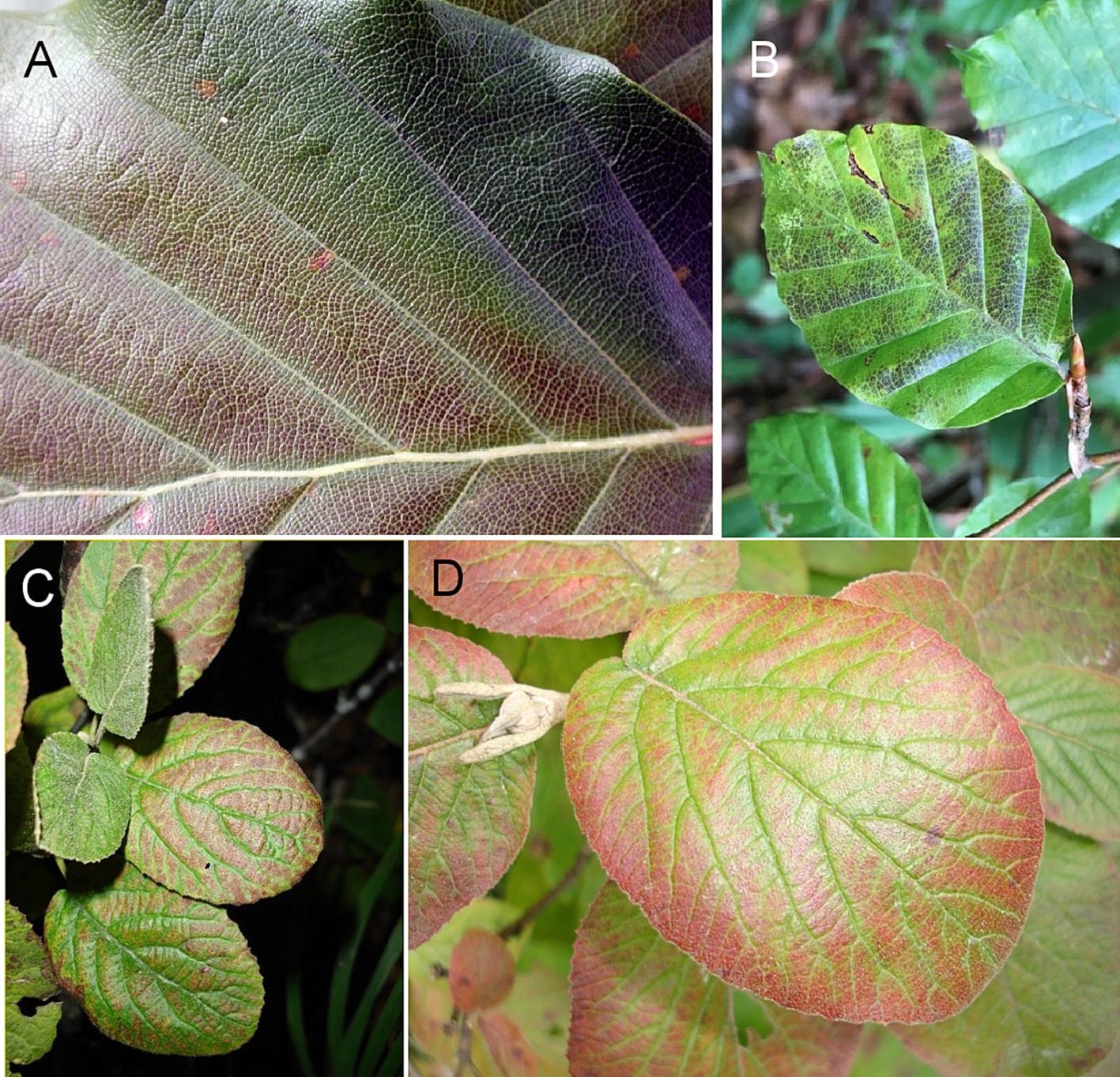
Despite numerous regulatory measures (in the United States and Europe from the 1970s and 1980s onwards, followed by Asia), photochemical smog persists and is spreading well beyond urban areas. A recent analysis [2] of tropospheric ozone concentrations in Europe (2005–2018) shows that annual averages exceed 40 ppb (~80 μg/m³) – the toxicity threshold for vegetation – at 37.3% of sites in the European monitoring network [3].
Although trees absorb pollutants (an effect often presented as beneficial for air quality) [4], this benefit is largely offset by the direct toxic effects on their metabolism, growth and health (See What is the impact of air pollutants on vegetation?).
2. Interactions between pollution and trees
Photosynthesis enables plants to absorb CO₂ via the stomata in their leaves, to produce carbon compounds and to release oxygen – a vital process for all living organisms (See The path of carbon in photosynthesis). This is an asset in the face of anthropogenic CO₂ accumulation (greenhouse effect and global warming). However, leaves also absorb pollutants that disrupt photosynthesis, increase oxidative stress, alter metabolism and, ultimately, affect the growth and health of trees (See What is the impact of air pollutants on vegetation?).
From the onset of industrialisation, the damage became visible. In 1866, Elie Berthet described foliage in the Hainaut coalfield region covered in a fine layer of coal dust [5] . By the end of the 19th century, aluminium smelters in the Maurienne region were producing massive quantities of fluorine, causing the rapid death of conifers (fir, pine, spruce). Levels returned to acceptable levels in France by the end of the 20th century, but severe dieback persists near certain Russian smelters (Scots pines in the boreal forest near Irkutsk).
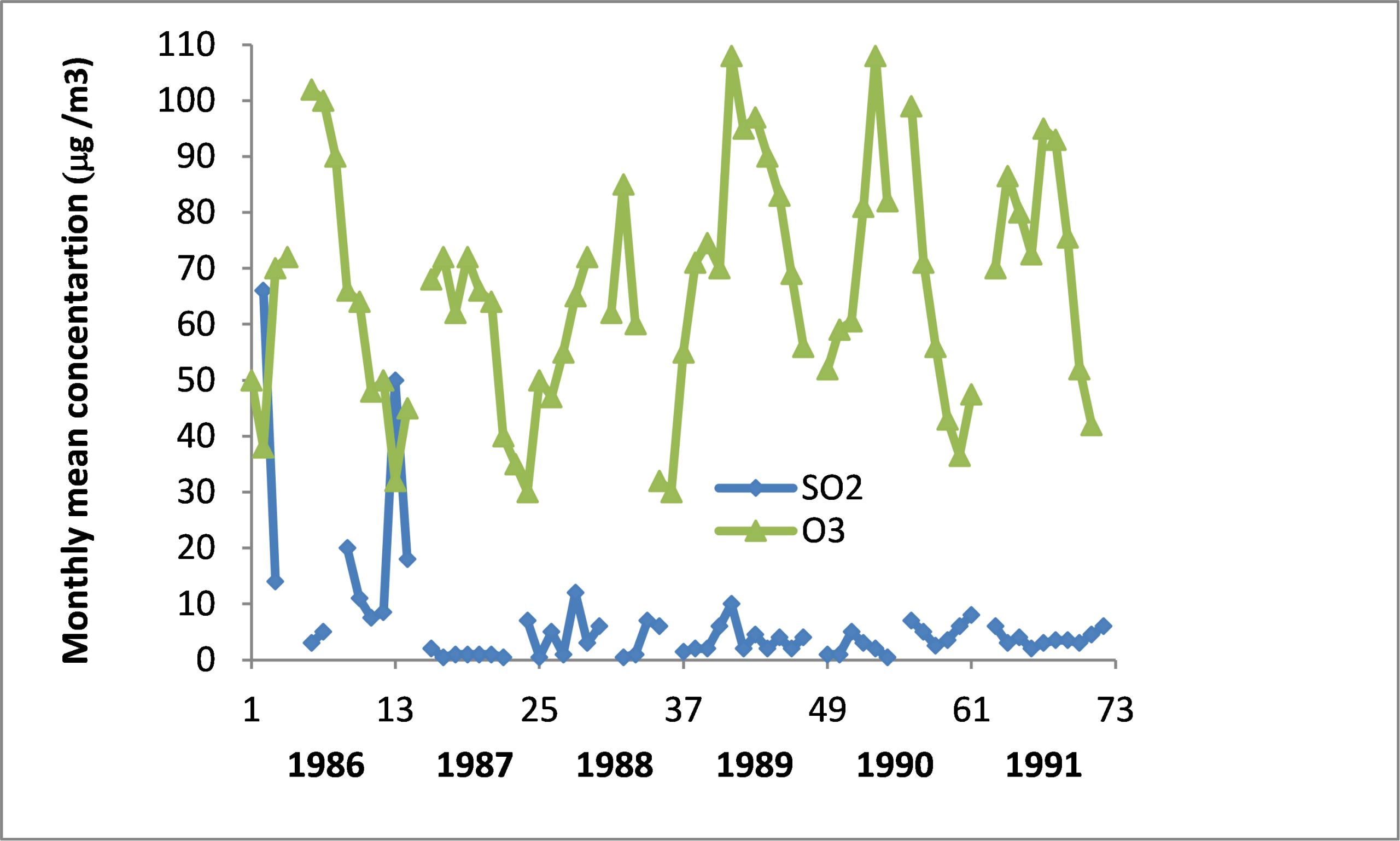
Conversely, ozone concentrations remain high in spring and summer (Figure 2). Unlike SO₂, ozone is a secondary pollutant transported over long distances. It has emerged as a serious candidate for explaining the ‘new forest decline’ affecting conifers (fir, spruce, Scots pine) and broadleaves (beech) in Europe and North America. In France, the DEFORPA programme (Forest Decline and Atmospheric Pollution, 1984–1991) and other European studies led to a consensus in the 1990s: forest decline results from a combination of various stress factors. Trees, often planted too densely on poor soils and outside their natural ecological limits, are subjected to severe climatic events (the 1976 drought, extreme cold). Those already weakened by previous stresses are the most affected. In this context, ozone acts as an aggravating factor.
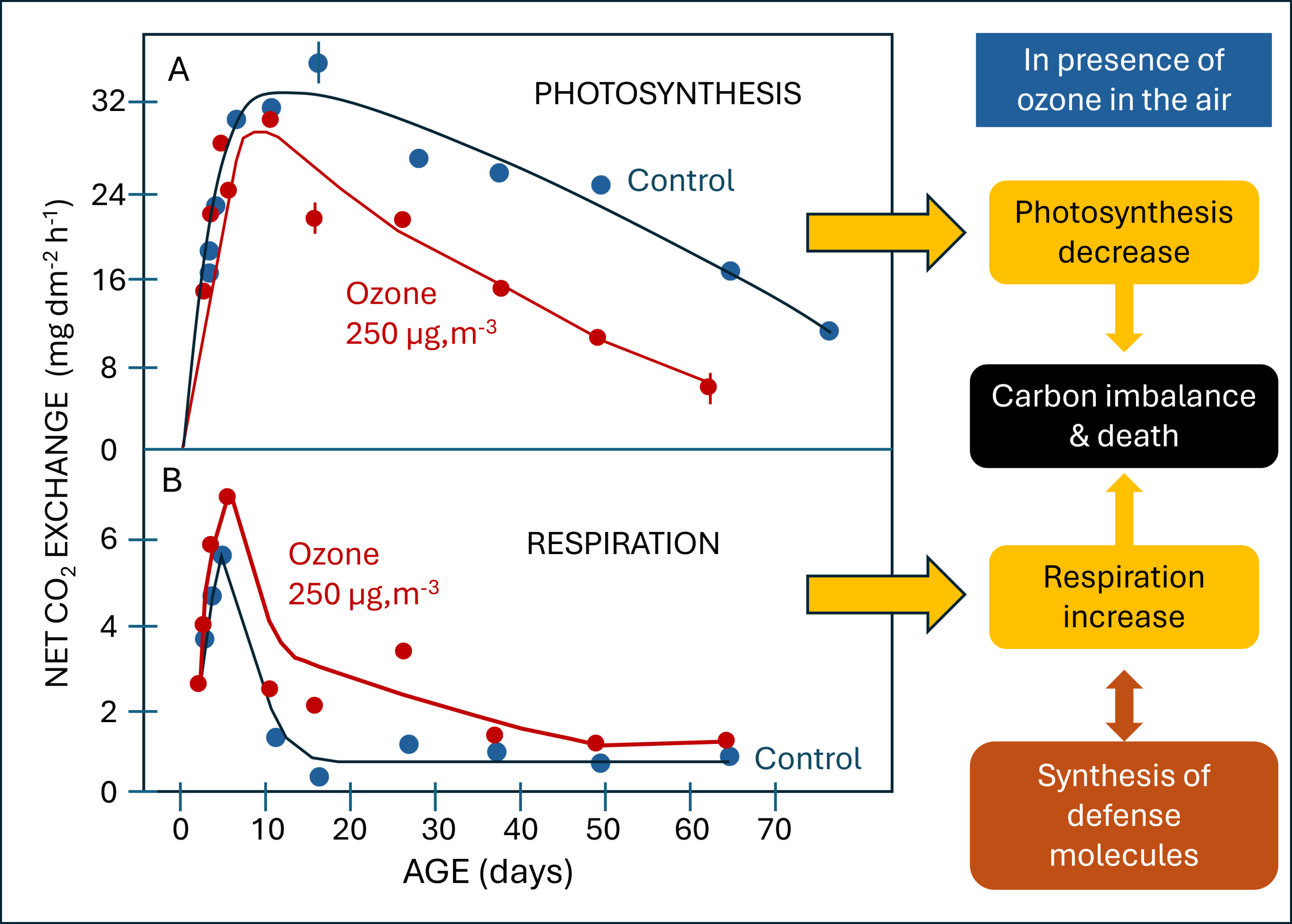
Ozone exerts its oxidising effect by disrupting leaf cell metabolism (see Environmental constraints and oxidative stress in plants). Photosynthesis decreases whilst respiration increases (Figure 3) [6] to promote the synthesis of defence compounds, leading to a carbon imbalance detrimental to cell life [7].
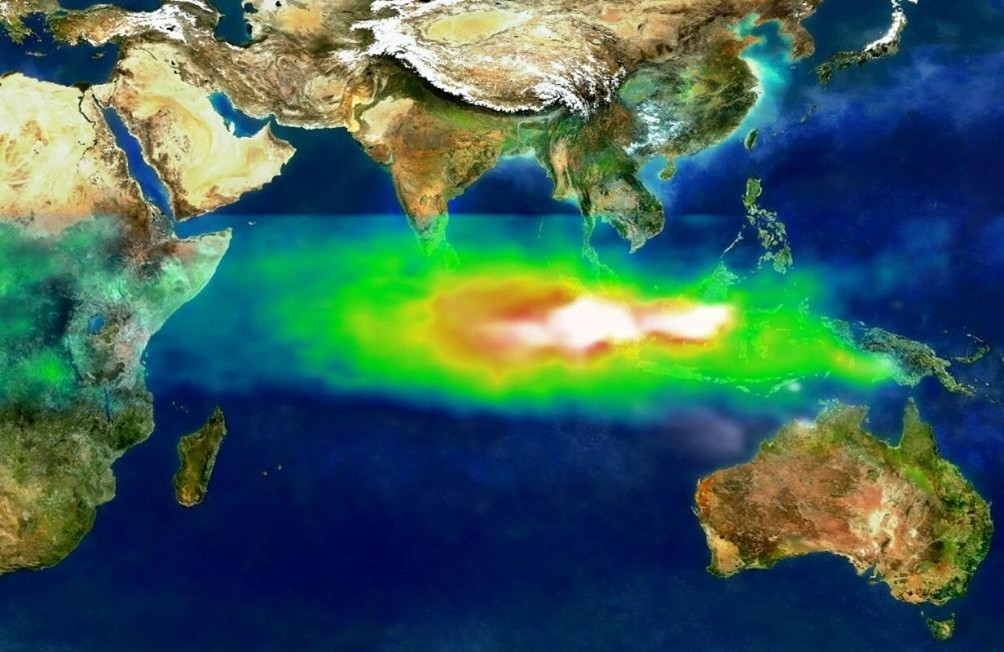
Although atmospheric ozone concentrations are stabilising in Europe and North America, they are still rising in Asia. The vulnerability of forests depends on the combined effects of ozone and factors linked to climate change. Forest fires (Indonesia, Amazon) amplify ozone production via the NOₓ released by combustion; ozone migrates over long distances beyond its place of production (Figure 4).
Fires associated with drought exacerbate the damage to photosynthesis caused by ozone, reducing the capacity for CO₂ sequestration, not only through direct emissions during the fires, but also through ozone-induced disruption of plant metabolism. This creates a vicious circle that contributes to global warming.
Notes et references
Thumbnail. [Photo source: PxHere]
[1] Haagen-Smit AJ, Darley EF, Zaitlin M, Hulle H & Noble W (1952). Investigation into damage to plants caused by air pollution in the Los Angeles area. Plant Physiology, 27, 18–34.
[2] Ferretti M. et al. (2024). The fingerprint of tropospheric ozone on broad-leaved forest vegetation in Europe. Ecological Indicators, 158, 111486.
[3] It should be noted that the toxicity threshold for humans is 50 μg/m³.
[4] Nowak DJ & Van den Bosch M (2019). The effects of trees and forests on air quality and human health in and around urban areas. Public Health, 31, 153–161.
[5] Berthet E (1866). The Coal Miners of Polignies. Louis Hachette Publishers, Paris, 303 pp.
[6] Reich PB (1983) Effects of low concentrations of O₃ on net photosynthesis, dark respiration, and chlorophyll content in ageing hybrid poplar leaves, Plant Physiology, 73: 291–296. https://doi.org/10.1104/pp.73.2.291.
[7] Dizengremel P (2001). Effects of ozone on the carbon metabolism of forest trees. Plant Physiology and Biochemistry, 39, 729-742. https://doi.org/10.1016/S0981-9428(01)01291-8.