


Sewage sludge: a boon for agricultural land?
PDF
The massive production of sludge resulting from the treatment of our urban wastewater is part of a very positive hygienist approach (discharging properly treated water into our rivers). But what should be done with this waste, which has both good and bad aspects? Spreading this sludge on agricultural land is a controversial yet necessary practice. What is its impact on the receiving soil?
Preliminary note: Mostly based on data from the situation in France, this article deals mainly with trace metals (TM) present in sewage sludge. Other contaminants, particularly organic ones, will only be mentioned briefly. For a more extensive description of wastewater composition and treatment in sewage treatment plants, see Why and how to treat urban wastewater?
1. What is sludge?
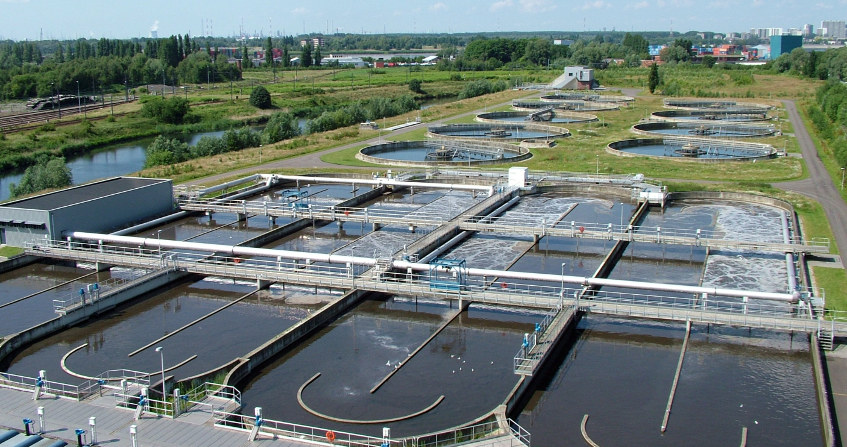
Sludge is the semi-solid residue from the treatment of wastewater from towns and villages in sewage treatment plants. This “wastewater” is a mixture of:
- Rainwater (which rinses roofs and pavements and is therefore enriched with zinc, cadmium, lead and hydrocarbons)
- Domestic water (from washing, dishwashing, showers, toilets), rich in organic matter, nitrogen, phosphorus, cellulose, etc.
In the past, this was supplemented by wastewater from industrial and craft activities, loaded with various metals, particularly lead (Pb), cadmium (Cd) and mercury (Hg). Nowadays, this industrial wastewater is treated within the factories themselves and no longer enters the sewer system without being at least partially purified.
The production of this sludge in France is estimated at 1 million tonnes of dry matter per year. This sludge can be spread on fields by farmers or used in urban landscaping.
Spreading accounts for 73% of sewage sludge produced in France (Figure 1), just under half of which is first composted in a mixture with green waste. The area currently spread in France is around 750,000 to 800,000 hectares, or 2.5 to 3% of usable agricultural land.
A small proportion can also be treated by anaerobic digestion of organic matter, with the solid residue (digestate) being spread after methane recovery.
The rest of the sludge from French wastewater treatment plants is incinerated (18%) or sent to landfill (9%), the latter being a “back-up” option.
The treated water is discharged into watercourses.

2. Components : Advantages/disadvantages
Agricultural spreading is a practice recommended by water agencies and ADEME. It is also the main method of sludge recovery in Europe because it offers many advantages (in addition to getting rid of waste that would otherwise be difficult to dispose of). The addition of sludge makes it possible to:
- fertilise the soil, as it is rich in organic matter, nitrogen and phosphorus, nutrients that are essential for crop growth. It can partially replace synthetic fertilisers and contributes to the recycling of phosphorus, the rarest and most precious element in agriculture.
- improve the physical and chemical qualities of the soil by helping to maintain carbon stocks.
Sludge contain copper, zinc and other useful oligoelements, as well as high levels of calcium (when the sludge is limed, i.e. treated with quicklime). This treatment raises the pH of the soil (when it is acidic), improves aggregate stability and provides an essential nutrient for plants. Furthermore, spreading does not require any investment on the part of farmers other than a spreader, and sludge is usually provided free of charge.
However, sludge also contains undesirable and even polluting substances in varying quantities (we will come back to this later):
- Potentially toxic trace elements (often referred to as “heavy metals”), mostly metals (TM [1]): Cd, Cr, Cu, Hg, Ni, Pb, Se, Zn;
- Organic micropollutants (polycyclic aromatic hydrocarbons = PAHs, polychlorinated biphenyls = PCBs, PFAS [2], antibiotics, drug residues, hormones, pesticides, microplastics, etc.);
- Pathogenic organisms (worms, bacteria, viruses [3]). To remedy this undesirable presence, sludge is often heated and/or limed (see Focus Liming and thermal treatment of sewage sludge).
There is concern about the transfer of these undesirable substances from the receiving soil to cultivated plants (risk of phytodisponibility) or livestock and therefore to our food.
3. Societal acceptability of sludge spreading
Agriculture is caught between a rock and a hard place. On the one hand:
- Wastewater from towns and villages is being treated more effectively than ever before, which is excellent news.
- landfilling is now virtually prohibited.
- the only other way to dispose of sludge is through incineration, which is expensive and harmful to the environment. Not only are there few incinerators, but the final residues (clinker) also require long-distance transport by lorry to be stored in landfills. Finally, incineration prevents the recycling of organic matter and nutrients (P, N) contained in sludge.
- As a result, there is a growing volume of sludge to be “disposed of” (or “recycled” or “recovered”) by agriculture.
On the other hand, we are seeing:
- a growing concern for the quality of agri-food products.
- widespread mistrust of sludge spreading, leading to demands from processors (Bonduelle, sugar producers), distributors (e.g. Carrefour), consumers and even foreign importers, resulting in “quality charters” or “labels” that formally exclude spreading…
- a desire for “traceability” (as with beef and wheat) and increasing consideration of the “precautionary principle”.
As a rule, farmers are willing to spread sludge from their village’s wastewater treatment plant. But it is a different story when it comes to spreading sludge from large cities, particularly Paris and its suburbs! Numerous conflicts have arisen in various regions of central France, particularly in the Cher department.

To allay reservations, charters on “quality standards for the agricultural use of sewage sludge” have been signed and implemented, involving government departments, sludge spreading companies, local authorities and chambers of agriculture. There are many examples of this, including the Artois-Picardie basin and the departments of Aveyron and Haut-Rhin.
Possible perceptions of sludge spreading
Should the spreading of sewage sludge on agricultural land be considered:
- a way of recycling waste as fertiliser (very positive connotation)?
- a service to the community, as it allows the disposal of a by-product that we do not know what to do with (rather positive connotation)?
- the spread of potentially polluting substances (with very negative connotations) into our environment?
In the United States, this sewage sludge is misleadingly referred to as “biosolids“! In this way, the rather positive prefix “bio” is used to mask a less appealing reality. In France, it is now classified as “organic waste products” or PRO. Thus, the word “sludge” is carefully avoided.
4. There is sludge and then there is sludge : variation in space and time
It is true that urban sewage sludge contains undesirable trace metals (TMs): lead, cadmium, zinc, copper, etc., but:
- in very different quantities depending on the treatment plant, depending on whether it is a large industrial city or a small rural village (Variation in space) (see Focus Variation in space and time in sewage sludge composition);
- in very different quantities over time within the same plant (Variation in time) (see Focus Variation in space and time in sewage sludge composition).

Over the years, there has been a spectacular decrease in the TM content of Achères sludge, particularly about cadmium, the most feared metal (Figure 3).
To achieve this result, various regulations have been put in place and enforced. Cadmium has been strictly banned from almost all industrial processes that used it: cadmium plating to protect metals from corrosion, additives in plastics, soldering, manufacture of rechargeable nickel-cadmium batteries, dyes, etc. A first observation stands out: the heavy metal composition of today’s sludge is completely different from that of the 1970s to 1990s (see § 7).
5. French regulations
The regulations governing the recycling of sludge in agriculture are as follows:
– Articles R211-25 to R211-47 of the Environment Code.
– Decree of 8 January 1998 laying down technical requirements for the spreading of sludge on agricultural land (later amended by a decree of 15 September 2020).
Here are the key points:
- Sludge from wastewater treatment plants (WWTPs) is considered waste. As a result, the sludge producer is responsible for the spreading process; he must draw up an annual spreading programme, followed by an agronomic assessment of the process.
- There are plans to significantly reduce the total amount of TMs flowing into the system by imposing stricter requirements on sludge composition and limiting authorised tonnages.
- Limit values for six trace elements in soil prior to spreading (e.g. 2 mg of cadmium per kg or 100 mg of lead per kg) have been set, hence the need to carry out preliminary studies and analyses (see § 6). Above these limit values, exemptions are possible but require an additional study of the immobility and non-bioavailability of trace metals present in the soil [4].
- The pH of the receiving soil after spreading must be considered and must be > 6.0.
- Spreading is prohibited on land that is too steep or soil that is too permeable, on plots close to watercourses, drinking water catchments or dwellings, etc.
The specifications for organic farming and other quality schemes such as the “Label Rouge” prohibit the use of sewage sludge as fertiliser.
Finally, spreading sludge on grassland is not formally prohibited but is not recommended. Similarly, restrictions on spreading apply to vegetable and fruit crops.
It should be noted that since trace elements are present in very small quantities, the unit of measurement is milligrams of the element per kilogram of dry matter (mg/kg DM), whether the sample is soil or sludge.
6. Quality of receiving soils
To select soils suitable for receiving sewage sludge, the spreading plan must take into account the following considerations:
- location in the landscape (plots far from watercourses, with little or no slope);
- soil type (not too thin, not too permeable). It must then be based on soil analyses, particularly about six TMs.
Regulations require that none of the six elements exceed the thresholds shown in Table 1. These are “total contents”, i.e. the contents of major elements or trace elements obtained by analysis after prior dissolution of all constituents, in particular all silicates, which are very abundant in soils [5] .
Table 1. Threshold values for six trace metals in “soils” (actually for the ploughed surface horizons of the land where spreading is planned). Total contents expressed in milligrams per kilogram of dry matter (mg/kg DM).

The meaning of these thresholds’ values should not be misunderstood. They do not represent maximum permissible levels in soil (a low level might be acceptable, whereas a higher level would not). Nor are they maximum natural levels above which contamination would be certain. These are relatively arbitrary values, initially inspired by Dutch regulations, and are not the result of scientific studies [6].
French legislation does not propose thresholds to distinguish between contaminated and uncontaminated soil! It merely sets administrative values above which the spreading of sludge from urban wastewater treatment plants is not automatically authorised. Nothing more.
Several studies [7,8] have shown that the limit value of 50 mg of nickel per kg in the receiving soil has been set too low. Many clayey and/or iron-rich soils far exceed this threshold, which often causes administrative difficulties and unfounded concerns for certain spreading plans. This nickel threshold should be raised to 100 mg/kg.
Spreading may, however, be authorised (by way of derogation), provided that proof of the harmlessness of this high concentration of a particular TM in the receiving soil is provided. This proof may be provided by a sufficiently substantiated additional study. A methodological guide was drawn up in 2005 to help formulate requests for derogations for the spreading of urban sewage sludge on agricultural land in the event of natural pedogeochemical anomalies [4].
7. What impact does this have on soil quality?
7.1 1970s-1980s : Controversial impacts
At that time, contradictory statements appeared in scientific and technical literature, which were also heard in the corridors of conferences. On the one hand, “the spreading of sewage sludge has a clear impact on soils and crops, as demonstrated by the INRA trial in Bordeaux at Couhins”… but on the other hand, “the spreading of sewage sludge has no detectable impact on soils or harvested plant organs”.

Significant impacts were observed on soils in the “Vexin français” region, where urban sludge from 11 French and German sewage treatment plants was spread extensively between 1975 and 1999 [9,10], as well as at the Bézu-le-Guéry experimental site in the Aisne department (Figures 4 and 5).
In the case of soils on the Vexin plateaus (luvisols derived from loess) [11] (Figure 4), usual agricultural cadmium concentrations (TAH, [12]) range from 0.20 to 0.40 mg/kg, regardless of organic carbon levels, which vary widely. The three sites where urban sludge was spread showed the highest carbon contents but also clear cadmium contamination: between 1.55 and 2.16 mg/kg. Contamination was therefore confirmed.

In the case of “Luvisols dégradés” in the south-east of the Paris Basin (Figure 5), there is a good natural geochemical relationship between zinc and iron. The only analysis that completely deviates from this relationship corresponds to a surface horizon from the experiment conducted in Bézu-le-Guéry, where sludge from Achères was spread extensively (118 t/ha in two applications in 1974 and 1977). Zinc contamination is evident.
7.2 An inventory of experiments in France
To get to the bottom of this, an inventory was carried out of field experiments conducted in France to assess the impact of sewage sludge spreading (Figure 6). To do this, the final reports were consulted. Here are some of the results of this compilation [13,14,15].
As part of several of these trials and research programmes, analyses of soft wheat (or maize) grains were carried out at the same time as analyses of the corresponding soil surface horizon [16]. Comparisons were made between plots “with sludge” and plots “without sludge”.

1. 1970s and 1980s: excessive spreading of urban sludge with high cadmium content.
Experiments: INRA in Couhins (Gironde); Bézu-le-Guéry (Aisne); La Bouzule (Meurthe-et-Moselle).
Agronomic reality: Achères sludge on agricultural soils in the Vexin region (Val d’Oise, see refs. [9,10]).
These experiments most often involve sludge with very high levels of heavy metals spread in high doses, resulting in enormous flows of heavy metals, particularly cadmium. For instance, Table 3 presents estimate of cadmium flows introduced in various trials mentioned in this article. These flows range from barely 1 g of Cd per hectare (small stations with very “clean” sludge – low tonnages) to 4320 g of Cd per hectare (four applications of sludge from Achères in the 1970s and 1980s). Not to mention the experiment in Bézu-le-Guéry, where two “double dose” applications added 18.9 kilograms of cadmium, or the one in Couhins Louis Fargue (641 kg)! The effects of this spreading are clearly visible in the total concentrations measured in the surface horizon of the receiving soils (see Figures 4 and 5).
Table 2. Estimates of cadmium fluxes from various studies conducted in France (expressed in grams per hectare). Comparison with the European regulatory value and flows linked to phosphate fertilisation. DM = dry matter. Reminder: the surface horizon (30 cm thick) on one hectare weighs approximately 3,600 tonnes. For details about this table, see references [9,10,11].

2. Special case of Limousin (1990s): spreading of urban sludge loaded with industrial cadmium in an acidic soil environment.
As a result of the activity of a particular industrial establishment, sewage sludge from the city of Limoges was for a long time heavily laden with Pb but above all with Cd (Table 3).
Table 3. Average TM levels in Limoges’ sludge compared to those spread in France during the same period (expressed in mg/kg of dry matter) © Denis Baize

Since 1999, this sludge has no longer been spread on agricultural land, but it was used for around thirty years prior to that. This is why the Chamber of Agriculture has developed a study of soil and crop quality closely modelled on the Quasar programme protocol [17], to assess the impact of this sludge spreading on the composition of wheat grains.
Three types of plots must be distinguished according to the amount of cadmium brought in by the spreading between 1988 and 1998:
- 2 plots that received flows of less than 100 g/ha (low flows);
- 4 plots that received flows of around 300 g/ha (medium flows);
- 8 plots that received approximately 500 to 600 g/ha, which is much higher than the cumulative flows authorised by French regulations of January 1998 (extreme flows).
These latter plots probably received three times more Cd over the previous 30 years.

3. 1990s-2000s: sludge spreading at reasonable doses in accordance with the 1997-98 regulations.
Experiments: Grignon and Feucherolles (Yvelines), Colmar and Ensisheim (Haut-Rhin), Poucharramet (Haute-Garonne), Bouy (Marne), Barneau (Seine-et-Marne), Vandeuvre-sur-Barse (Aube), etc.
Observatories: QUASAR programme, and Chambers of Agriculture (Bourgogne-Franche-Comté, Somme, Aisne, Charente Maritime) …
In all these studies, no detectable difference was found between the analyses carried out on plots that had received sludge and those carried out on control plots that had not been treated.
7.3 How can we assess a possible transfer from soil to plant?
The amount of trace metals absorbed by a plant through its roots varies greatly. It depends on:
- the family and species (in terms of trace metals absorption as nutrients, maize does not behave like wheat or spinach, etc.);
- the variety: when grown on the same soil, a wheat variety called “Soissons” does not absorb TMs in the same way as a wheat variety called “Trémie”;
- the natural properties of the soil where the plant is grown (grain size, presence of calcium carbonate, abundance of iron and manganese oxides, etc.);
- the properties acquired by the soil because of successive agricultural practices (soil amendments, fertilisation): e.g. pH or abundance of Cl–.
In addition, each plant species stores unwanted trace metals in different organs: some in the roots, others in the stems, leaves or grains.
It is therefore conceivable that the number of possible combinations of species × variety × organ × soil types is practically infinite.
To estimate the risks of phytodisponibility, in vitro chemical tests are commonly used (known as “partial extractions”). However, these tests are unreliable because they are carried out under artificial conditions, on air-dried soil samples, which are not adapted to different plants, different soils or different chemical elements (see Focus Partial extractions on soil samples).
To know with certainty whether a crop is contaminated as a result of soil pollution, it is better to analyse the harvested organ (wheat or maize grain, spinach leaf, potato tuber). Unfortunately, these analyses on plant matrices are costly and delicate and would need to be repeated many times.
About partial extractions, we have listed the unavoidable theoretical obstacles. However, they are very practical and there are currently no other more effective diagnostic tools available for routine use.
7.4 Importance of the pH of the receiving soil
It is important to emphasise the major impact that the pH of the receiving soil has on the risk of transfer of heavy metals (whether of natural or anthropogenic origin), particularly cadmium from the soil to plants. The lower the pH, the greater the risk of phytodisponibility and mobility. Fortunately, this parameter can be easily controlled in the medium term by farmers through regular applications of basic calcium amendments. It should be noted that limed sludge itself acts as an “antidote” to the trace metals it contains, raising the pH of the receiving soil and thereby reducing the potential for mobility and phytodisponibility of potentially dangerous metals.
7.5 Examples of sludge spreading in Europe
In most European countries (Great Britain, Germany, Belgium, etc.), sewage sludge is recycled in two ways:
- Agricultural spreading, governed by specific and demanding regulations.
- Energy production (biogas combustion or direct incineration).
In Wallonia, agricultural recovery (considered recycling) is preferred to energy recovery.
Switzerland is a special case. Since 1 October 2006, it has been prohibited to use sewage sludge as fertiliser in agriculture. Sludge is considered waste and must therefore be disposed of by thermal treatment in household waste incineration plants (UIOM), sludge incineration plants or cement works. The Federal Office for the Environment is grappling with a major technical problem: how to recover the phosphorus contained in sewage sludge, which, when dehydrated, contains around 1% phosphorus?
8. Messages to remember
- The phrase “spreading urban sewage sludge on agricultural land” does not adequately reflect the huge differences in metal flows depending on the circumstances: cumulative tonnages applied and sludge composition (which has varied greatly and still varies over time and space).
- More recent applications, at reasonable doses and with sludge whose composition complied with regulations, had no detectable impact on soil composition or on the composition of soft wheat grains. This can be explained by the modest cadmium flows introduced, which were well below the cumulative regulatory flows (see Table 2).
- The main merit of the 1998 French regulations on sludge spreading was to encourage a significant reduction in TM flows. This objective has been achieved.
- Spreading urban sewage sludge on agricultural land is the least bad solution for disposing of this waste, especially as it allows the recycling of organic matter and nutrients such as phosphorus.
- To avoid any agronomic problems and public concern in the future, three ideas are essential:
– Continue to improve the composition of sludge (and not only in terms of metals).
– Strictly comply with regulations designed to prevent excesses.
– Do not always spread on the same land.
Notes & references
Cover image. Wastewater treatment plant in Saudi Arabia [Source : Pixabay]
[1] The concept of trace metal, or TMs, is gradually replacing that of heavy metals, which is poorly defined as it encompasses metals that are truly heavy and others (metalloids) that are less so.
[2] PFAS: Perfluoroalkyl and polyfluoroalkyl substances
[3] During the Covid-19 pandemic (which began in 2019), caused by the SARS-CoV-2 coronavirus, measurements in the wastewater of large cities made it possible to track its progress.
[4] ADEME & APCA, 2005. Dérogations relatives à la réglementation sur l’épandage des boues de station d’épuration. Guide technique. . 147 pages. https://www.oieau.fr/eaudoc/system/files/documents/41/205253/205253_doc.pdf ; https://www.lot.gouv.fr/contenu/telechargement/13267/104377/file/a7_guide_ademe.pdf (in french)
[5] To obtain total concentrations, it is therefore necessary to use dissolution methods capable of dissolving silicates (hydrofluoric acid, alkaline fusion) or X-ray fluorescence.
[6] Baize D., 2002. Les épandages de boues d’épuration urbaines – Examen critique des valeurs limites “sols” de la réglementation française. pp. 137-154. In : “Les Éléments traces métalliques dans les sols – Approches fonctionnelles et spatiales” D. Baize and M. Tercé coord. INRA Éditions, Paris. 570 p (in french)
[7] Duigou N. and Baize D., 2010 Nouvelle collecte nationale d’analyses d’éléments en traces dans les sols (horizons de surface) – (Cd, Cr, Cu, Hg, Ni, Pb, Se, Zn). Rapport final. Contrat ADEME 0875C0036. 284 pages. (in french)
[8] Duigou N. and Baize D., 2011. Teneurs en éléments traces métalliques de l’horizon de surface des sols en France. Résultats d’une collecte nationale d’analyses – Constitution de la BDetm. 10èmes rencontres de la fertilisation raisonnée et de l’analyse, COMIFER-GEMAS, Reims, 2 p. https://comifer.asso.fr/wp-content/uploads/2015/04/duigou-comifer-2011_v7.pdf (in french)
[9] Tercé M., Morel J.L., Baize D., Bermond A., Bourgeois S., Cambier P., Gaultier J.-P., Lamy I., Mench M., Mocquot B. & Moisan H., 2002 – Approches agronomiques – Devenir du cadmium apporté par des épandages de boues urbaines en céréaliculture intensive. pp. 455-469. In : “Les Éléments traces métalliques dans les sols – Approches fonctionnelles et spatiales” D. Baize & M. Tercé coord. INRA Éditions, Paris. 570 p (in french)
[10] Gaultier et al., 2003 Gaultier J.P., Cambier P., Citeau L., Lamy I., vanOort F., Isambert M., Baize D. and Tercé M., 2003 – Devenir des éléments traces dans les sols du Vexin français soumis à des épandages de boues. In Tercé M. (Coord.), Agriculture et épandage de déchets urbains et agro-industriels. Les Dossiers de l’environnement de l’INRA No. 25, Paris, 154 p. pp. 63-73. https://www.researchgate.net/publication/228751710. (in french)
[11] Relatively thick soils showing clear textural differentiation resulting from vertical illuviation of clay particles.
[12] TAH: abbreviation for the French expression « Teneurs Agricoles Habituelles »
[13] Baize D., 2006 – Épandages de boues d’épuration urbaines sur des terres agricoles : impact sur la composition en cadmium des sols et des grains de céréales. 17e Journées Information Eaux, APTEN, 26-28 septembre 2006, Poitiers. Tome 1, pp. 24-1 to 24-14. (in french)
[14] Baize D., Courbe C., Suc O., Schwartz C., Tercé M., Bispo A, Sterckeman T. and Ciesielski H., 2006 – Épandages de boues d’épurations urbaines sur des terres agricoles : impacts sur la composition en éléments en traces des sols et des grains de blé tendre.Le Courrier del’Environnement de l’INRA no. 53, pp. 35-61. https://hal.science/hal-01199208/file/C53Baize.pdf (in french)
[15] Baize D., 2009. Cadmium in soils and cereal grains after sewage sludge application on French soils. A review. Agronomy Sustainable Development, 29, pp. 175-184. https://hal.archives-ouvertes.fr/hal-00886468/document.
[16] Dosages were often added after so-called “partial” extractions on soil samples. Various reagents (such as EDTA or DTPA) were used, which were supposed to extract only the phytodisponible forms of heavy metals.
[17] Courbe C., Baize D., Sappin-Didier V. and Mench M., 2002. Impact de boues d’épuration anormalement riches en cadmium sur des sols agricoles en Limousin. In : Actes des 7e JNES, octobre 2002 – Orléans. pp. 15-16. (in french)
The Encyclopedia of the Environment by the Association des Encyclopédies de l'Environnement et de l'Énergie (www.a3e.fr), contractually linked to the University of Grenoble Alpes and Grenoble INP, and sponsored by the French Academy of Sciences.
To cite this article: BAIZE Denis (October 23, 2025), Sewage sludge: a boon for agricultural land?, Encyclopedia of the Environment, Accessed April 6, 2026 [online ISSN 2555-0950] url : https://www.encyclopedie-environnement.org/en/soil/sewage-sludge-boon-agricultural-land/.
The articles in the Encyclopedia of the Environment are made available under the terms of the Creative Commons BY-NC-SA license, which authorizes reproduction subject to: citing the source, not making commercial use of them, sharing identical initial conditions, reproducing at each reuse or distribution the mention of this Creative Commons BY-NC-SA license.