



Rural soils at a territory scale
PDF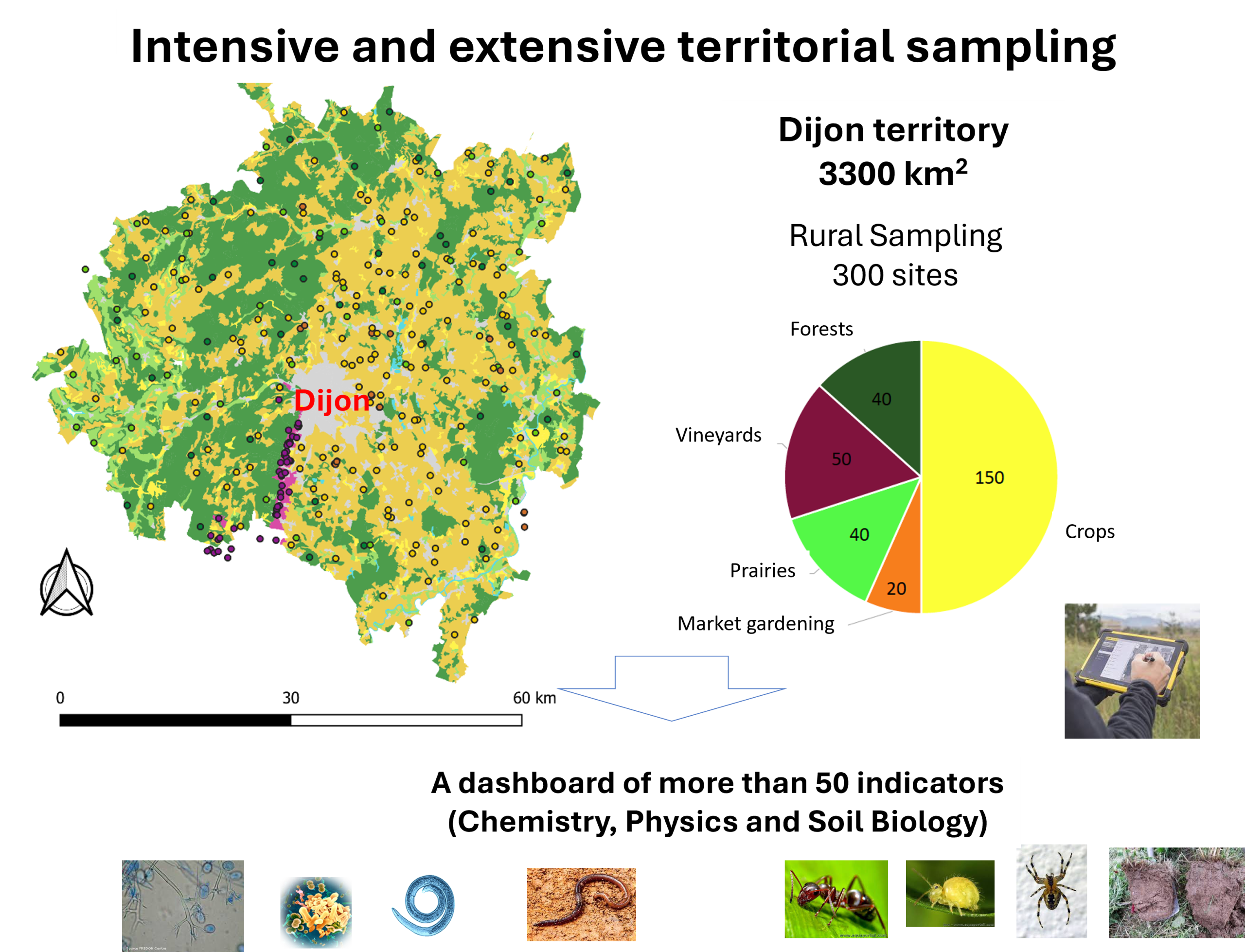
The ‘ProDij, Dijon Sustainable Food 2030’ project, led by Dijon Métropole and funded under the ‘Investments for the Future’ programme, aims to make the Dijon Métropole urban area (3,300 km²and 370,000 inhabitants) a demonstration territory for sustainable food by 2030. Its societal ambition is based on the motto “produce better to eat better” (Figure 1).
Within this project, the ‘Sol expert’ initiative, coordinated by INRAE Dijon, aims to conduct an in-depth assessment of the impact of land-use patterns and agricultural practices on soil quality, within the context of the agroecological transition.
To this end, a sampling strategy that is both intensive and extensive has been implemented across all rural soils within the Dijon Métropole urban area. More than 300 sites have thus been selected. Soil quality is analysed using a unique dashboard comprising more than 50 complementary indicators, which comprehensively cover the chemical, physical and biological aspects of the soil.
Notes & references
Thumbnail. Logo ProDij Project, Dijon Sustainable Food 2030. [Source Dijon Métropole]
[1] The partners in this projet are: Dijon Métropole, Banque des territoires, Région Bourgogne Franche Comté, Timac Agro, Alliance BFC-Dijon céréales