


The impact of agricultural practices on soil microbiological quality
PDF
Long overlooked, soil is now recognized as a living ecosystem — and even as the planet’s foremost reservoir of biodiversity. Through this biodiversity, it delivers ecosystem services that are fundamental to the fabric of our society. Yet like so many other ecosystems, it has been subjected to mounting pressures for several decades, driven largely by human activities and, above all, by agriculture. Over the past thirty years, scientific research has developed powerful new tools to probe and illuminate the role of this vast underground world. Today, we can finally confront a question that resonates across all ecosystems: is soil experiencing the sixth mass extinction? And if so — what is driving it, and can the damage ever be undone?
1. Soil: an ecosystem serving our society
According to geologists, soil is a very thin layer on the surface of the Earth’s crust, ranging from a few centimetres to tens of centimetres in depth.
According to soil scientists, soil represents the most heterogeneous and structured environmental matrix on our planet. It consists of an assembly of mineral particles (sand, silt, clay) in aggregates of varying sizes, shapes and stability (See Soil formation in temperate climates & Six factors of pedogenesis).
For ecologists, soil is a relatively recent subject of study, as they only began to take a serious interest in it around sixty years ago. The reasons for this lack of interest were linked to the complexity of this matrix, its inaccessibility, but also undoubtedly to the ‘ordinary and less visible’ nature of its biodiversity. Furthermore, the soil is often equated with a burial ground or a waste disposal site, which significantly tarnishes its cultural and societal image.
However, this renewed interest from ecologists, coupled with major technological and methodological advances in our ability to characterise living organisms, has led to an almost exponential growth in knowledge about soil biology and ecology in recent decades.
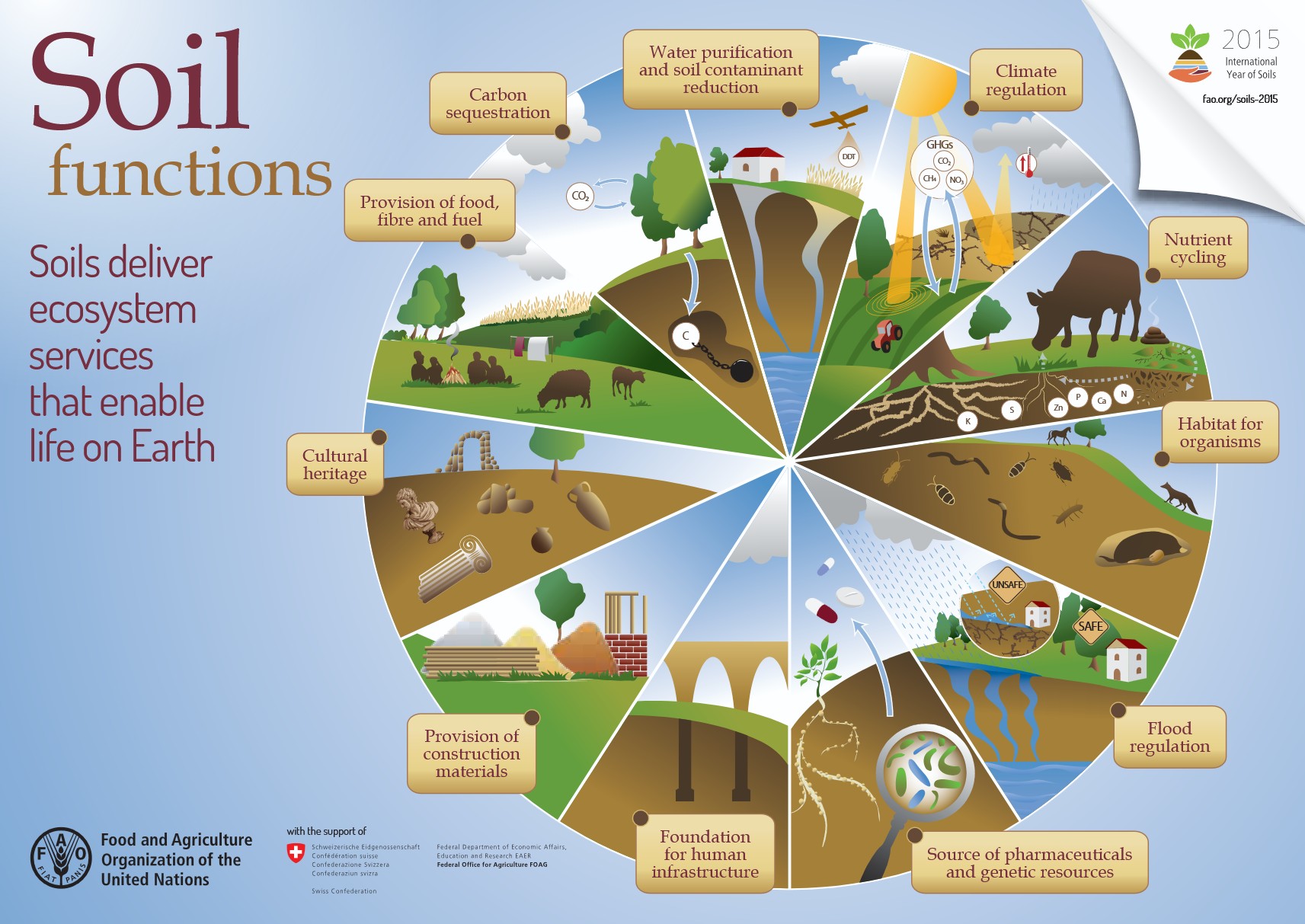
This biodiversity is fundamental to the provision of the ecosystem services necessary for the development, the regulation and sustainability of our society (Figure 1). In addition to its key role in supporting our infrastructure and food production, soil is also heavily involved in regulating the climate and the water cycle, and in mitigating environmental pollution.
2. The microbiological quality of soils
2.1 The importance and abundance of life in the soil
Soil biodiversity (See Soil biodiversity & Soil biomass), which is largely invisible, represents a considerable amount of living biomass: from 2.5 to over 10 tonnes per hectare (depending on soil type and management practices associated to land useà. This is equivalent to the biomass of organisms living on the soil surface (plants, macroorganisms). However, this life remains largely unknown to land users.
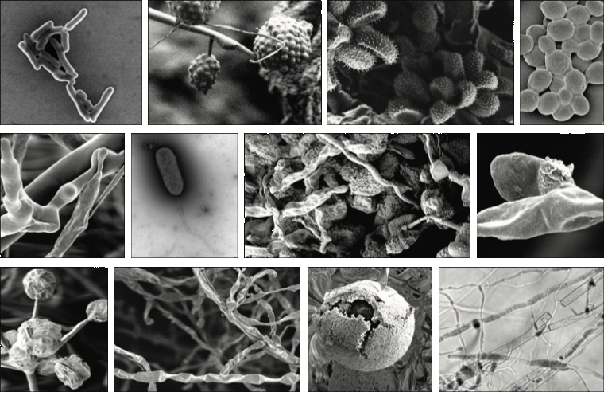
- Bacteria and archaea, single-celled prokaryotic microorganisms, i.e. whose cells do not contain a nucleus.
- Fungi, eukaryotic microorganisms (e. the cell contains a nucleus) which may be unicellular (yeasts) or multicellular. When multicellular, they take the form of mycelium. The common term ‘fungus’ actually refers only to those capable of temporary fruiting bodies visible on the surface or in the soil.
2.2 Microorganisms: small but essential to life on Earth
The smallest of the soil’s inhabitants, microorganisms are the most abundant and the most diverse, both taxonomically and functionally. Thanks to an extraordinary capacity for genetic adaptation to changes in their environment, microorganisms have colonised, without exception, all the soils on our planet.
Microbial diversity is estimated at 1 million species of bacteria and 100,000 species of fungi per gram of soil (Figure 2).
Beyond genetic diversity, these communities also represent a very significant proportion of the soil’s living biomass: in the order of several tonnes of carbon per hectare, equivalent to around ten cows grazing on the same area! This tremendous wealth gives microorganisms a special place within the living world as a reservoir of genetic resources: it is a true heritage.
2.3 Essential functional roles in ecosystems
The enormous diversity of microorganisms also translates their significant contribution to the ecosystem functions and services provided by the soil, notably:
- Microbial communities contribute to ecosystem support and regulatory services, notably through their role in the biogeochemical cycles of major elements such as carbon, nitrogen, phosphorus and sulphur…
- The microbial component is, for example, responsible for transformations in the nitrogen cycle such as atmospheric nitrogen fixation, ammonification, nitrification and denitrification.
- The mineralisation of organic matter, a central process in the carbon cycle, is largely carried out by microorganisms that convert complex organic molecules into mineral elements, some of which are readily assimilated by plants.
- Due to their metabolic flexibility, microorganisms also play a role in the degradation and transfer of pollutants (metals, PAHs, pesticides, etc.).
- Finally, certain microorganisms also have a significant impact on plant health and growth, for example by forming symbiotic relationships or by inducing certain diseases.
2.4 Impact of reduced soil biodiversity on soil quality
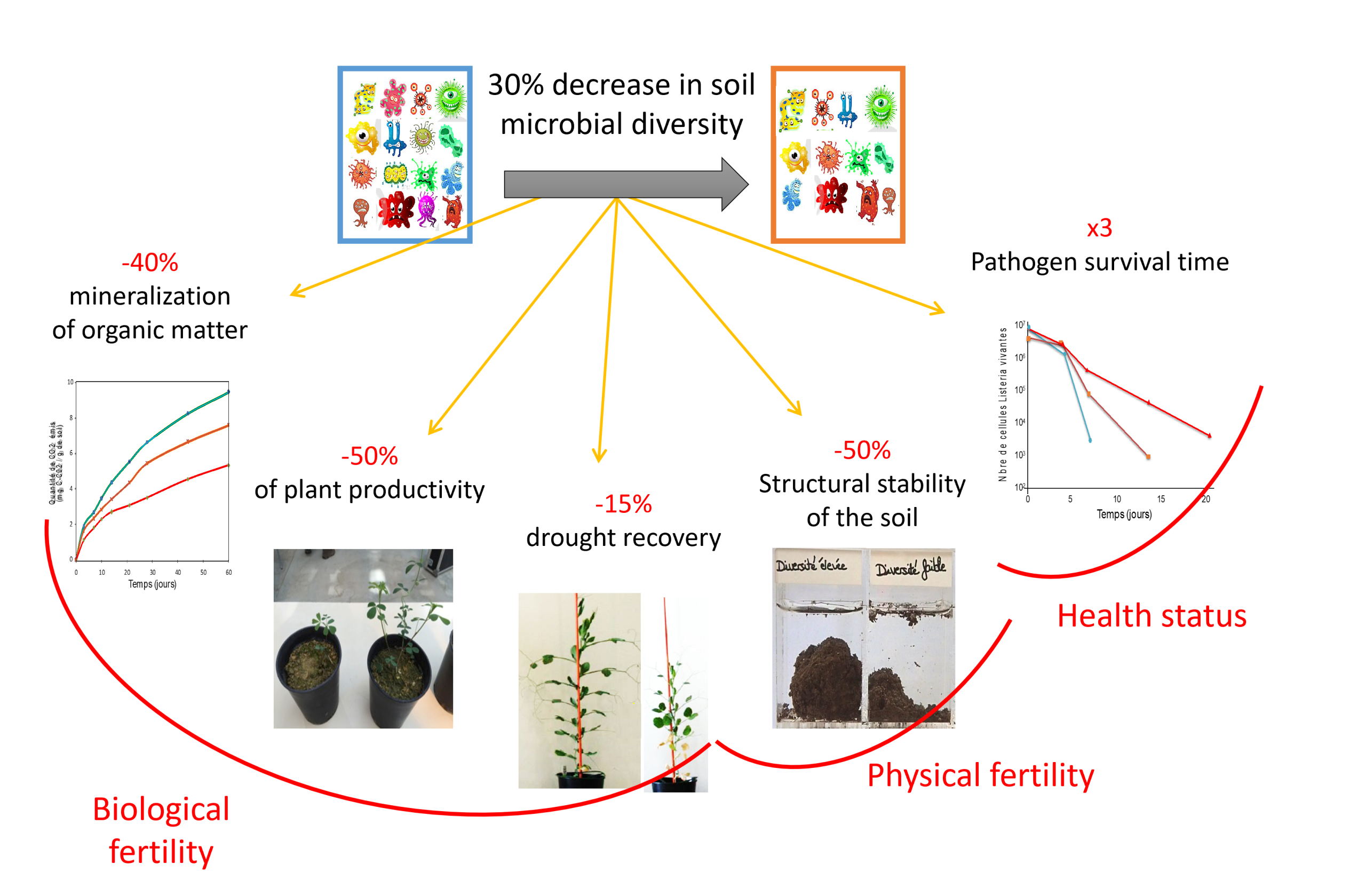
- A 40% drop in the soil’s capacity to mineralise organic matter, and therefore a significant loss of its natural fertility,
- A halving of the vegetative growth of crops grown on this soil (alfalfa, wheat, tomatoes, etc.),
- A 50% loss in soil structural stability: its ability to resist erosion is weakened as its water retention capacity,
- A reduced ability of plants to recover (-15%) following water stress,
- A threefold increase in the survival of exogenous and opportunistic pathogens, which are no longer eliminated by the barrier effect of the soil microbiota.
3. Microbial inventory of French soils
3.1 Strategy for mapping microbial diversity
For the past twenty years or so, scientists have been studying the abundance and diversity of soil microorganisms using molecular tools. These tools rely on the extraction and characterisation of DNA directly extracted from soil. Thanks to recent advances in mass sequencing (high-throughput sequencing), it is now possible to decipher the immense microbial diversity of the soil.
These tools have been applied to samples from over 2,200 sites in the French soil monitoring network (known as Réseau de Mesures de la Qualité des Sols, see focus RMQS– A French Network for Soil Quality Monitoring) spread across the French territory [5],[6]. They have enabled:
- The measurement of microbial biomass, which is derived from soil DNA extraction yield and enables the quantity of microorganisms present to be assessed.
- Massive soil DNA sequencing, which provides information on the diversity of the microbial taxa.
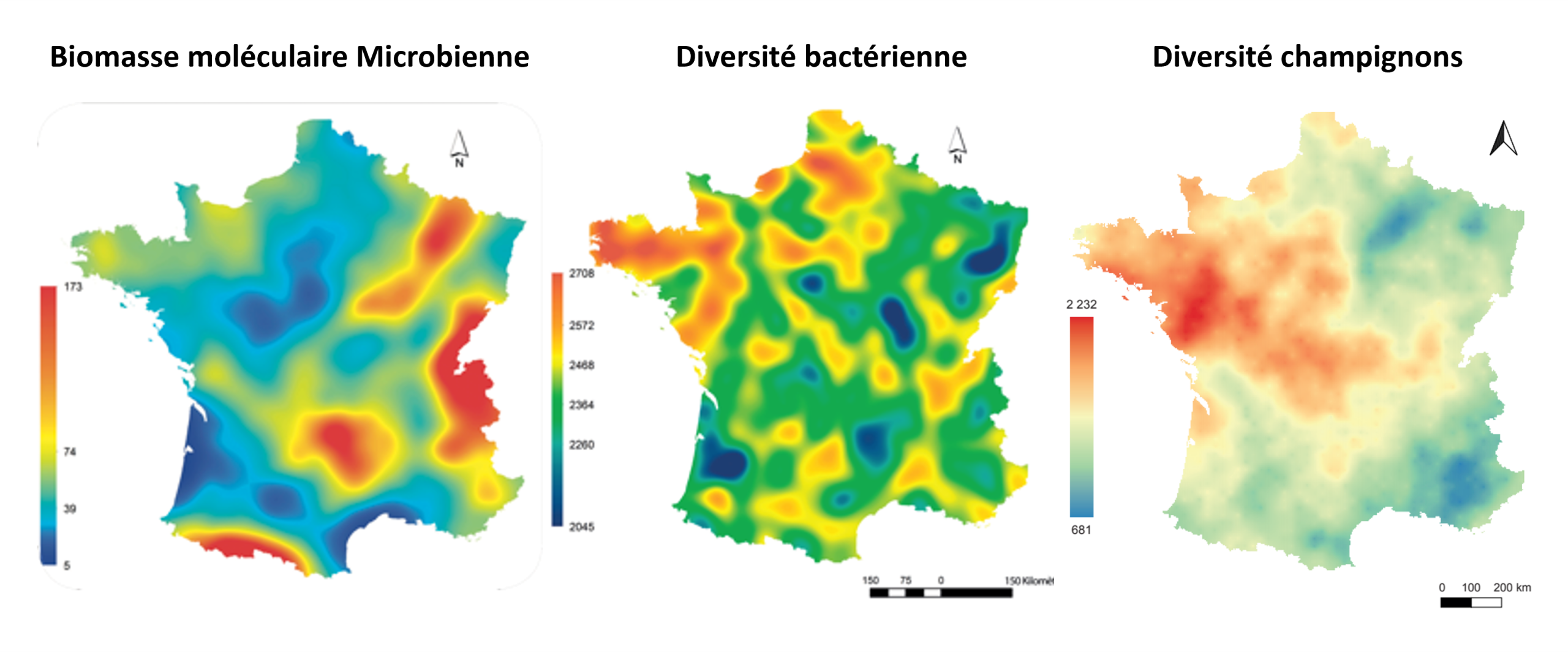
The national maps of microbial biomass, bacterial diversity and fungal diversity in soils (Figure 4) show significant geographical variations in these parameters [7]. A more detailed analysis of these maps has made it possible to:
- Demonstrate a spatially heterogeneous distribution of microbial communities yet structured into biogeographic profiles at the national level.
- To identify and rank the environmental parameters structuring the abundance and diversity of soil microbial communities at the national territorial scale. At this scale, local parameters (soil type, land use) have a greater influence compared to global parameters (climate, geomorphology) [8],[9].
- To demonstrate that certain land-use practices (particularly agricultural ones) can lead to declines in abundance and significant changes in the diversity and composition of microbial communities.
- That each bacterial and fungal taxon exhibits a distinct spatial distribution due to specific ecological attributes.
Figure 4. National maps of microbial biomass and bacterial and fungal diversity in French soils. [Source adapted from ref. [5,6], CC licence]
3.2 Factors influencing microbial biomass
Soil texture (contents of sand, silt and clay), as well as pH and the quantity and quality (C/N ratio) of soil organic matter, are the main parameters influencing the distribution of microbial molecular biomass. These characteristics define the soil’s capacity (in terms of habitat and nutrient resources) to support microorganisms.
A comparison of microbial biomass by land use type shows that:
- Soils under grassland and forests harbour a greater amount of microorganisms than those under arable crops or vineyards and orchards.
- In agricultural soils, the lower microbial biomass can be explained by various agricultural practices such as (i) the absence of permanent vegetation cover (crop rotation without catch crops, vineyards without grass cover), (ii) tillage, (iii) fertilisation with chemical fertilisers at the expense of organic inputs, and (iv) the application of biocides such as pesticides.
All these practices lead to the destruction of soil habitats for microorganisms and/or the depletion of nutrient resources (a decline in the quantity and quality of soil organic carbon) and, in some cases, to toxic contamination for microorganisms (heavy metals, pesticides, antibiotics, PAHs, etc.).
3.3 Microbial diversity and geographical areas
The national map of soil bacterial diversity shows significant variations:
- Geographical areas with a radius of around 100 km where the number of taxa is high (shown in red on the map).
- Other areas where the number of taxa is low (shown in blue on the map) (see Figure 4B).
At this scale, as previously observed for microbial biomass, a weak influence of climate or geomorphology is demonstrated. More detailed statistical studies show that these observed variations in bacterial diversity are influenced by soil type (in terms of pH, texture and C/N ratio). These parameters provide information on a soil’s capacity to contain a wide variety of habitats, which can thus support a wide variety of different organisms.
However, a comparison of microbial biomass and biodiversity maps shows that geographical areas rich in biomass and microbial biodiversity are not necessarily the same (e.g. north-eastern France) and therefore that high microbial biomass does not necessarily indicate high biodiversity in a soil, and vice versa.
3.4 Influence of disturbances and land use
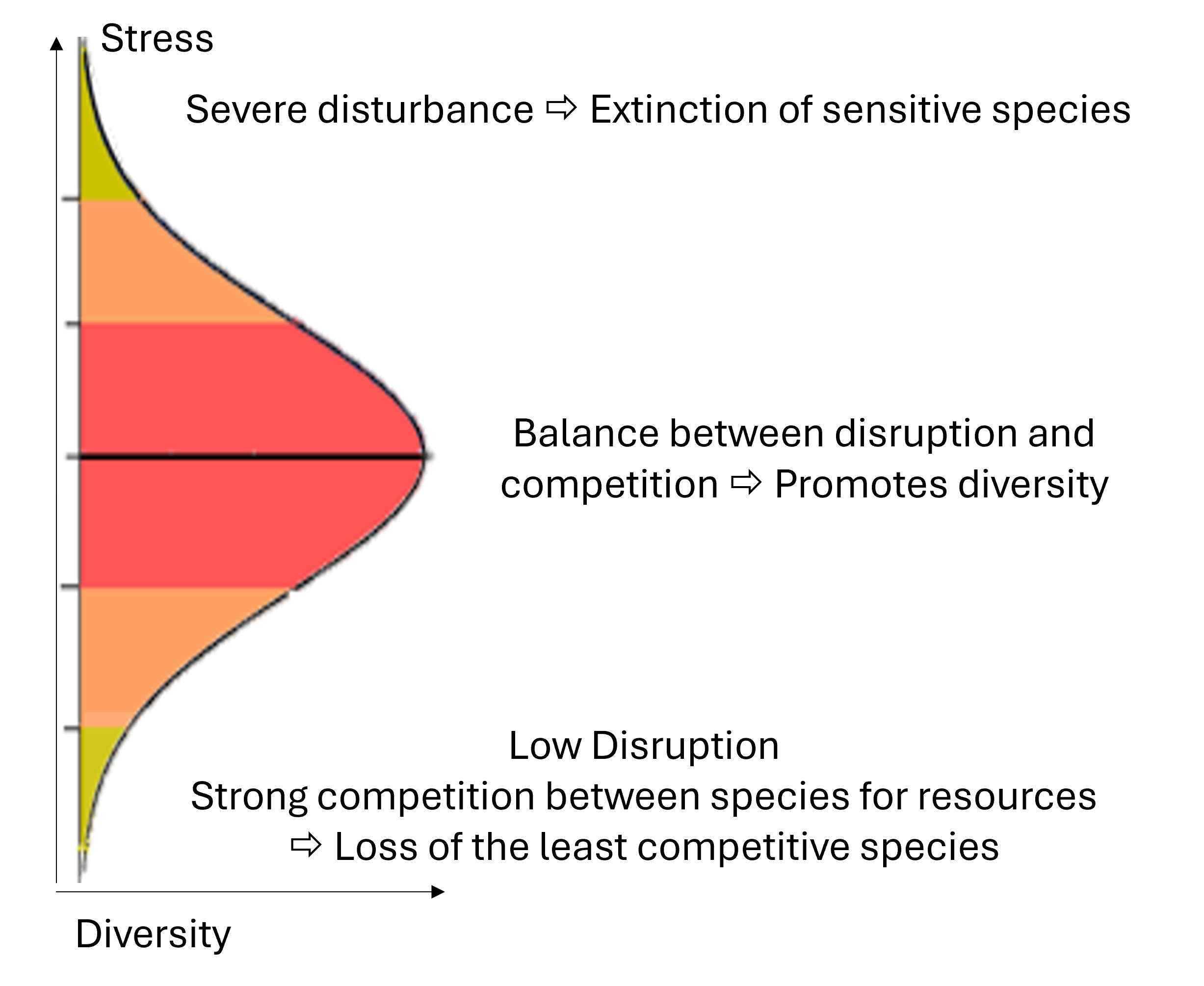
This is explained by the ecological concept known as ‘intermediate disturbance’, which links an ecosystem’s level of diversity to the intensity of the disturbances to which it is exposed, with maximum diversity occurring in moderately disturbed systems (Figure 5).
Thus, soils under forests and grasslands represent ecosystems that undergo low levels of disturbance, characterised by the virtual absence of human activity, and therefore harbour a lower bacterial diversity.
Conversely, agricultural and vineyard soils (which generally undergo a multitude of agricultural interventions) correspond to more disturbed systems associated with higher bacterial diversity.
3.5 Soil fungal diversity
The final map concerns fungal diversity (see Figure 4C). It reveals geographical areas with a high taxon richness (shown in red on the map, within a 250 km radius) and others that are much poorer (shown in blue) (see Figure 4C). Unlike the previous maps, a clear influence of soil type and climate can be observed.
Indeed, unlike microbial biomass and bacterial diversity, fungal diversity is highly dependent on the temperature and rainfall conditions specific to the various French climates (oceanic, Mediterranean, mountainous, continental) (Figure 6).
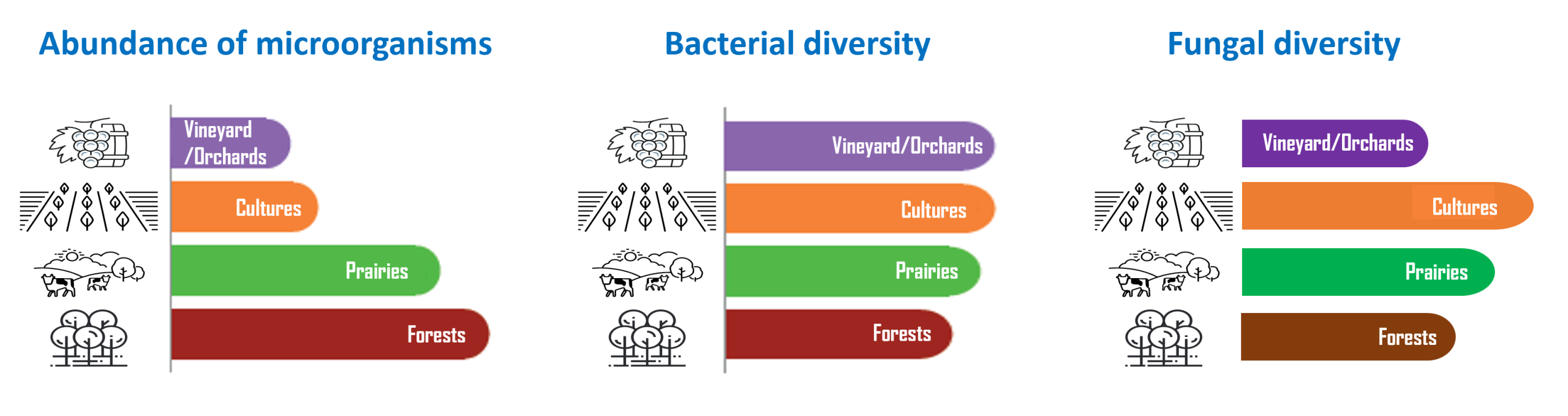
Vineyard soils, however, are an exception: their fungal diversity drops significantly, probably due to high disturbances linked to intensive viticultural practices (mechanisation, severe tillage, insufficient ground cover and heavy phytosanitary pressure to protect the vines) [10].
3.6 Definition of microbiological quality indicators
French national terrotory microbial mapping work has made it possible to:
- Standardise tools for the molecular characterisation of microbial communities and enable their large-scale use.
- Transform them into operational indicators of soil microbiological quality.
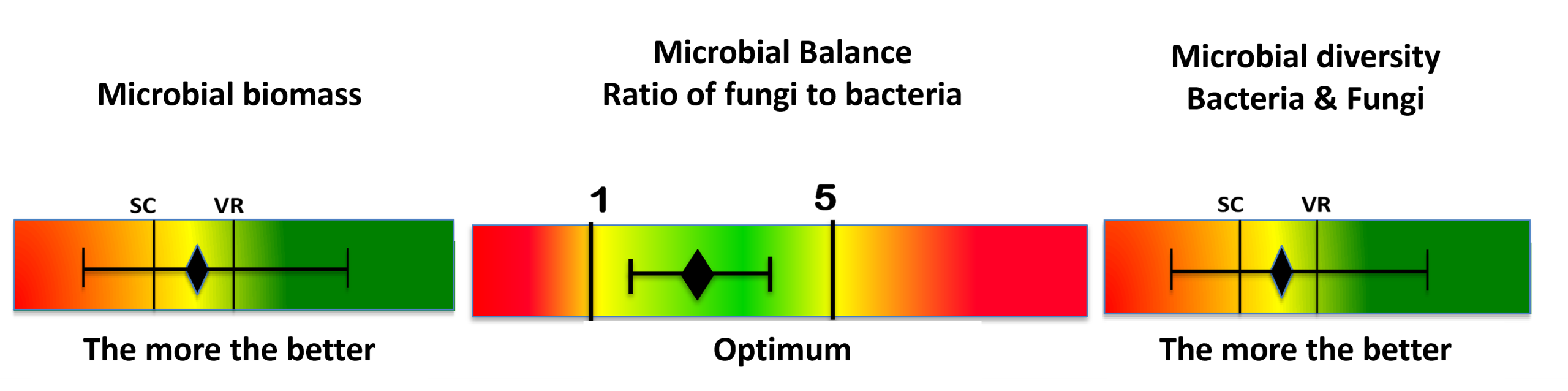
Today, these bioindicators are being introduced to the agricultural sector through participatory research projects directly involving farmers, with the aim of:
- Raise their awareness of the issue of their soil’s microbiological quality within the context of agroecological transition.
- Enable them to assess for themselves the impact and sustainability of their farming practices on the microbiological quality of their soils.
Furthermore, with a view to establishing European and national regulations on soil health, these bioindicator tools have been transferred to private analytical laboratories and consultancy firms to:
- Develop operational diagnostic tools for assessing production systems.
- Define new environmental labels.
4. Soil quality in a rural area of an urban zone
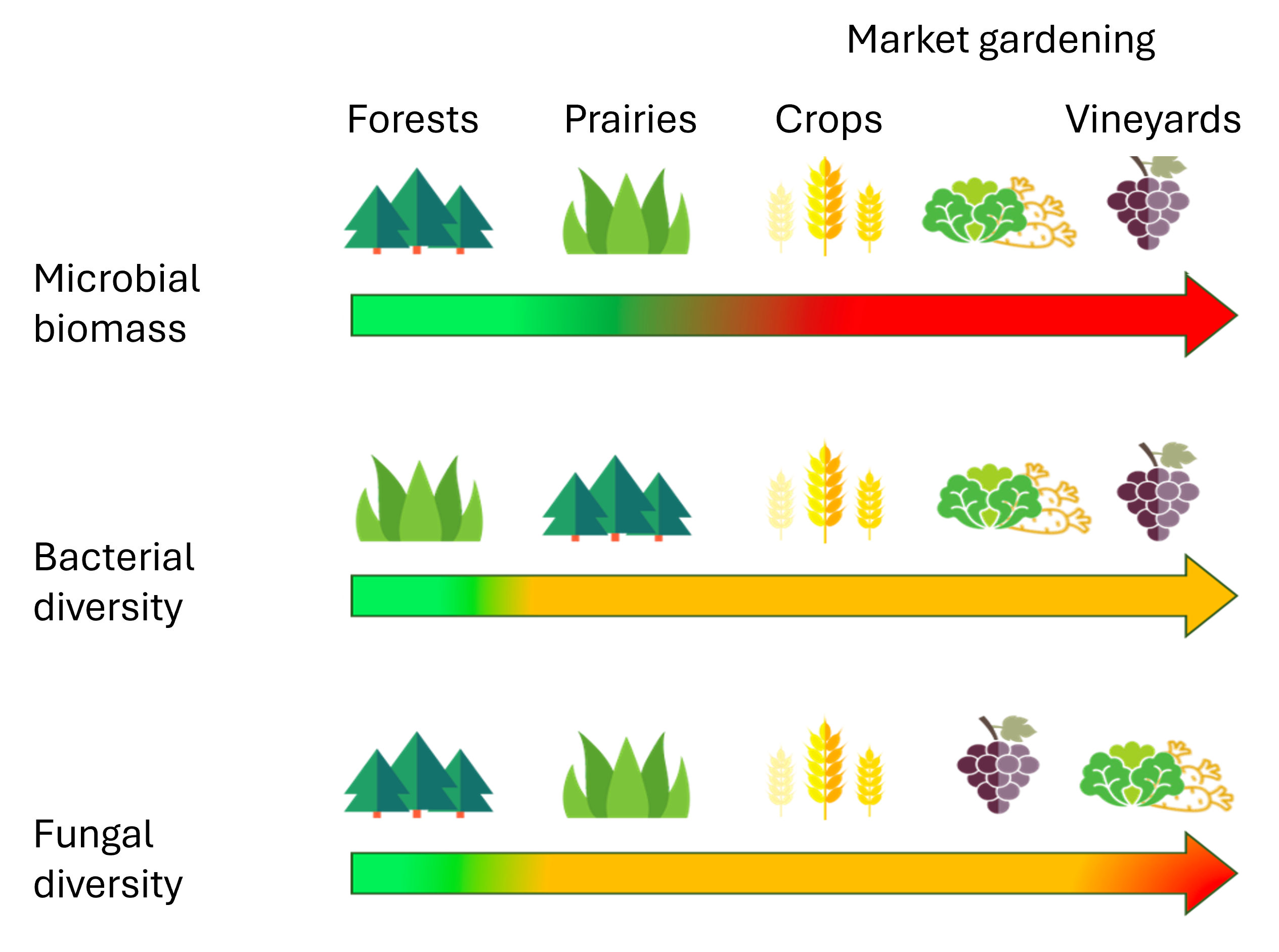
The main results confirm several trends already observed at national level (Figure 8):
- Agricultural practices have a strong impact on microbial biomass and a moderate impact on bacterial diversity.
- For these microbial parameters, no clear distinction is observed between the main types of agricultural systems (arable farming, vineyards, market gardening).
In contrast, fungal diversity shows varying responses across different systems (Figure 8):
- Moderate impact on arable farming and viticulture.
- Strong impact on market gardening.
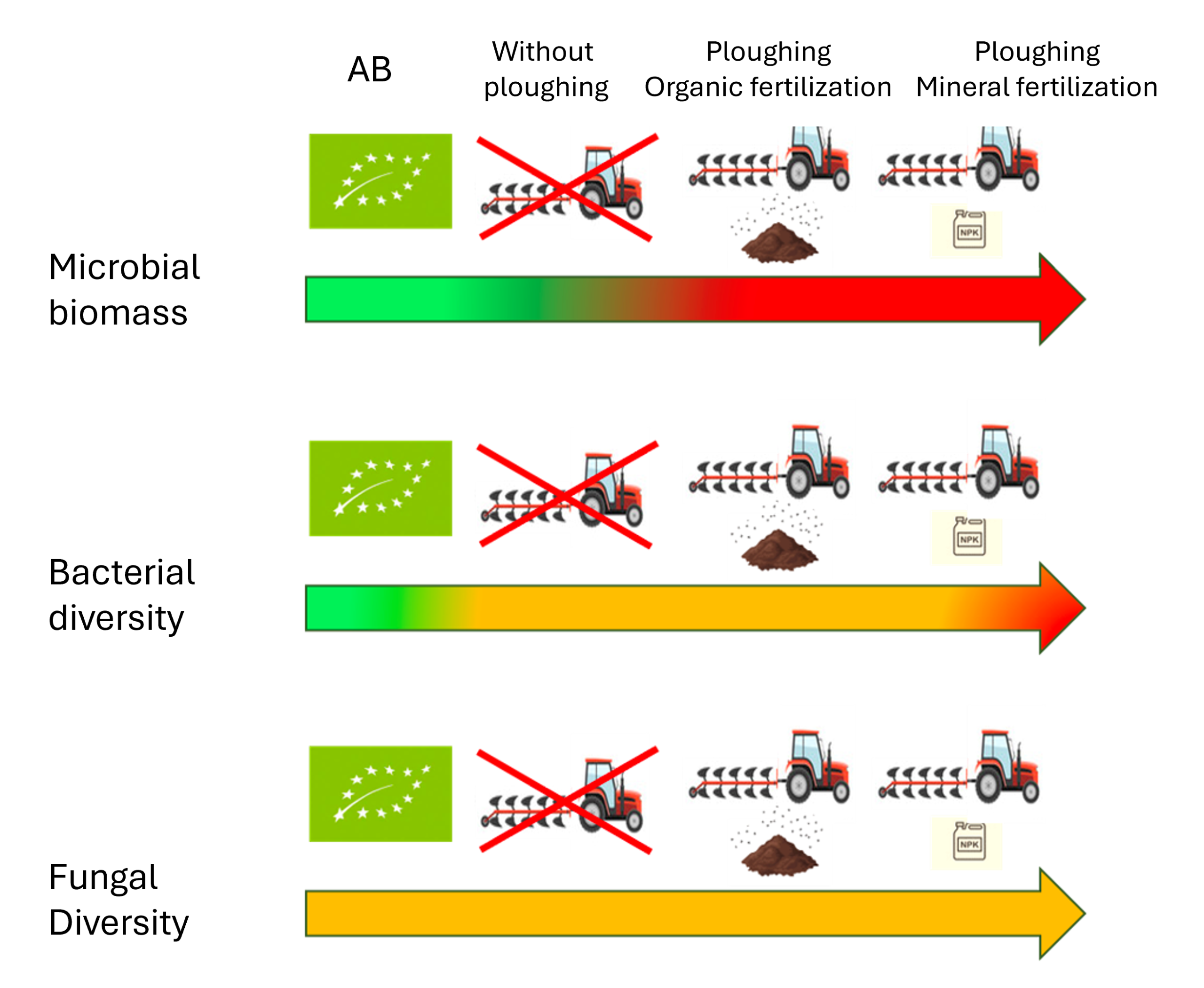
A more detailed analysis of agricultural practices for arable farming systems confirms that the intensification of tillage, combined with mineral fertilisation and the use of synthetic pesticides, leads to a significant deterioration in soil microbiological quality (Figure 9).
5. Impact of viticultural practices on soil quality
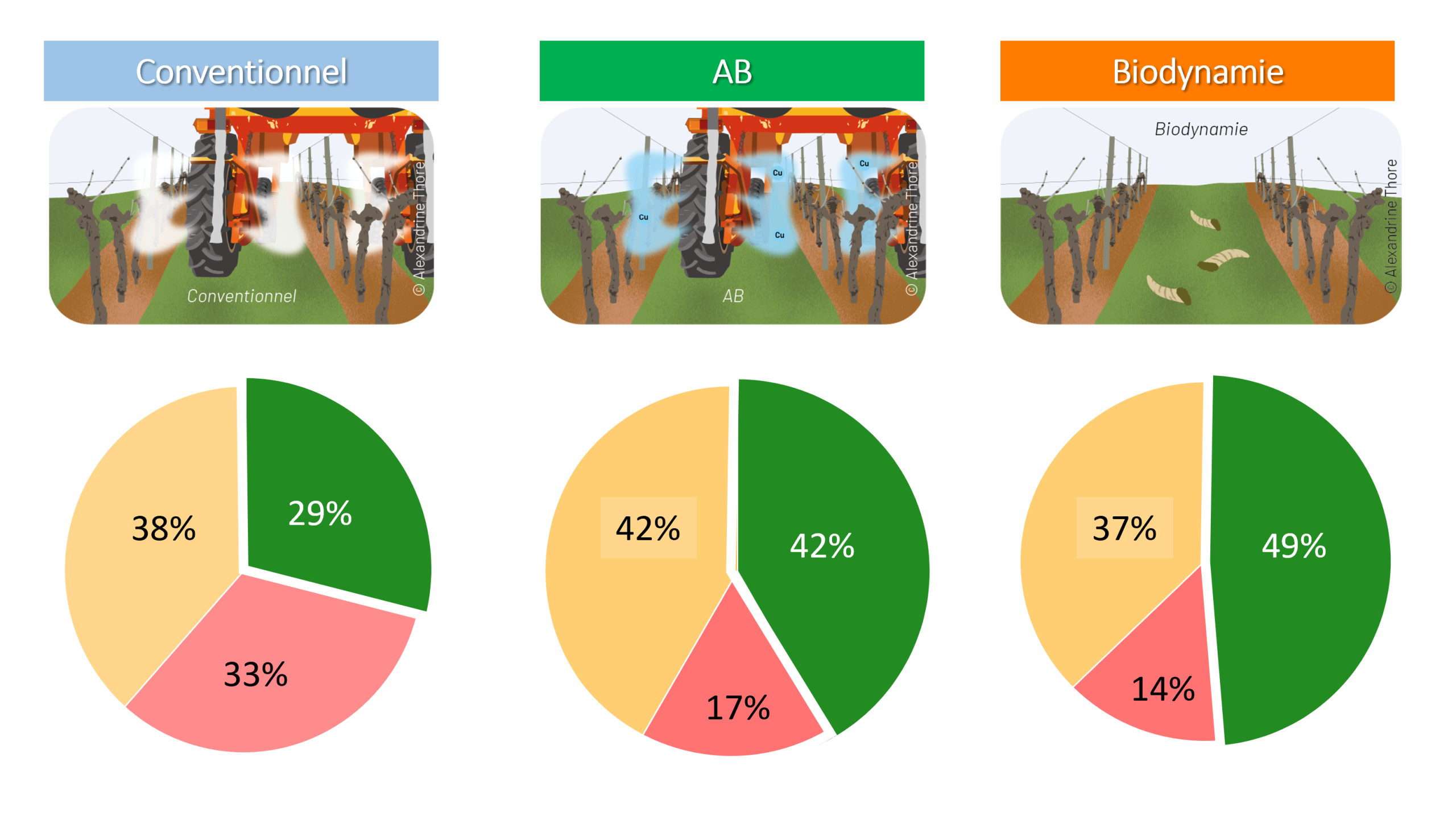
- From conventional viticulture to organic viticulture.
- But also when switching from organic viticulture to biodynamic viticulture (Figure 10).
This trend, which is robust thanks to the representativeness of the different production methods within the network of winegrowers established (see Focus Soils of wine-growing regions), reinforces the idea that agroecological practices sustainably promote soil life (Figure 10).
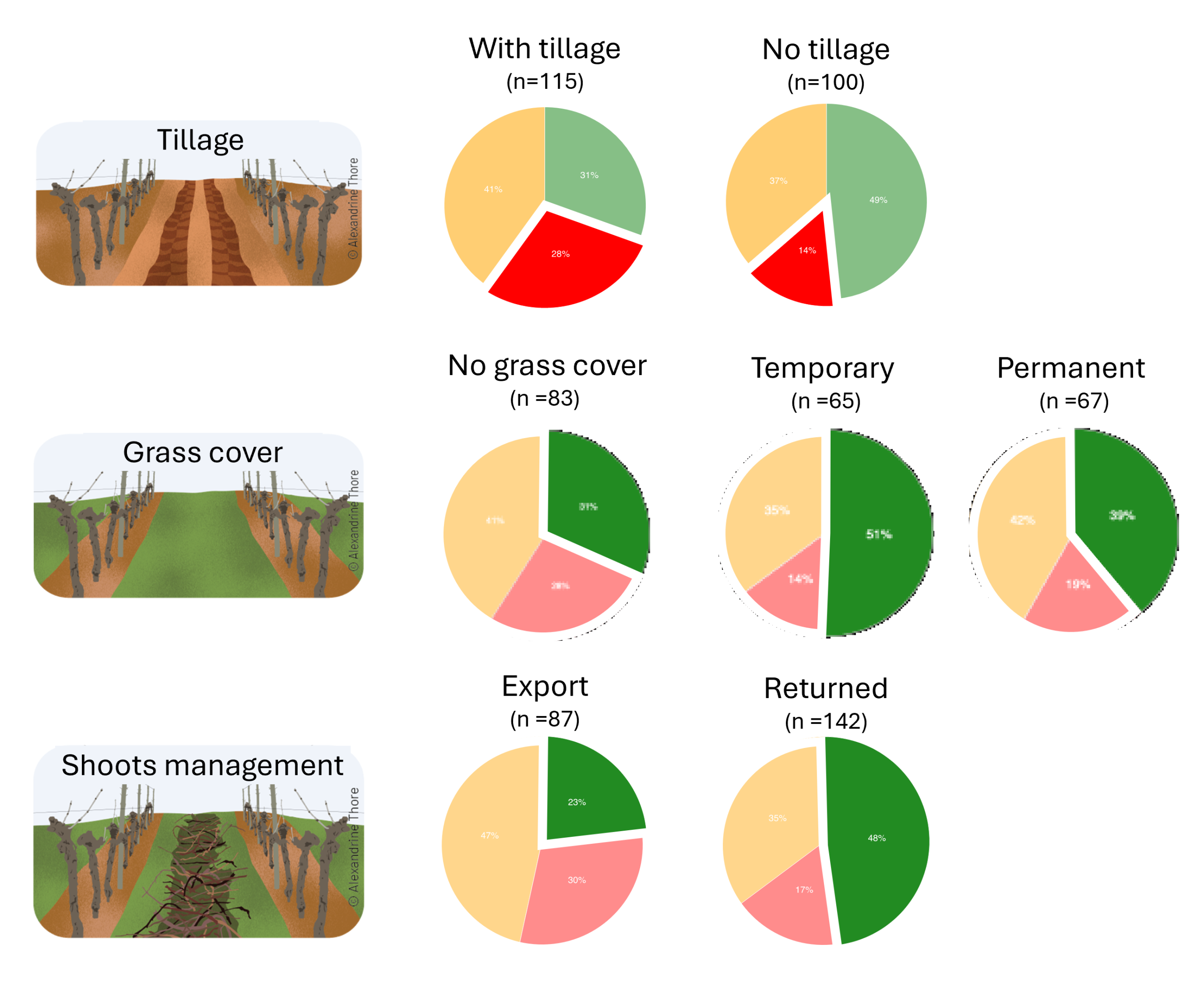
- Soil tillage, in all its forms (ridging/de-ridging, scarification, ploughing, etc.), has a negative impact on microbiological quality.
- In contrast, grass cover practices prove to be rather beneficial, with an effect that is all the more pronounced when the grass cover is perennial and diverse.
A particularly innovative development concerns the management of vine shoots: returning them to the soil significantly improves the microbiological quality of the soil compared to removing them from the plot (Figure 11) [15].
6. Messages to remember
- For the past 30 years, soil ecology research has made significant strides in improving our understanding of soil biodiversity, its role and its sensitivity to our land use practices.
- Soil is not merely an inert medium for plant production but a living ecosystem that provides numerous services to our society.
- Soil is the planet’s main reservoir of biodiversity, as it is host to 60% of the planet’s biodiversity.
- Among the soil living organisms, microorganisms are the most abundant and diverse
- France is the first country to have produced a national cartographic inventory of its soil microbiology.
- The microbiological quality of agricultural soils is poorer than that of grassland and forest soils.
- Among agricultural soil management practices, tillage and the use of pesticides are the most damaging.
- Conversely, the most beneficial practices are maintaining long-term, diverse vegetation cover and the use of organic amendments.
I would like to thank our fellow scientists who have contributed to the generation and dissemination of the knowledge arising from our research programmes: S Dequiedt, PA Maron, S Terrat, C Zappelini, N Chemidlin-Prévost Bouré, W Horrigue, B Karimi, C Djemiel, C Jolivet, A Bispo, N Saby.
Notes & references
Cover image. [Photo Lionel Ranjard]
[1] https://www.ipbes.net/news/Media-Release-Global-Assessment-Fr
[2] https://ec.europa.eu/commission/presscorner/detail/fr/qanda_23_3637
[3] Team BioCom de l’UMR Agroécologie de Dijon – https://umr-agroecologie.dijon.hub.inrae.fr/
[4] Maron P.A. & Ranjard L., 2019. La qualité écologique des sols. Editions Technique de l’Ingénieur. GE1051 (in French).
[5] Karimi B, Terrat S., Dequiedt S., Chemidlin N., Maron P.A. & L Ranjard. 2018. Atlas Français des bactéries du sol. Ed. Biotope, Ed. du Muséum (in French).
[6] Djemiel C, Dequiedt S., Terrat S., Maron P.A. & L Ranjard. 2024. Atlas Français des champignons du sol. Ed. Biotope, Ed. du Muséum (in French).
[7] Dequiedt S., Karimi B., Chemidlin Prévost-Bouré N., Terrat S., Horrigue W., Djemiel C., Lelievre M., Nowak V., Wincker P., Jolivet C., Saby N.P.A., Arrouays D., Bispo A., Feix I., Eglin T., Lemanceau P., Maron P.A. & Ranjard L. – 2020 – Le RMQS au service de l’écologie microbienne des sols français, Étude et Gestion des Sols, 27 :51-71 (in French).
[8] Terrat S, S Dequiedt, N Saby, W Horrigue, M Lelievre, V Nowak, J Tripied, T Regnier, C Jolivet, D Arrouays, P Wincker, C Cruaud, B Karimi, A Bispo, PA Maron, N Chemidlin Prévost-Bouré, L Ranjard*. 2017. Mapping and Predictive Variations of Soil Bacterial Richness across French National Territory. PlosOne 12(10): e0186766
[9] C Djemiel, S Dequiedt, W Horrigue, A Bailly, M Lelièvre, J Tripied, C Guilland, S Perrin, G Comment, N Saby, C Jolivet, L Boulone, A Bispo, A Pierart, P Wincker, C Cruaud, P-A Maron, S Terrat and L Ranjard*. 2024. Unravelling biogeographical patterns and environmental drivers of soil fungal diversity across France. Soil 10,251-273. https://doi.org/10.5194/soil-10-251-2024
[10] This work has therefore provided France with the first national maps of the abundance and diversity of bacteria in its soils. These original findings have been made available to the general public (citizens, students, farmers, teachers, policy-makers, etc.) through the publication of the ‘French Atlas of Soil Bacteria’ (2018) and the ‘French Atlas of Soil Fungi’ (2024), original natural history works with no international equivalent (in French).
[11] https://ofb.gouv.fr/
[12] http://indicateurs-biodiversite.naturefrance.fr/indicateurs/evolution-de-la-biomasse-microbienne-des-sols-en-metropole
[13] http://indicateurs-biodiversite.naturefrance.fr/indicateurs/evolution-de-la-biodiversite-bacterienne-des-sols
[14] A Christel, N Chemidlin-Prevost Bouré, S Dequiedt, N Saby, F Mercier, J Tripied, G Comment, J Villerd, C Djemiel, A Hermant, M Blondon, L Bargeot, E Matagne, W Horrigue, PA Maron, L Ranjard. 2024. Differential responses of soil microbial abundance, diversity and interactions to land use intensity at a territorial scale. Scien Tot Environ 906:167454 https://doi.org/10.1016/j.scitotenv.2023.167454
[15] C Zappelini, S Dequiedt, J Tripied, W Horrigue, P Barré, V Masson, M Madouas, A Mathé, JP Gervais, PA Maron, L Ranjard*. 2025. Ecological impact of conventional, organic and biodynamic viticultural systems and associated practices on soil microbiota in various French territories. Agric Ecosyst Environ 392-109748 https://doi.org/10.1016/j.agee.2025.109748
The Encyclopedia of the Environment by the Association des Encyclopédies de l'Environnement et de l'Énergie (www.a3e.fr), contractually linked to the University of Grenoble Alpes and Grenoble INP, and sponsored by the French Academy of Sciences.
To cite this article: RANJARD Lionel (April 26, 2026), The impact of agricultural practices on soil microbiological quality, Encyclopedia of the Environment, Accessed September 28, 2026 [online ISSN 2555-0950] url : https://www.encyclopedie-environnement.org/en/soil/impact-agricultural-practices-soil-microbiological-quality/.
The articles in the Encyclopedia of the Environment are made available under the terms of the Creative Commons BY-NC-SA license, which authorizes reproduction subject to: citing the source, not making commercial use of them, sharing identical initial conditions, reproducing at each reuse or distribution the mention of this Creative Commons BY-NC-SA license.