




Soils of wine-growing regions
PDF1. A participatory project bringing together researchers and winegrowers in three major wine-growing regions of France
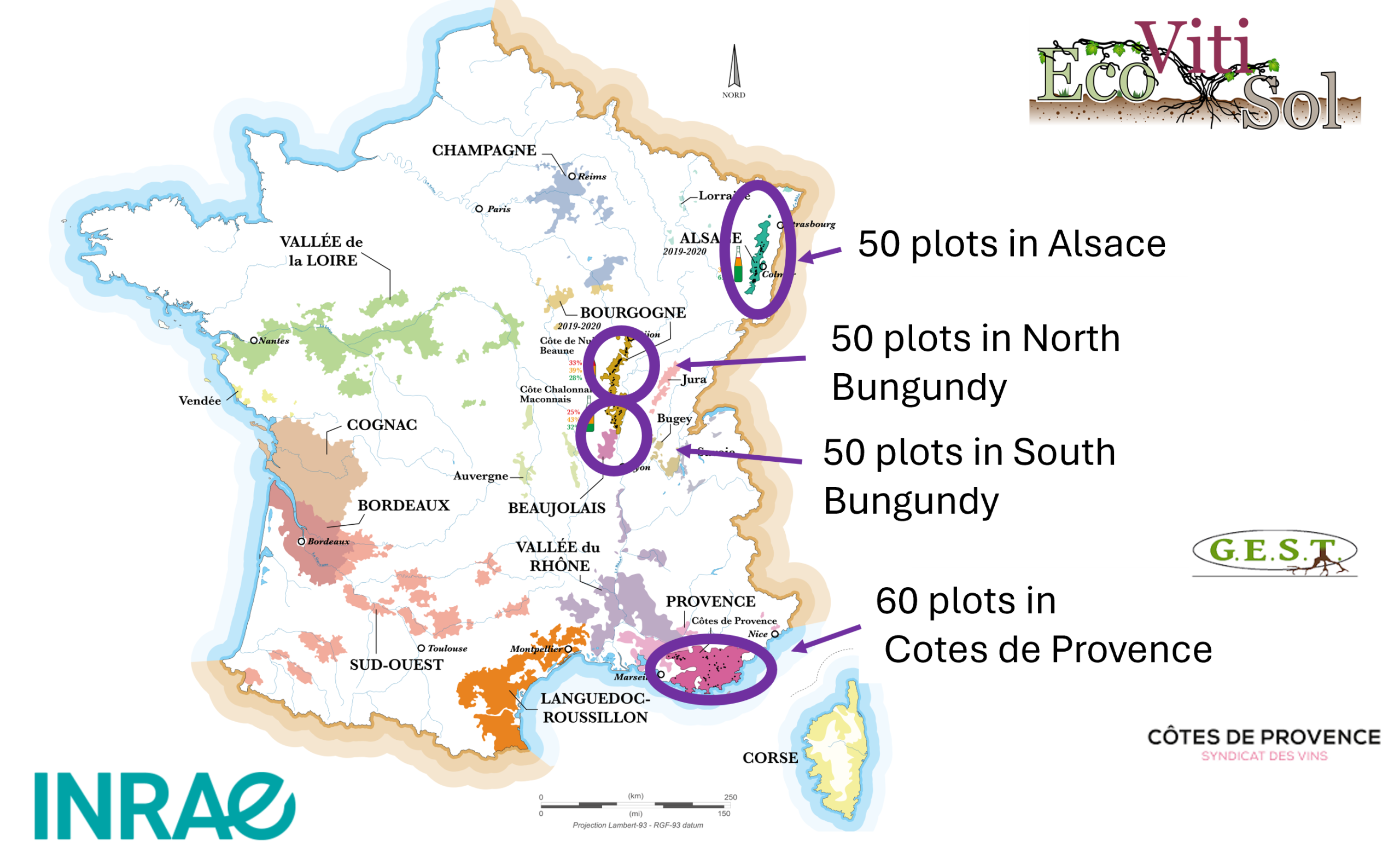
Figure 1. Wine-growing regions studied in the EcoVitiSol® project.
French viticulture, a strategic agricultural sector for France, generates around €10 billion in exports annually. However, this sector remains a major consumer of plant protection products (20% of pesticides used in agriculture on 3% of usable agricultural land) and is highly mechanised. These practices contribute to significant environmental degradation, particularly in terms of soil quality. Faced with this issue, many winegrowers have questioned the real impact of their production methods and cultivation practices on the health of their soils. It was to answer this legitimate question that the participatory EcoVitiSol® project was launched in 2018 (Figure 1).
Launched in 2018, this project aimed to explore a subject that has yet to be extensively documented on a large scale: the impact of production methods (Conventional, Organic, Biodynamic) on the microbiological quality of soils. The project leaders created a network of 210 vineyard plots across three main French wine regions—Alsace, Burgundy, and the Côtes de Provence—involving numerous dedicated winegrowers in the process.
This initiative is based on a fruitful collaboration between researchers specialising in (i) soil microbiological quality (INRAE Dijon), (ii) soil carbon (CNRS ENS Paris) and key regional stakeholders to establish a network of winegrowers (the GEST association and BIVB in Burgundy, INRAE Colmar and GIEE in Alsace, and the Côtes de Provence winegrowers’ association in Provence).
But the true originality of this project lies elsewhere: its participatory approach. Winegrowers do not merely make their plots available for research: they are actively involved in interpreting the results and in jointly developing knowledge about the microbiological quality of their soils.
2. A dynamic of exchange and transformation
EcoVitiSol® has not limited itself to producing scientific knowledge: it has created a genuine space for dialogue between researchers and winegrowers. Indeed, 95% of winegrowers express satisfaction with the project and their interactions with the scientists.
This support stems from their strong involvement in training on soil biology and in the development of workshops for the joint interpretation of data. Above all, 75% of the winegrowers in the network wish to incorporate soil biology into their strategic thinking, and nearly 60% say they are ready to adapt their practices, with some even considering a complete change in production methods.
Building on this success [2], the EcoVitiSol® project will now be extended to other wine-growing regions to confirm the results observed (it is already in place in the Bordeaux and Cognac regions). The long-term objective: by 2035, to carry out a comprehensive survey of the quality of wine-growing soils across France.
This will also enable us to raise awareness among winegrowers nationwide of the importance of soil quality and to increase the exchange of knowledge and experience between them for more sustainable practices.
In the field of Humanities and Social Sciences, the project has now attracted the interest of sociologists. They are studying it to gain a better understanding of the barriers to changing practices among winegrowers. An article has been published on this subject, featuring the results of interviews conducted with the network of winegrowers in the Côtes de Provence region [3].
Notes & references
Thumbnail. Logo EcoVitiSol®Project. [Source EcoVitiSol®]
[1] The partners in this project are: OFB, BIVB (Burgundy Wine Council), the Côtes de Provence Wine Syndicates, and GEST (Terroir Research and Monitoring Group), GIEE Welsthalten.
[2] The EcoVitiSol® project received the ‘Environmental Innovation 2023’ award from the journal Vin de France.
[3] B Bedessem, A Mathias, C Zappelini, P-A Maron, S Dequiedt, L Ranjard. 2026. Participatory research in ecology for agroecological transitions: a case study in viticulture, Review of Agricultural, Food and Environmental Studies, in press. ⟨hal-05303971⟩